
Spring Closet Cleanout as a Game: Measuring, Piles, and a Hand-Me-Down Bag (Ages 7-9)
How to turn packing away winter clothes in early April into a fun activity with a 7-to-9-year-old — with sleeve measuring, three sorting piles, and a hand-me-down bag the child packs themselves.
The first warm Saturday in April. You open the closet, pull out the puffy jacket that smells like storage, and immediately notice the sleeves stop somewhere above the wrist. Your child is standing next to you, asking if they can watch TV. From here there are two ways this goes: either you send them off and an hour later you're worn out alone among ten piles of clothes, or you hand them a tape measure, three sheets of paper, and a bag — and forty minutes later you both walk out of the room together.
The usual advice is "get your child involved in household chores." But that advice stops right where the hard part begins. Kids don't want to fold — that's boring. Kids want to decide. And deciding which jacket has gotten too small is actually something you can't judge precisely, because you're not the one wearing these clothes.
Why your child judges "too small" better than you do
You check whether the zipper closes. Your child can feel whether they can raise their arms, crouch down, put a backpack on over it. A sweater that looks fine on the outside might dig in under the arms — and that's exactly the sweater that sits unworn all winter while you wonder why. At 7-9 years old, kids can already put this into words, as long as you ask the right question: not "does it fit?" but "raise your arms up — where does it pull?"
So the whole job comes down to one simple system: three piles and a bag. A "fits" pile, a "too small" pile, and a "not sure" pile. The bag is for handing down, and only clean, undamaged clothes go in it.
The Tape Measure and Three Piles
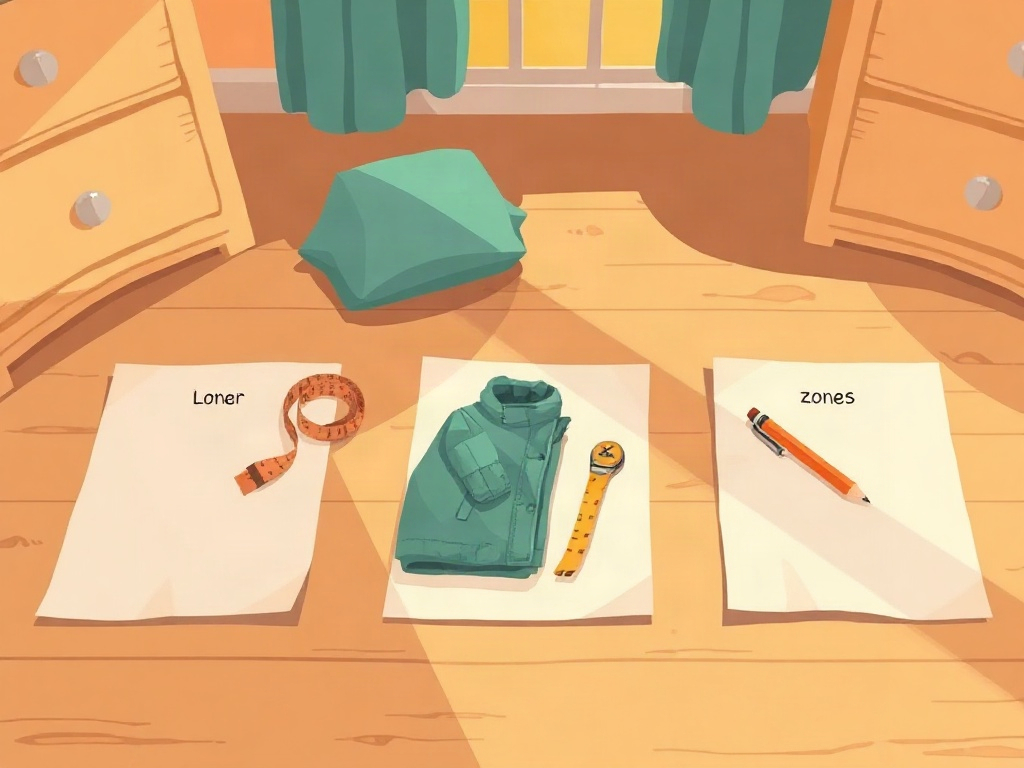
You only need a few things: a soft tape measure or a paper strip, three sheets of paper labeled "fits," "too small," and "not sure," a pencil, and a bag or box for hand-me-downs. Set aside 30-40 minutes and work with a child aged 7-9. There's one rule: every piece of clothing gets tried on, never just eyeballed. The child puts it on, raises both arms above their head, then crouches down and stands back up. If the sleeve rides up above the wrist when the arms go up, or the trousers pull tight when crouching, the item goes in the "too small" pile. If the child says "it fits, but I don't like it," that's a third pile, not the second one — the distinction matters, so say it out loud. For the trickiest cases, measure the sleeve length with the tape and write it down next to the item's name; next year you'll have something to compare it to. The job is done when there's no untried winter garment left on the floor and the "not sure" pile has no more than three items in it.
The Hand-Me-Down Bag: Who Decides What Goes In
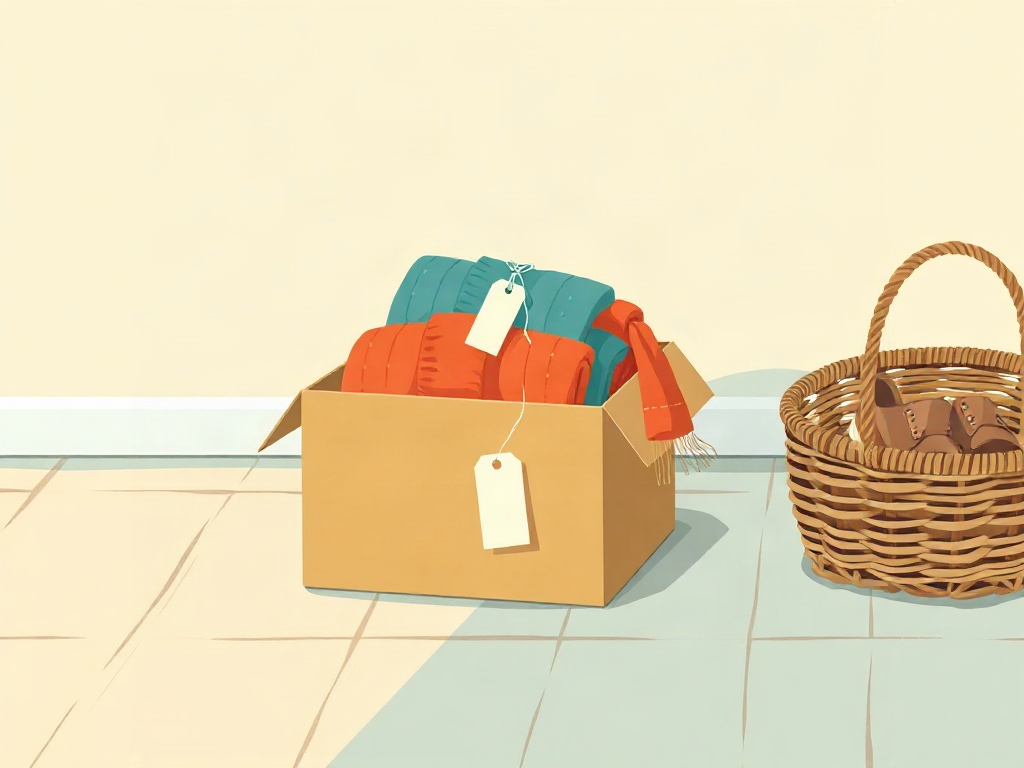
This is where most cleanouts fall apart. A parent tosses the favourite scarf into the bag, the child spots it on the way out, and drama ensues. It works better the other way round: the child hands you the item, you check it's undamaged, and then they're the one who drops it into the bag. The hand that lets go is the hand that says goodbye.
Give them a clear checklist too, so nothing goes in at random:
- Is it undamaged — no tears, no missing buttons, no stain that won't wash out.
- Is it actually too small, or just not your favourite today.
- Would a child who received it be happy about it — look at the item and answer honestly.
- If the answer to any question is "no," the item doesn't go in the hand-me-down bag.
Hand-Me-Down Shop
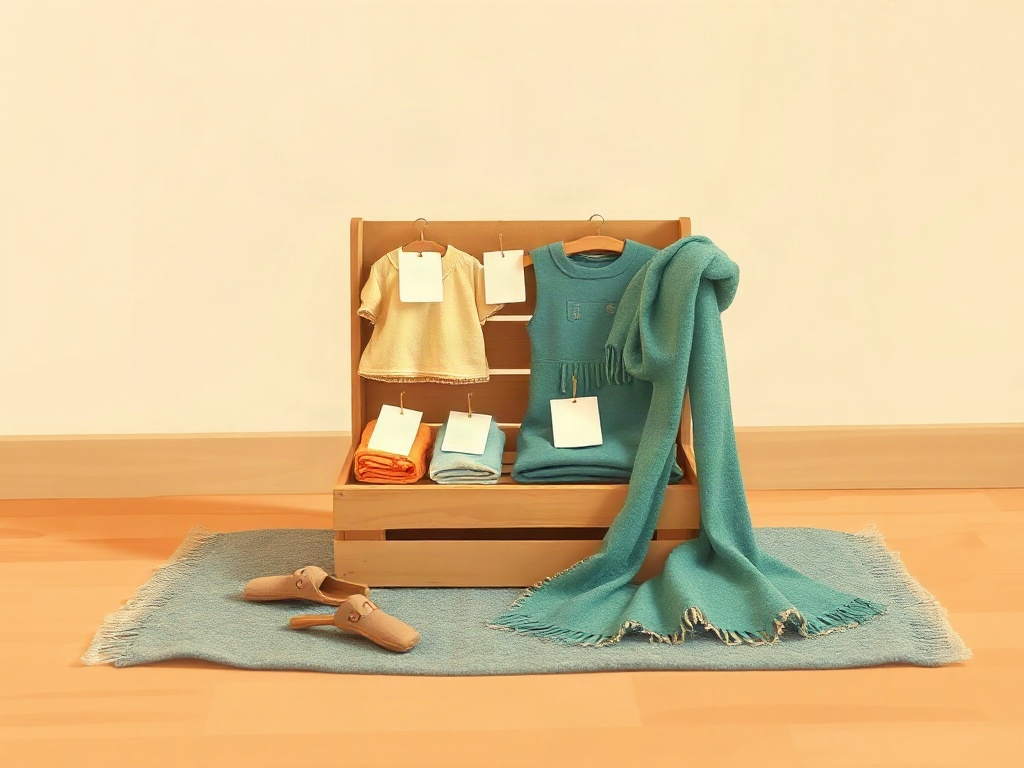
For this game you only need the "too small" pile, small slips of paper, a pencil, and, if you like, an old scarf for the shopkeeper's apron. Set aside 20 minutes; it works great with 7-to-9-year-olds and is perfect right after the first game, while the clothes are still out on the floor. Your child becomes the shopkeeper and arranges the clothes like a market stall. For each item, they write a tag with two things: who it would suit (e.g. "for a 6-year-old") and one sentence on why it's good — "warm, hood doesn't slip off." You're the customer, asking real questions: "Will this last until the end of November?", "Does it wash easily?" If your child can't think of anything good to say about an item, it's probably not fit for handing down — more likely for rags — and that's a perfectly fine outcome. It's done when every item in the bag has a tag, and your child can name at least three of them from memory, without looking.
Common Mistake: Clearing Out Without Sorting First
The most common version goes like this: you dump the entire wardrobe onto the bed and dive in. Twenty minutes later the bed is buried, your child has lost interest, and you're rushing because someone needs to sleep there tonight. In the end you shove everything back in just to clear the bed — and nothing actually got done.
It works much better if you pull out only one type of clothing at a time. Jackets first — try on, sort, done. Then jumpers. One round takes ten minutes and has a clear, visible finish line. If you don't have more than ten minutes on a given day, just do the jackets and stop there; pick up the hats the next day.
The second common mistake is promising "we'll buy new ones" halfway through the sort. That's when the child starts putting perfectly fine clothes into the "too small" pile, picturing the new ones already. If shopping is on the cards, talk about it only after the bag is tied shut.
"Raise your arms. Now crouch down. Where does it pull?" — three sentences an eight-year-old can use to decide a jacket's fate all on their own.
What to Do With the "Not Sure" Pile
Put it in a separate bag and store it away. In September, before school starts, open it first — by mid-September it'll already be obvious what's become too small for a second winter. That saves you half a shopping trip and turns the cleanout into something with a sequel, rather than a one-off ordeal.
If you want your child to see the result in numbers, count the items in the hand-me-down bag and write the number on a slip of paper with the date. Compare it next year. The number "fourteen" is far more convincing than "we tidied up."
A Small Reward That Isn't a Purchase
You don't need to pay for a job well done. The right to choose works much better: let your child decide how their own shelf gets arranged — by colour, by thickness, or by what they wear most often. If you still want something tangible, one or two euros for an ice cream on the way back from the donation point is plenty — especially since the trip there is part of the fun.