
The Fridge After Sunday Cooking: 2 Games That Get Your Child Organizing Instead of Watching TV
Sunday evening, pots on the counter, a fridge that won't close. Instead of tidying up alone, turn the cleanup into two concrete games for kids aged 7-9 — with date labels, containers, and shelves sorted by height.
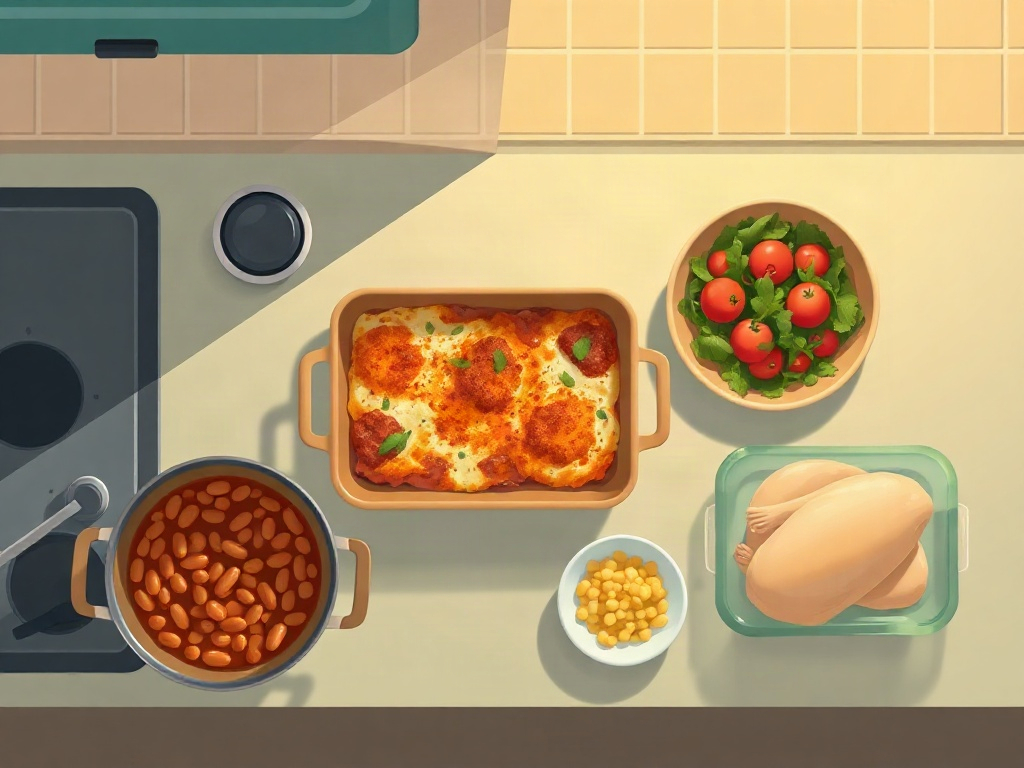
Sunday, 7:40 PM. On the counter there's a pan of shepherd's pie, a pot of beans, some leftover chicken, and a bowl of salad that won't last until tomorrow. The fridge has been open for three minutes, someone's shouting "shut the door," and on the middle shelf sits a container of something yellow that nobody remembers putting there. That's exactly the moment your child usually shows up, opens the fruit drawer, and asks when dinner's ready.
From here you have two options. One: "Move aside, you're just in the way." The other: give them the job of deciding where each container goes. The second option takes ten minutes longer for the first couple of weeks — and then saves you fifteen every week after that.
Why "help me tidy up" doesn't work
The most common sentence in the kitchen is also the most useless one. "Help me" carries no information. The child doesn't know where to start, when it ends, or how to tell they've done it right — so they pick up one container, plonk it down somewhere at the front, and wander back to the screen. It's not laziness. It's the lack of a task with a boundary.
The difference shows up the moment a task becomes checkable. "Help me" has no finish line. "Find the three oldest containers and put them at the front of the middle shelf" has an end point, a count, and a location. An eight-year-old can carry out that second sentence without a single follow-up question.
There's a second, quieter misconception too: that organizing the fridge is a matter of aesthetics. It isn't. It's a matter of height and date. A container that's an inch taller than the shelf doesn't sit there looking untidy — it simply doesn't fit, and that's a piece of physics a seven-year-old grasps faster than most adult explanations.
The prep that makes the difference — five minutes on Saturday
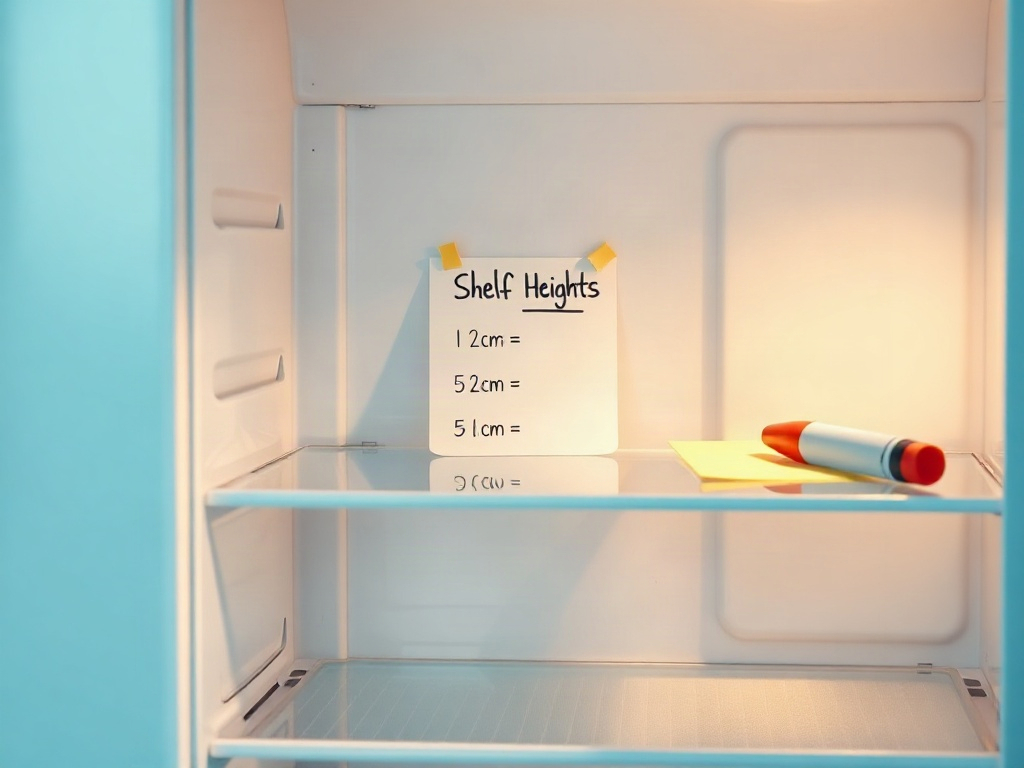
Measure the gap between shelves with a ruler and jot it down with marker on a small note stuck to the inside of the door: for example "top shelf 8 in, middle shelf 6.5 in, bottom shelf 10 in".
- Measure the gap between shelves with a ruler and jot it down with marker on a small note stuck to the inside of the door: for example "top shelf 8 in, middle shelf 6.5 in, bottom shelf 10 in".
- Set aside 6-8 containers you actually use, and sort them into two piles by height — short and tall.
- Get sticky notes or tape and a fat marker ready. Nothing else is needed; if you buy proper labels, a pack of self-adhesive ones lasts several months and costs around $2.
- Agree out loud on one rule: the oldest dish goes at the front. Everything else follows from that.
The "Date Inspector" Game
For this game you just need sticky notes, a fat marker, and the food already sitting in containers. It takes 10 to 12 minutes and suits kids aged 7 to 9. Your child gets a title: inspector. Their job is to write on each note the day the dish was cooked — not the full date with month and year, just "Sun," "Mon," plus the day number: "Sun 7." They stick the note on top of the lid, not on the side, because a side label can't be read once containers are lined up one behind another. Then the inspector goes through the whole fridge checking for anything without a label. Anything unlabeled gets pulled out onto the counter and the two of you decide together: keep it or toss it. Have your child say out loud, "this is from Tuesday, so it's older than the beans" — that sentence is the whole point of the game. They've nailed it once every container in the fridge has a readable label and they can point out, without thinking twice, which food inside is the oldest.
Height as a rule, not a question
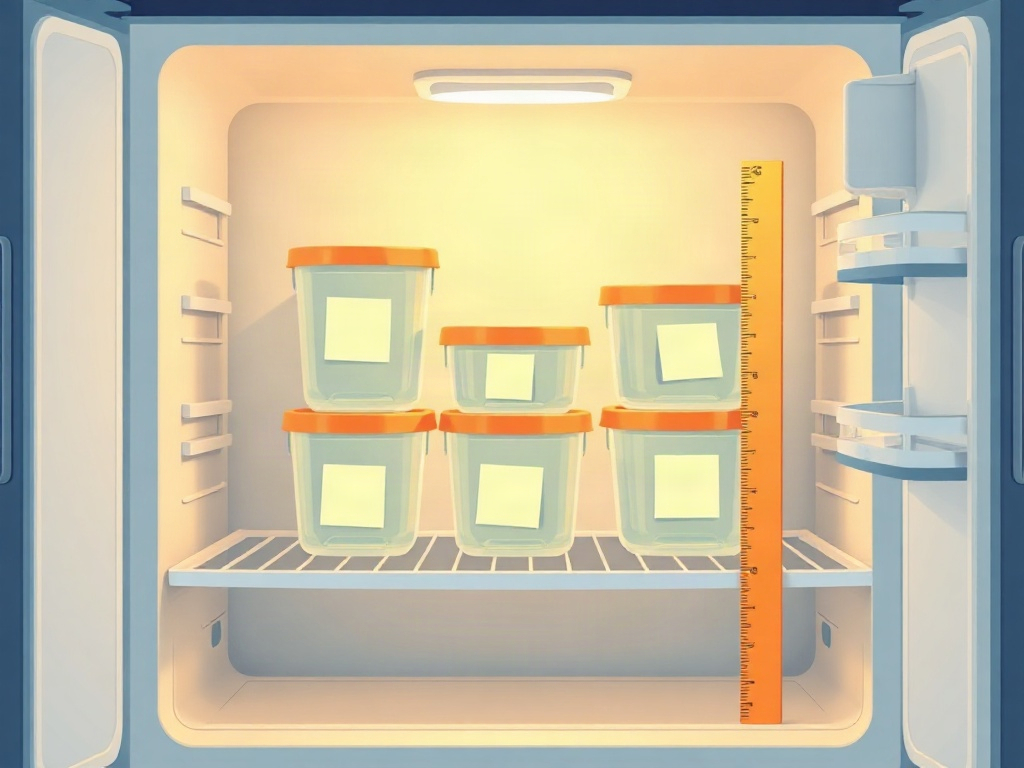
The second game is more physical and usually goes down better with seven- and eight-year-olds. The idea is simple: every container has to find a shelf it fits on standing upright, without tilting and without pressing against the shelf above. If it doesn't fit, the container "loses" and gets swapped into a different one.
The "Which Shelf Is Yours?" Game
You'll need a ruler or tape measure, the food containers, and the height note from the door. It takes about 8 minutes and suits ages 7 to 9, since it involves reading measurements. Your child measures the container, says the number out loud — "this one's 6 inches, so middle shelf" — and places it. House rule for arranging inside: tall containers at the back, short ones at the front, so everything stays visible. If a container is 7 inches and the shelf gap is 6.5, it doesn't get forced in — the food gets moved to a shorter container instead. For the top shelf, set one ban: no heavy pots up there, since your child can't reach them safely. They've nailed it once the fridge door shuts on the first try, nothing's tilting, and they can tell you which shelf matches which height.
"Mom, the beans are from Thursday and the shepherd's pie is from today — so the beans go in front." That sentence is the entire point of the exercise.
The common mistake: handing the whole cleanup over at once
A parent gets inspired, says "okay, you're organizing the fridge today," and leaves the kitchen. Twelve minutes later they come back to an open door, three containers on the floor, and a child who gave up halfway through. Then comes the conclusion "it doesn't work, he's still too young" — when actually that's not it at all.
The reason is simple: a whole fridge means forty decisions in a row. An adult makes them automatically, because they've made them a thousand times. An eight-year-old makes each decision consciously and runs out of steam around decision number fifteen. That's why the two games above are separate and short — one is about dates, the other about height. Don't run both in the same evening the first few times.
A second, subtler mistake: correcting things while the child watches. If you move a container two inches to the left the moment after they've placed it, they won't want to take part next Sunday. Leave the arrangement as they made it, as long as the door closes and nothing spills. If you genuinely need to move something — do it later, and next time just add the rule: "yogurt always goes on the door."
How to keep it going through the week
- Every Wednesday evening: 3 minutes, your child checks for any container labeled from before Sunday and moves it to the very front.
- One sheet on the door with two columns: "cooked Sunday" and "eaten." Your child checks items off — you don't write anything.
- When something gets thrown out, say it calmly and with a number: "this sat for five days, next time we'll cook less." The number teaches; the scolding doesn't.
- If you have a second, smaller fridge or a freezer, give your child just one drawer to start with — it's theirs, and they're responsible for it.
After three or four weeks, something happens that you didn't plan for: your child starts opening the fridge with a question instead of a hand. "What's the oldest thing in here?" instead of digging at the back for the newest. It's a small shift — but it's exactly the one that cuts down on wasted food at home, and you'll see it on the grocery bill by the end of the month.