
Easter Egg Games for Kids Aged 5-7: Races and Hunts for the Week Before Easter
Dyed eggs sit in the bowl until Easter and nobody touches them. Here are Easter egg games for kids aged 5-7 that turn them into a garden full of races and puzzles — with clear rules, short playtime and a definite finish.
The bowl of dyed eggs has been sitting on the table since Thursday. The kids walk past it, poke one, put it back, and ask when they can finally crack them. But there are still three days until Easter Sunday. It's exactly during those three days that the eggs do their best work — not on the table, but out in the garden.
The usual advice is to keep the eggs untouched for Sunday. But a hard-boiled egg that has spent several days out of the fridge is no longer safe to eat. So it's smarter to dye a few extra and set aside five or six as play eggs only — these are for games, never for eating, and they go in the bin once the games are over. A cracked egg on Saturday isn't a failure — it's just the next round's material. Keep the eggs meant for the holiday table in the fridge, and remind the kids to wash their hands after playing.
Why the egg is such good kit for Easter egg games for kids aged 5-7
An egg is heavy enough to feel in your hand, and fragile enough to make you slow down. For a five- or six-year-old, that combination is rare. A ball demands strength, building blocks demand sitting still, but an egg demands care — the child slows down on their own, without an adult saying a word.
And there's another thing: the rules around an egg are short. "Don't drop it" is a rule a five-year-old understands the first time they hear it. No need to explain scoring, teams and taking turns before the game has even started.
Egg-and-Spoon Relay — Round the Garden
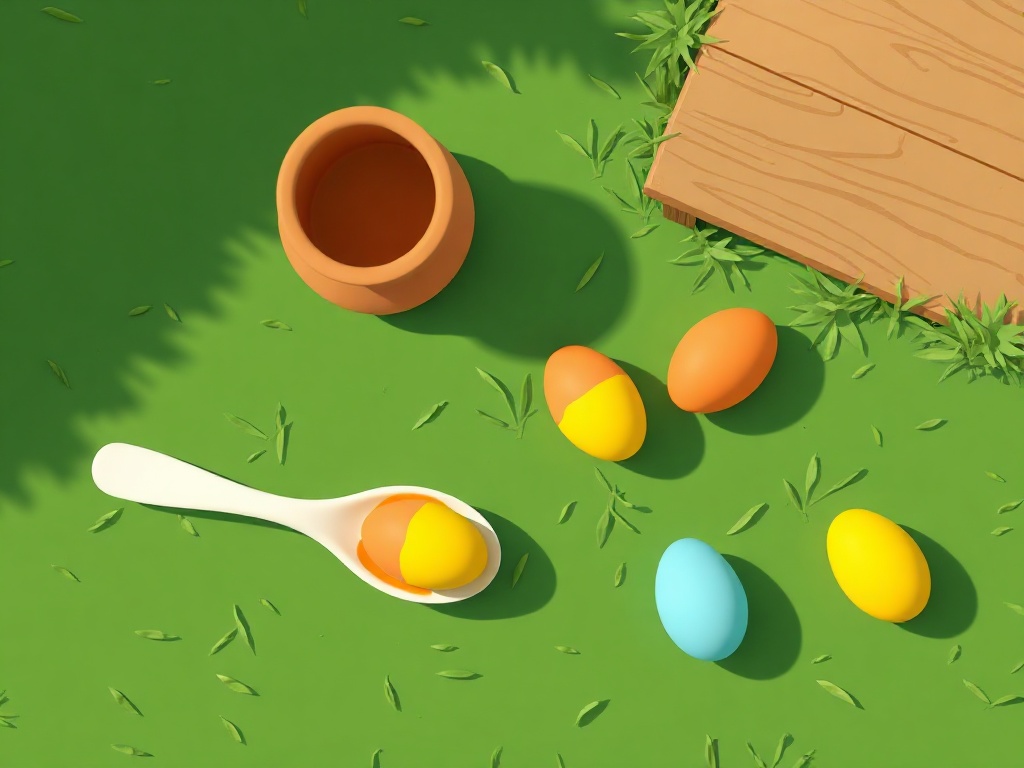
You'll need two tablespoons, four dyed play eggs (two for play, two spares), and something to mark the turning point — a plant pot, a bucket, a tree. It takes about 15 minutes, or 20 if the kids ask for a second round. It suits ages 5-7, though five-year-olds do best holding the spoon with both hands. Each child carries an egg on the spoon to the plant pot, goes round it, and comes back. If the egg falls, the child stops where they are, picks it up, and carries on from there — they don't go back to the start, or it ends in tears. Whoever's running the game counts out loud to ten between turns so nobody bumps into anyone. You've succeeded if every child has completed at least one full lap to the plant pot and back, however many times the egg fell.
If you only have one child, race against the clock instead of another person. Count out loud, the child runs the lap, and next time tries to beat their own number. A three-year age gap in the garden, though, spoils a relay — a seven-year-old will beat a five-year-old every time. In that case, give the older child a tighter course: between two chairs rather than a straight line.
What to do with the shells instead of throwing them out
Shells from dyed eggs are colourful, break into large pieces, and don't roll away. That makes them good material for sorting and hunting games — the kind of thing that works better at this age than races against the clock. The shells are craft material, not a snack.
Gather the shells in a bowl, rinse them in cold water, and leave them to dry for an hour or two on the windowsill. Then have the kids crumble them by hand into pieces about the size of a fingernail. The crumbling itself is part of the fun — five-year-olds can sit over it for a good while. Wash hands afterwards, and keep the crumbs away from any younger brothers or sisters who still put things in their mouths.
The Coloured Shell Hunt
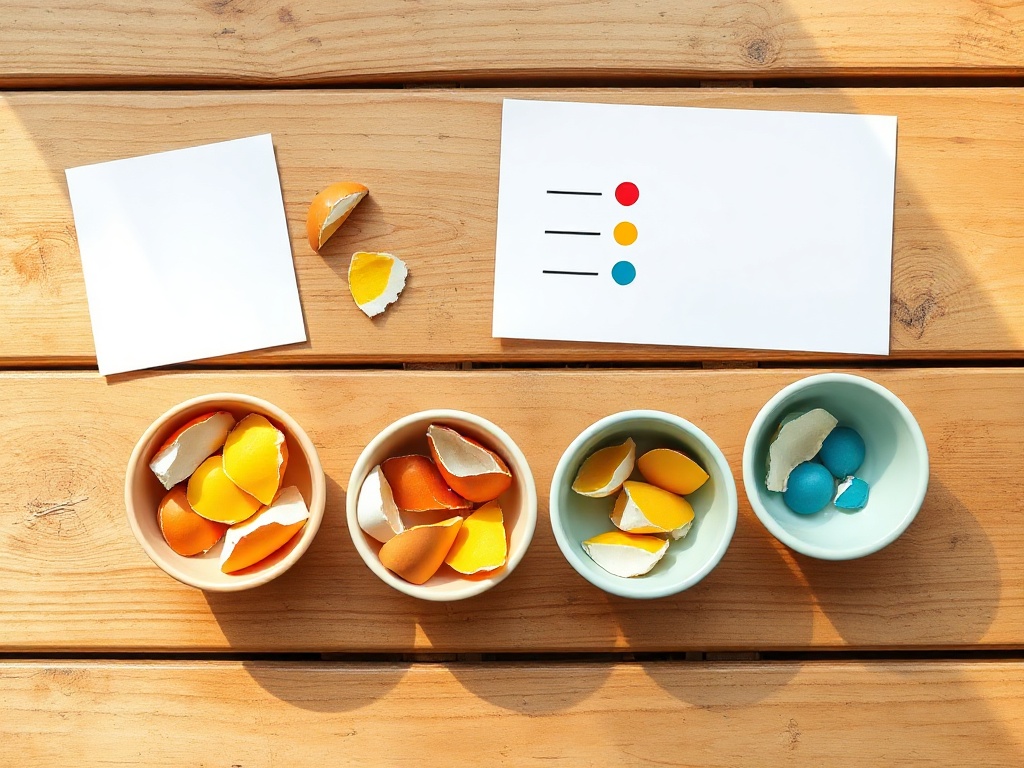
You'll need shells in at least four different colours, four small bowls or bottle caps, and a sheet of paper. Setup takes 5 minutes, the game itself about 20. It suits ages 5-7, and older kids can hide the pieces themselves for the next round. Hide three pieces of each colour around the garden — under a leaf, on the rim of a plant pot, on top of a stone. On the paper, draw four coloured dots, with a tally mark next to each for how many pieces you hid. The child searches and drops what they find into the matching bowl. The game has done its job when the child works out on their own which colour they're still missing, without being told — for instance, when they say: "I've found all the red ones, I still need two blue ones."
The game has a natural end point — the bowls fill up. That matters, because in the garden it's usually not the start that falls apart but the finish: kids don't know when they're done, and the game dissolves into aimless running about.
A common mistake: turning everything into a race
Most adults' first instinct is to say "go on then, who'll get there first". With eggs, that backfires. The child sets off fast, the egg falls on the third step, then a second fall follows, and by the fourth the child says "I don't want to" and sits down on the steps. Not because they give up easily, but because the game has put them in a spot where speed and care cancel each other out.
So flip the question: not who's first, but who made it round without dropping. Same movement, different question — and the kids last three times as many rounds. It's the one change that makes most Easter egg games for kids work in a garden. If you still want speed, save it for the last round, once the play eggs are already cracked and there's nothing left to lose.
- Don't hand over the best-dyed egg for play — the child will freeze up worrying about breaking it and won't budge.
- Play on grass rather than paving if you can; the same drop sounds completely different, and kids react to the sound.
- Don't count scores out loud in front of the younger child if the gap is obvious.
- Don't start collecting the shells while the kids are still playing — they'll take it as a sign the game is over.
- Keep play eggs and eating eggs apart from the start, and bin the play ones at the end of the day.
One day, one game — how to spread these Easter egg games across the week
Don't cram every game into a single afternoon. One thing a day is enough, and no more than about twenty minutes at that. On Thursday you dye the eggs and leave them be. Friday is the egg-and-spoon relay. Saturday you crumble shells and play the hunt. Sunday you crack the eggs that have been kept in the fridge — and that's when the race finally belongs, because there, cracking is the whole point, not a mistake.
For the first couple of years, kids will just want to hunt for shells. The hunting is the game — the sorting comes later, around age seven.
What it all costs
Easter egg games for kids cost next to nothing. A pack of egg dye is one of the cheaper things in the shop, and there's usually enough left for next year too. Everything else is already at home: spoons, bowls, a sheet of paper, old socks instead of gloves. If the child wants to help, let them pick the colours themselves while you're shopping — that's part of the fun, not an extra expense.
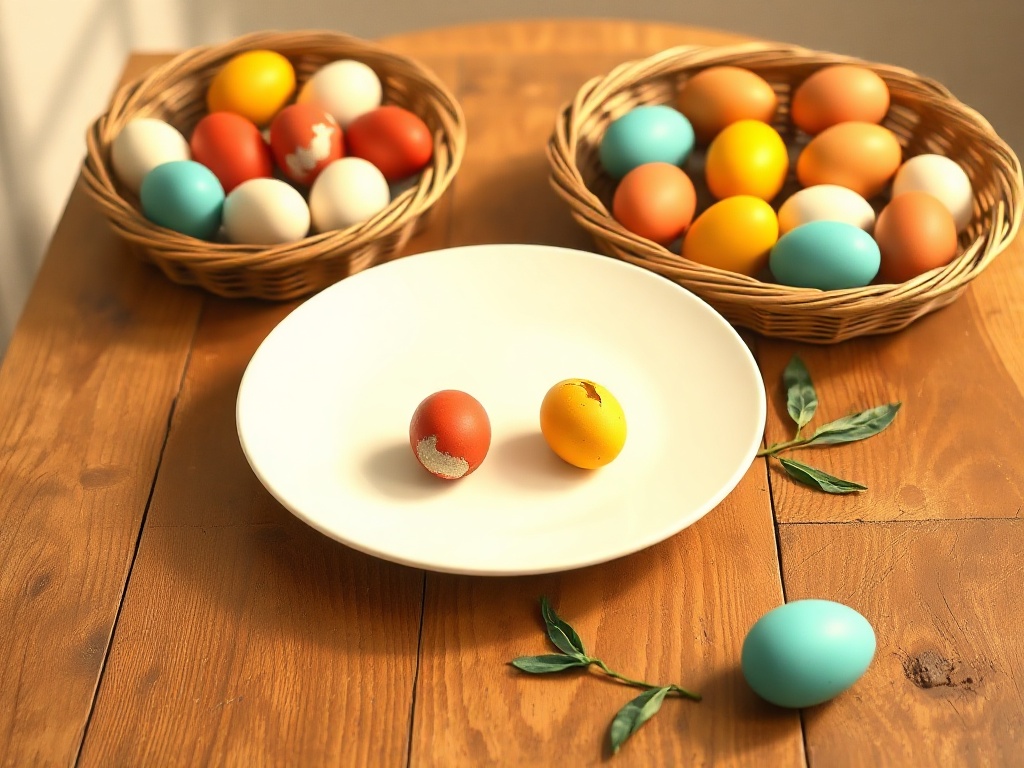
One last practical tip. Set one plate aside and put the eggs that have been through the games on it. Those don't go on the holiday table — once the games are finished, they go straight in the bin. That way nobody argues on Sunday morning, and the kids know exactly which eggs are theirs to crack and eat: the ones that stayed in the fridge.