
Twenty Minutes in the Waiting Room: What to Do With Your Child Without a Phone
Concrete games for 6-9-year-olds that work standing up, whispered, and empty-handed — for the doctor's waiting room, a queue at the counter, or the checkout line.
Number 34 on the screen, you're 41. Your child has already slid off the chair, is tugging your sleeve, and is asking for the third time when you'll go in. Your hand reaches for the phone — you know it'll buy twenty minutes of quiet, and you also know there'll be a scene later when you take it back.
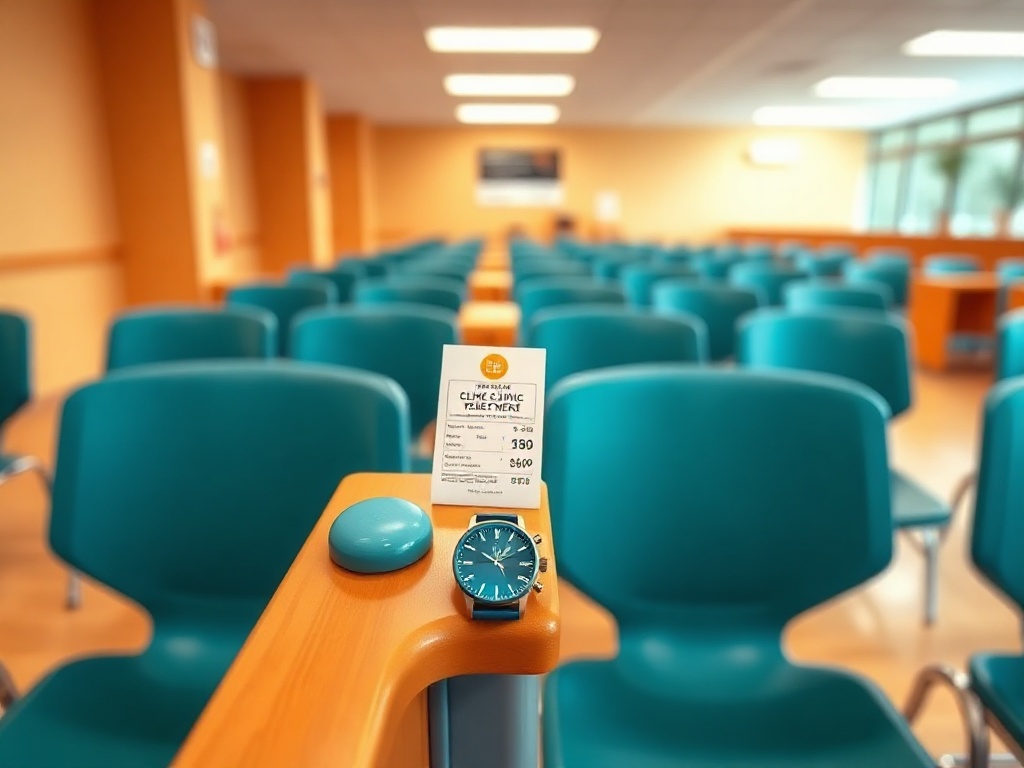
Between these two extremes — phone or "sit still" — there's a third option that rarely gets talked about. A 6-9-year-old isn't bothered by waiting itself. They're bothered by having nothing to do. Their mind is running at full speed with nowhere to put it. Give them a task with clear rules and a clear end, and twenty minutes flies by.

Why "sit still and wait" almost never works
Because it's not a task — it's a ban. You're telling the child what not to do, without giving them anything to do instead. It's like telling someone not to think about a pink elephant.
Flip the wording around. Instead of "stop fidgeting" — try "count how many people in this waiting room are wearing glasses, I'll guess too and then we'll compare." The difference is huge: the second one has a start, a direction, and a finish. The child knows when it's over and what counting as a win looks like.
There's also a practical reason the games below are built the way they are. In a waiting room you can't scatter crayons on the floor, you can't talk out loud, you can't get up and wander around. So everything here is played sitting or standing, quietly, without spreading your things onto the next chair.

Games that need nothing in your hands
Waiting Room Detective
All you need are eyes and a whisper. The game takes 5 to 8 minutes and works best for kids aged 6 to 9. Look around the room together, then you silently pick an object — the fire extinguisher, the blue handbag of the woman by the door, the clock. Your child asks yes-or-no questions only: "Is it made of metal?", "Is it bigger than my backpack?", "Is someone holding it?". Count the questions on your fingers. The goal is to guess it in ten questions or fewer, then you switch roles. They've succeeded if they guess correctly at least once and manage to phrase questions that get a yes or no — not "what is it".
This game works oddly well because the child has to think in categories, not single objects. "Is it metal" rules out half the room in one go. By the way, if you notice they're only asking "is it this" guesses, just model one broader question and they'll pick up the logic within two minutes.
One-Word-Each Story
Materials: none. Time: 7-10 minutes, longer if it takes off. Age: 6-9. There's one rule — the story is told word by word, taking turns, each person saying exactly one word. You start: "A...". Your child: "...dog...". You: "...lost...". Your child: "...its sock...". It ends up silly, and that's exactly the point. Both of you try to steer it toward some kind of ending that makes sense. They've succeeded if you reach a sentence with an ending, without either of you saying two words at once. For extra challenge with 8-9-year-olds: ban one word for the whole game — like "and".
When you have a bag and a bit of lap space
The Number Ticket
All you need is the little paper ticket with your number on it and a pen. Five minutes. For 7-9-year-olds who can already add up to 20. Take your number — say, 41. Ask: which two numbers add up to 41? Then: what about three numbers? Flip the ticket over and let your child write down the solutions. If the number is small, add up its digits instead. They've succeeded if they find at least three different number pairs on their own, without you counting out loud together.
The Finger Trail
You need your hand and your child's back, so this works when you're sitting side by side. Takes 4-6 minutes and suits 6-8-year-olds best. Trace a letter on their back with your finger — slowly, big. They have to guess it. Then a number. Then a simple shape — a circle, a cross, a wave. Once they've got the hang of it, move on to short three-letter words. Switch roles, and honestly pretend you're finding it tricky. They've succeeded if they guess five signs in a row. The game is quiet, nothing falls on the floor, and most kids physically calm down doing it.
The most common mistake: preparation that never gets used
Parents often pack the bag ahead of time — a picture book, a box of crayons, a small toy set bought for €3-4. In the waiting room, none of it comes out. Or it does, and four minutes later it's on the floor.
The reason is simple. Those things need a table, light, and space. A waiting room has none of the three, and the child has a coat on their lap and a backpack between their feet. On top of that, an object runs out of steam fast: they flip through the pictures, done. Word games and question games have no bottom — every new question opens the next one.
The other mistake is related. We save the "big" game for the moment the child has already started whining. By then it's too late. Start the game the moment you sit down, while your child is still calm and willing to join in. The first five minutes of waiting are the cheapest — that's where the rest of the half hour is won or lost.
Don't wait for your child to get bored before you start. Start before they've even realised they're waiting.
How to phrase it so it actually works
Wording carries more weight than it seems. Compare:
- Instead of "let's play something" — try "I've got a game where you have to catch me out in ten questions." The second sounds like a challenge; the first sounds like killing time.
- Instead of "while we wait" — try "until we reach number 41." The child sees the count on the screen and tracks the progress themselves.
- Instead of "okay, that's enough" — try "we've got one more round left, you choose which game." The choice pulls the child back into the game when their attention starts to drop.
- Instead of "I'll give you the phone after" — say nothing at all. Say it once, and every game after that just becomes an obstacle in the way of the phone.
What's left after the waiting room
Pick two of these games — not all of them — and make them yours. One for outings, one for the queue at the shop. By the third or fourth time, your child will be the one asking "can we play detective" as you're pulling the ticket out of the machine. That's exactly the point: turning waiting from empty time into something the two of you share.