
What to Do at Home Between 12 and 5 PM in July When It's 95 Degrees Out
Five hours cooped up indoors during the hottest part of the day aren't a punishment, as long as you have two or three games that actually hold up until the end. Here's what works for kids between 7 and 10 — and why quiet activities are the wrong move.
It's half past noon, the AC is humming, the blinds are drawn, and your kid has already circled the hallway three times muttering "I'm bored." There are still a full five hours to go until 5 PM. The tablet is the easiest way out — and that's exactly why around 4 PM there's usually a meltdown, because nobody wants to give it up.
Parenting advice for hot afternoons almost always sounds the same: something calm, something quiet, coloring, a puzzle. The problem is that at ages 7-10, a kid isn't tired from moving around — they're not tired enough. Cooped up indoors since morning, their body has nowhere to spend its energy, and coloring bottles that energy up instead of burning it off.
So this article isn't a list of twenty ideas. It's three games that genuinely hold up for 30-40 minutes each, plus one explanation of why most afternoons fall apart around hour three.
Why "something quiet" falls apart by hour three
Quiet activities run out fast because they have no finish line. Coloring ends the moment your kid gets bored of it — about eleven minutes in. A 100-piece puzzle scatters across the table and sits unfinished for three days. There's never a moment where your kid gets to say, "done, I made it."
Games that hold attention through the heat share three things: a clear goal, visible progress, and physical movement that doesn't crank up body temperature too much. We're not talking about jumping jacks — we're talking hands, walking around the house, carrying things.
The Apartment Museum
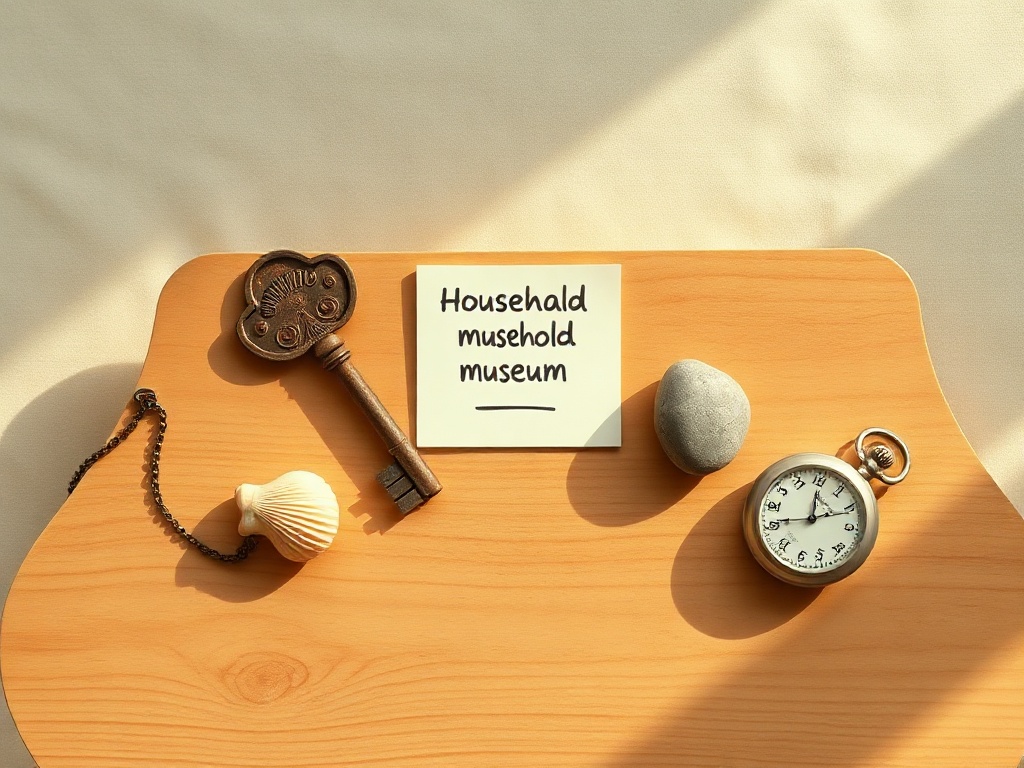
Your kid becomes a museum curator and puts together an exhibit of household objects. All you need is eight to ten objects (an old key, a seashell, a broken watch, a pebble), some paper, and a pen for the labels. It takes 40 to 60 minutes and works best for kids ages 7-10. There's one rule: every object gets a label with a name and a one-sentence story. "Grandma's front door key, used from 1990 to 2015." The stories can be made up too — that's half the fun. At the end, your kid gives the rest of the family a guided tour and talks about each piece. The activity is done when all eight objects have labels and your kid can walk through the whole tour from start to finish without skipping an exhibit.
How to make an activity last an hour instead of ten minutes
The trick isn't the game itself — it's whether there's an audience and a deadline. Say "I'll come see what you made at 3:30" and you'll get completely different behavior than "go play something." An eight-year-old works toward the moment someone's going to look.
- Give a clock time out loud, not a duration. "By 3:30," not "for half an hour."
- Don't get involved in the middle. Pop in for two minutes at the start and five at the end.
- If there are two kids, split the roles clearly — one builds, one records. Otherwise they'll fight over the same supplies.
- Leave the mess. Cleaning up mid-game kills the game.
Ice Excavation Station
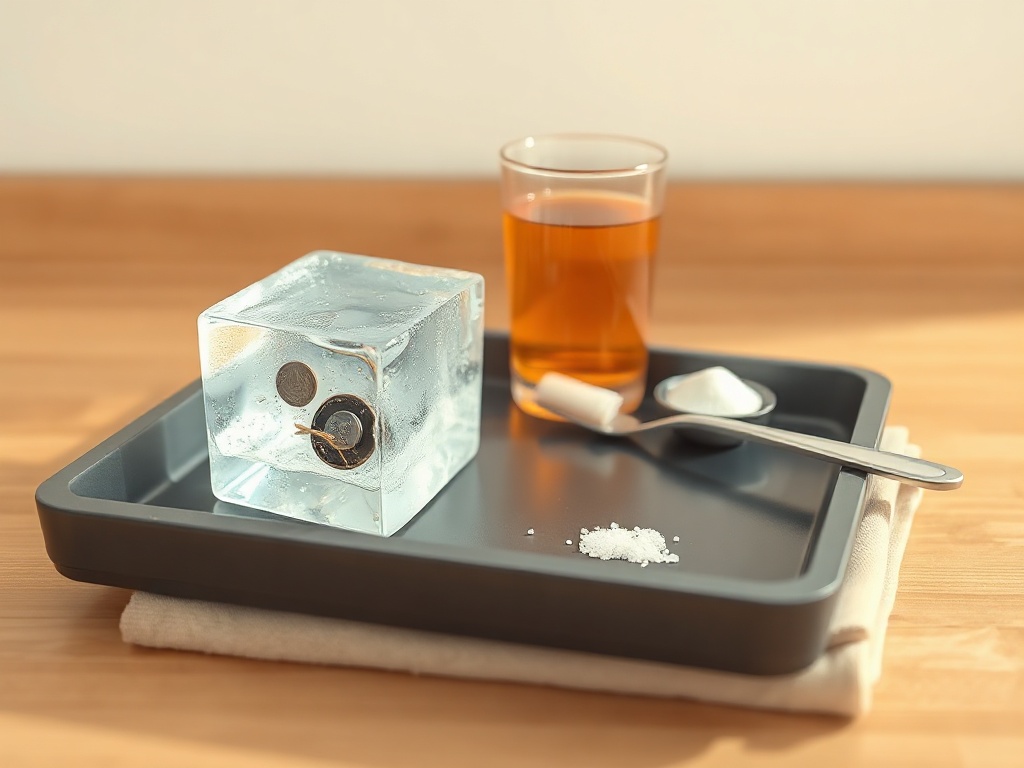
Freeze a few small objects ahead of time in cups or containers — a button, a small figurine, a piece of string, a penny. You'll also need: a tray or deep dish, salt, a cup of warm water, a spoon, a toothbrush. The game takes 30-45 minutes and suits kids ages 7-9. The task is to free the objects from the ice without smashing the block. They'll try salt, try warm water, try scrubbing — and jot down on paper which method worked fastest. Younger kids will insist "the salt is cheating" because it looks like nothing and still eats holes through the ice. Count it a success once your kid has freed at least three objects and can say which method was fastest and why they think so. Put a towel down underneath — the water is getting on the floor no matter what.
The most common mistake: screen time first, games later
The logic seems airtight — the kid's restless, you put on a movie, they calm down, then they'll play afterward. In practice, the opposite happens. After an hour and a half of screen time, whatever you suggest next sounds flat. Ice cubes can't compete with animation, and your kid isn't "spoiled" — they're just comparing.
Flip the order. Games first, while there's energy to spend, screen time as the thing that comes last. In practice that means: activities from noon to 3 PM, a movie or an episode after 3 PM. That way the screen isn't background noise, it's a landing spot — and nobody's fighting about it at 4:45.
The second common mistake is offering three ideas at once. "You could draw, you could build something, we could make play-dough." Your kid picks none of them. Give one thing, specific, with the supplies already laid out on the table.
The House's Secret Code
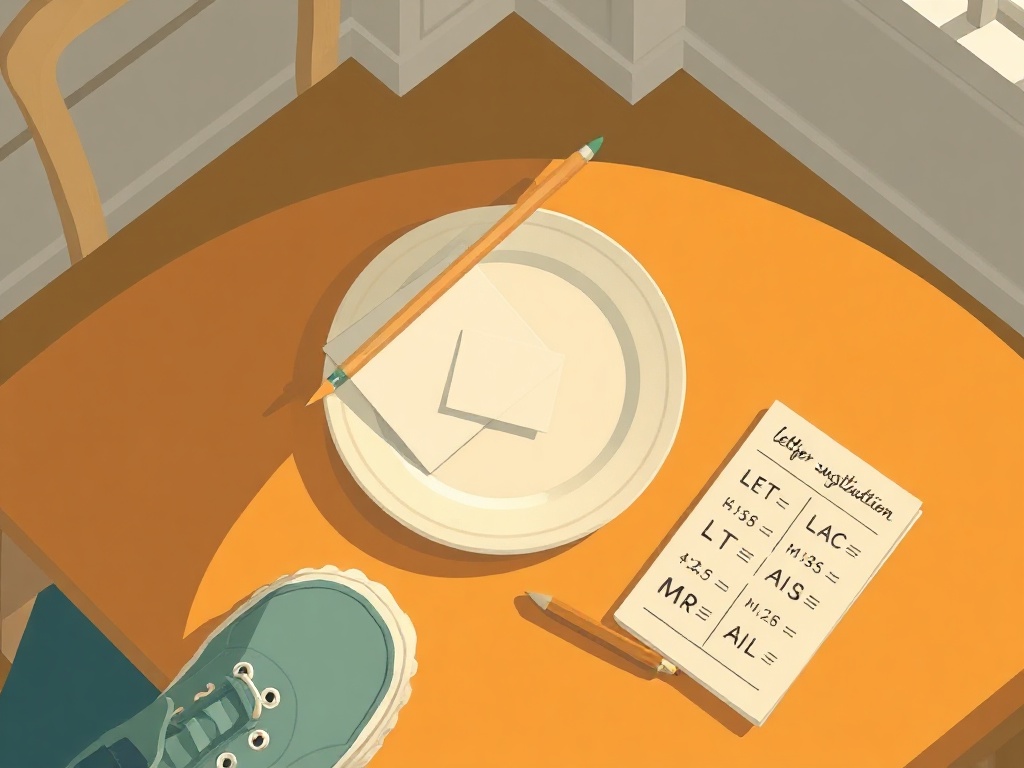
Two people (or a parent and kid) invent a cipher and write each other notes all afternoon. All you need is paper, two pens, and a code key — for example, shifting every letter two places forward in the alphabet. It keeps kids ages 8-10 busy for 30-40 minutes, spread out in chunks across the afternoon. Notes get left in hiding spots: under a plate, in a shoe, on top of the fridge. "Bring me a glass of water," written in code, takes an eight-year-old about four minutes to crack — and they'll actually bring the water, which otherwise never happens. The game succeeds once your kid decodes three messages on their own and writes at least one of their own that you're able to read.
What to have ready before the morning's even over
A hot afternoon gets solved at 9 AM, not at 1 PM. If the ice cubes aren't frozen yet, the ice game doesn't exist. If the museum objects aren't gathered, you'll be hunting for them right when your kid is at their least patient.
- Freeze the objects in ice in the morning — they need at least four hours.
- Put together a "supplies" box: paper, tape, string, old magazines, cardboard tubes. You already have all of this lying around.
- If you're buying anything, a deck of cards and a few balloons will do it — under €5 total, and they'll get used all summer.
- Close the blinds before 10 AM. An apartment that's already heated up won't cool down in the afternoon.
"I made a museum and it has eight exhibits" is a sentence that doesn't come out of coloring.
One more thing that holds true for all of July: don't try to fill all five hours. One activity before lunch, one after, some puttering around in between, and an hour of screen time toward the end is plenty. Boredom between two games isn't a failure — it's the moment your kid comes up with something on their own, as long as you don't hand them a phone right then.