
15 Minutes in the Bakery Line: Games That Keep Your Kid on Their Feet and in a Good Mood
The bakery in the morning, five people ahead of you, and a kid who's already starting to fidget. Here are three games that work standing up, with no props and no phone — plus one common mistake that ruins them.
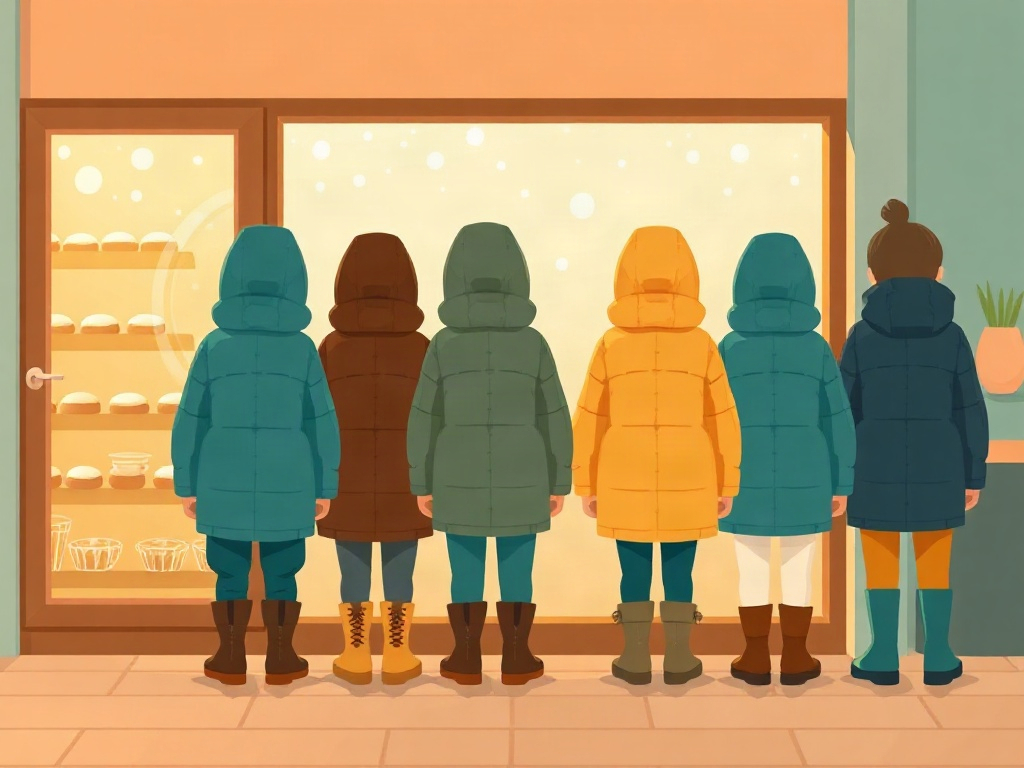
The bakery door opens and inside it's warm, smelling of cheese pastry and something sweet. Ahead of you — six backs in winter coats. Your child has already unzipped their jacket, tugs at your sleeve, and asks for the third time when it'll be their turn. Outside it's 25°F, the clock reads 7:42, and school starts at 8:00.
The usual move is the phone. It buys five minutes of quiet, then costs double that when you have to take it away — right when you're at the counter and need to order. But a queue has something few everyday moments have: it repeats almost daily, lasts roughly the same amount of time, and has a visible end. That makes it a great place for a child to practice waiting — as long as the game you give them also has an end.
We're talking about kids between 5 and 7 here. Younger ones can't hold a rule for more than a minute or two, and eight-year-olds find these games too babyish and will say so out loud.
Why distraction doesn't work, but waiting with a purpose does
The difference is simple. Distraction tells the child: "don't think about waiting." A game with an end tells them: "we're doing this until we reach the counter." The first one collapses the moment you take the distraction away. The second ends naturally — we arrived, the game's over, we order.
That's why each game below is tied to the queue itself. We count the people ahead of us. We look at the display case we're heading toward. We listen to the sounds coming from right where we are. There's no way to carry them home, and no need to.
Case Under the Magnifying Glass
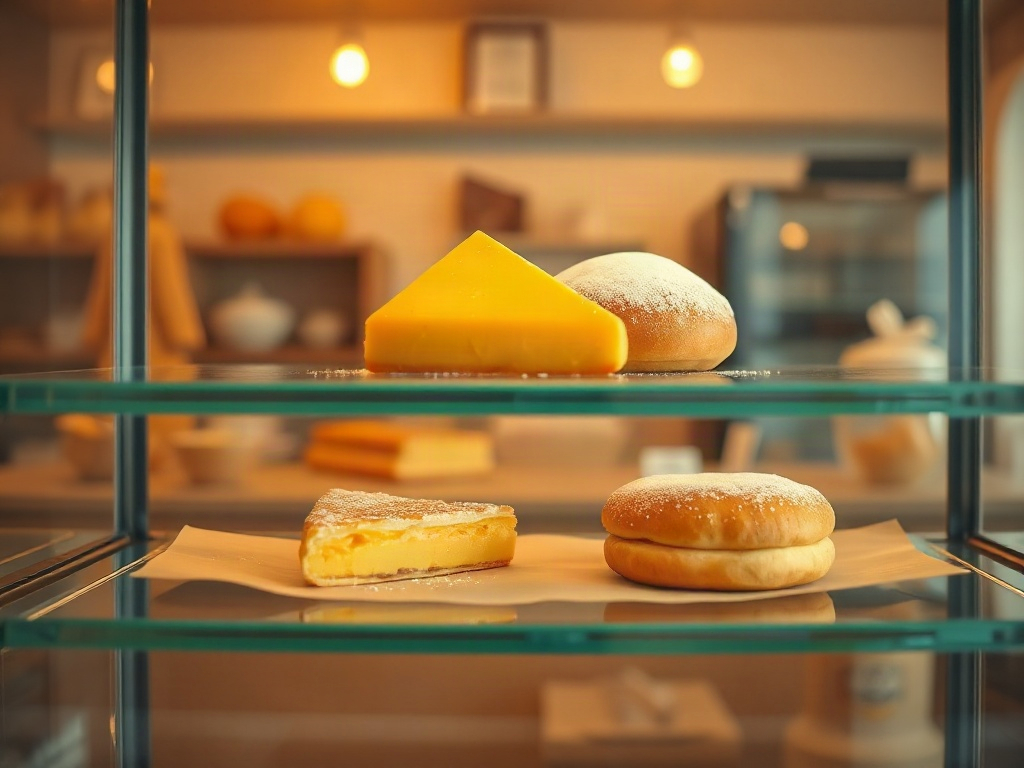
You need nothing but the display case in front of you, and maybe one fingerprint circle on the glass — only on your side, not someone else's. The game is for ages 5-7 and fits neatly into 4-6 minutes. You say something you can see in the case without naming it: "I see something triangular and golden." The child scans with their eyes and guesses — a cheese pastry. Then it's their turn, and they give you a riddle: "I see something with white on top, like snow." (powdered sugar on the pumpkin pastry). The rule that holds it all together: no pointing, no shouting — just whispering. The game's a success if the child has posed at least two riddles on their own, without prompting, and has resisted running up to the case.
How Many Backs to the Counter
All you need is the people ahead of you and your child's ten fingers. For ages 5-7, it takes 3-4 minutes and refreshes itself. The child counts how many people are ahead and holds up that many fingers. Then, each time someone grabs their bag and leaves, they put down a finger and whisper the new number. Ask along the way: "If one more person joins the line behind us now, what place are we in?" For six-year-olds, add: "How many more need to leave for us to be first?" It's a success if the child notices on their own that someone has left and lowers a finger before you've said anything.
The game for the coldest mornings, when nobody wants to talk
Some days your child is sleepy, their hat's slipped over their eyes, and every word from you gets a grunt in reply. That's when riddles don't take off. What works then is something that doesn't require talking — just listening.
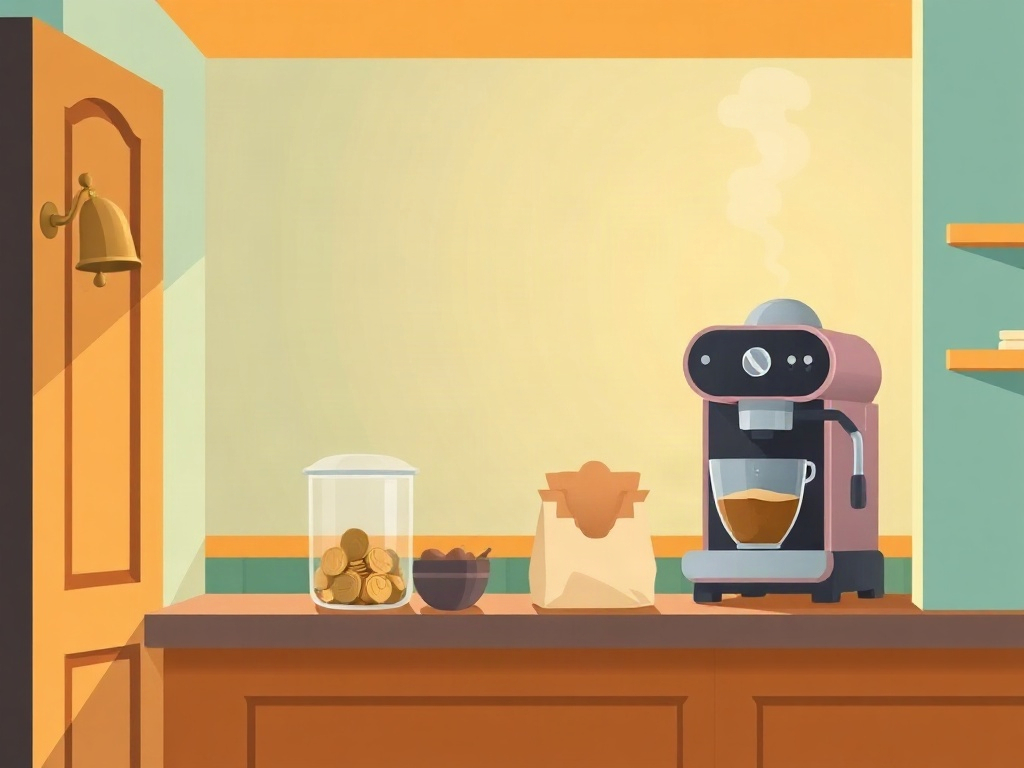
Say quietly: "Close your eyes for a count of ten and remember three sounds." Then, when they open their eyes, list them together: the espresso machine, the bell on the door, someone coughing, a plastic bag rustling, coins in the till. Three is enough. If they catch a fourth — say it out loud and keep going. Two minutes total, but those exact two minutes usually turn the mood around.
The common mistake: the promise "if you behave, I'll get you something"
The temptation is huge, and it comes out as: "Stand still and I'll get you a croissant." The problem is that this turns waiting into a bargain, and bargains get renegotiated. The next morning your child already knows the price and starts from the other end — first they want the croissant, then they decide how long they'll wait. And the day you say "no," you end up with a meltdown right at the counter, with eight people behind you.
A sturdier approach is deciding on the snack before you walk in, independent of behavior. "Today we're getting one pastry and one ayran" — said on the sidewalk, before the door. If your child has their own pocket money, the limit is set in advance and counted outside: "You have €2, see what fits in that." Then the queue game stays a game, not an exam with a prize at the end.
A second mistake, smaller but annoying: starting a game that can't possibly finish on time. Counting to a hundred, twenty-questions riddles, a story to be continued. You reach the counter halfway through, cut it off, and the child feels cheated — rightly so. That's why every game here runs under six minutes and wraps up cleanly.
How to keep it all from falling apart right at the counter
- Give a warning: "Two more people and it's us — this is the last riddle." Kids hate being surprised by an ending.
- Give them one job at the counter: to say "good morning" or to hand over the coins. Hands that have a task don't tug on sleeves.
- Keep the hat and gloves in your pocket, not in their hands — otherwise the game turns into picking up dropped things.
- Don't take the jacket off inside, even if it's warm. Five minutes later you're back out in the cold, and zipping up takes longer than the wait did.
"Two more people and it's us." One sentence, said at the right time, saves more than any game can.
After two or three weeks you'll notice something curious: your child starts counting the backs ahead of them on their own, before you've even suggested it. That's the whole point. You haven't filled fifteen minutes for them — you've given them a way to get through those minutes themselves.