
30 Minutes of Evening Reading and Writing: How to Turn It Into a Game (Ages 7–9)
Reading and writing homework isn't fixed with rewards at the end, but by changing the task itself. Two ready-made games and clear rules for weeknight evenings, Monday through Friday.
It's 6:40 pm. The notebook is open to a page with twenty words to copy, the child is gripping the pencil like a shovel, and has already gotten up for water three times. You say, "Fifteen more minutes and we're done." They answer, "But I can't write that much." You're both right — and you're both stuck in the same Friday-night rerun of Monday.
The usual advice here is to promise something nice at the end: a cartoon episode, ten minutes of tablet time, a sticker on the fridge. That works for exactly as long as the reward lasts. By the third evening, the child is already negotiating the price instead of doing the task. A more honest approach is different: if the task is boring by design — twenty identical words in a column — no reward will make it interesting. You change the task.
Why the end-of-task reward backfires
When the reward is external, the child starts counting. How many words for how many minutes of screen time. And since counting is easier than writing, that's where their attention goes. You'll see it in one very specific sentence: "What if I only write ten — do I still get to watch?" From that point on, you're not helping with homework, you're negotiating.
The other reason is more practical. A child aged 7–9 rarely holds up for half an hour in the same kind of effort. Copying is manual work — holding the pencil, pressure, lines, spacing between letters. After twelve to fifteen minutes the hand simply gets tired and letter quality drops. If you push on, the child learns that writing is something that hurts. That's why the 30 minutes get cut up, not stretched out.
Split the half hour into three parts
- The first 10 minutes — the hardest part, while the mind is still fresh. Regular writing: words, sentences, copying.
- The middle 8–10 minutes — a game that does the same job, using different muscles. This is where the two games below come in.
- The last 8–10 minutes — reading aloud, but not necessarily from the textbook. It could be a recipe, game instructions, a shopping list.
- Between parts — one minute standing up. Carrying a glass of water to the kitchen works better than "take a break."
The Mistake Detective
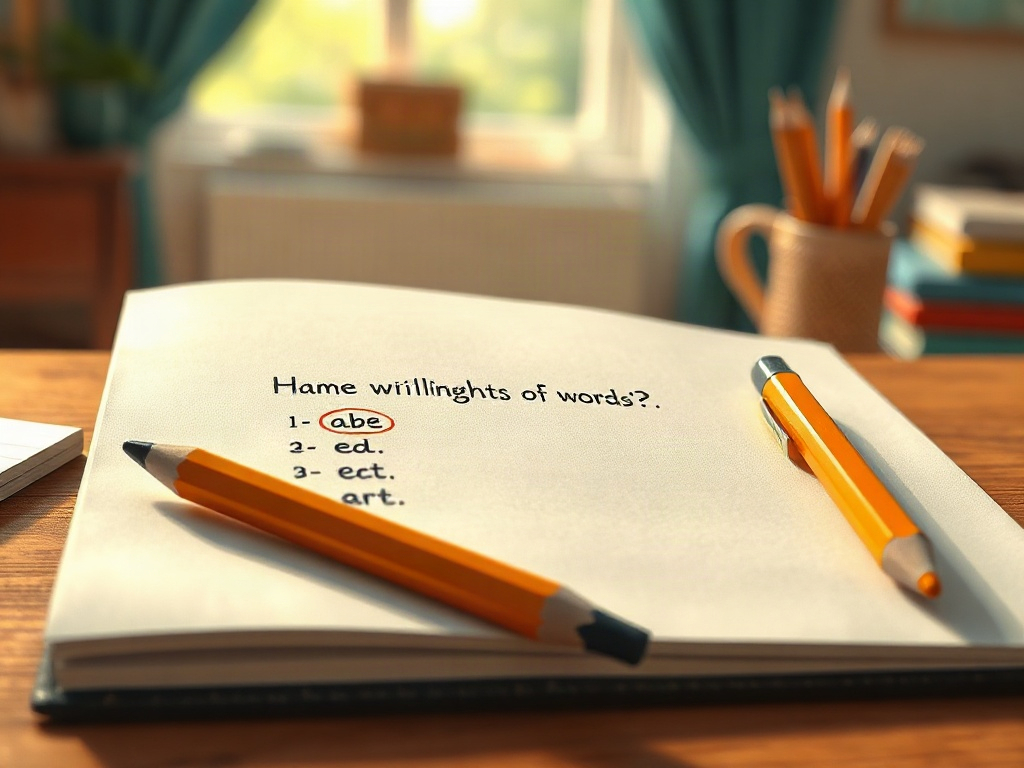
All you need is the notebook, a pencil, and a sheet of paper. You copy out five sentences from the lesson, but deliberately get them wrong — six mistakes in total: two missing capital letters, two swapped letters within a word, one missing full stop, one word written without a needed space. The child is the detective and has a pencil in a different colour. For every mistake found, they circle it and write the correct form above. It takes about 8 minutes, suits ages 7–9, and for younger children cut it down to four mistakes. It counts as a win when the child finds at least 4 out of 6 mistakes and explains out loud why it's wrong — not just "this is wrong here," but "this needs a capital letter because it's the start of the sentence." If they find a mistake you didn't make on purpose, they earn the right to make up the next sentences for you.
The difference from plain copying looks small but matters: the child reads carefully because they're hunting for something, and writes only a little, but precisely. The hand doesn't get tired, and the eye learns to spot a missing full stop — exactly the thing that costs them points in dictation later.
Three Words and a Lie
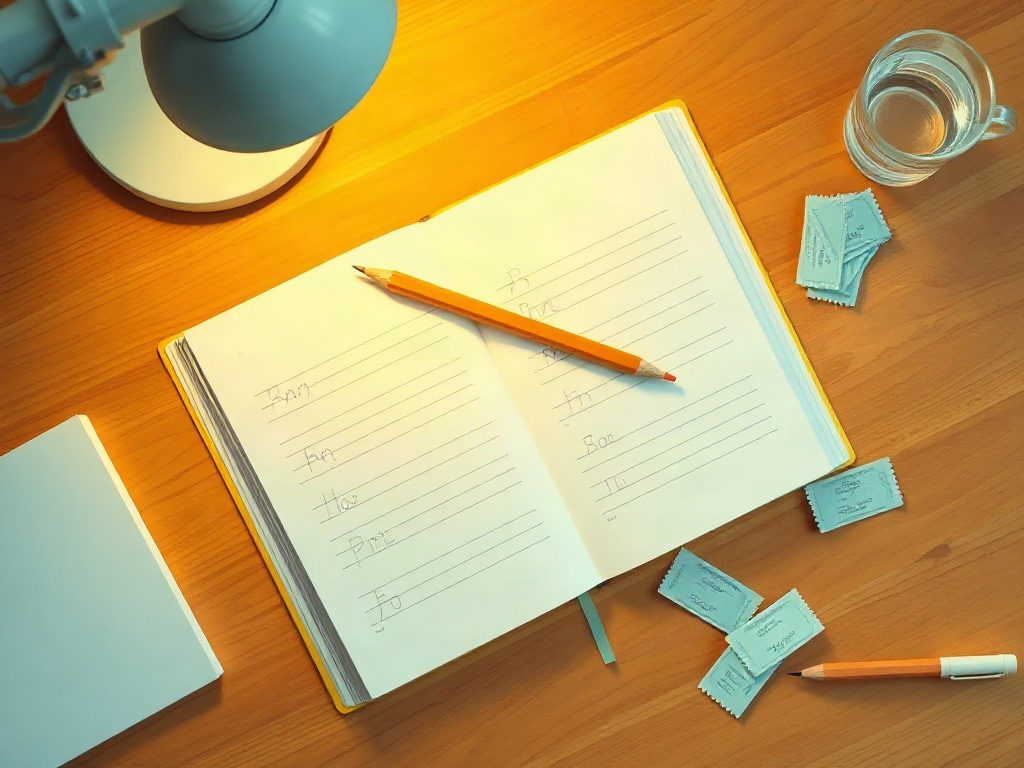
You'll need six slips of paper the size of a bus ticket and a pencil. On three of them, the child writes one word each from the lesson — for example "milk," "path," "dinner." On the other three, you write a short sentence using one of these words correctly, and one where it's used nonsensically ("I drank a path."). Shuffle them and have the child read aloud, saying "true" or "lie" after each sentence and correcting the false one. The game takes 10 minutes and suits ages 7–9; for younger children use shorter words from the lesson. It's a success when they read all six slips aloud without stumbling and correct at least two of the lies with a sensible sentence. Keep the slips in a box — after two weeks you'll have a ready-made deck for review before a test, without writing anything new.
The most common mistake: sitting across from the child like a second teacher
Many parents sit across the table, watch the hand, and correct on the fly: "Not like that. Erase it. Erase it again." The evening turns into a second lesson, except with the person the child usually comes to for a break. The result is predictable — the child starts hiding the notebook or saying "we don't have homework."
The opposite works better. Sit beside the child, not across from them, and correct one thing per page, not eight. Decide in advance what you're focusing on that week — say, just capital letters. Leave everything else alone. Next week it's word spacing's turn. The child can't fix everything at once, and you can't watch everything at once without becoming unpleasant to be around.
Second common mistake: doing homework at 8:30 pm "whenever it fits in." For 7–9-year-olds, the difference between 6:30 and 8:30 is huge, and it shows in the handwriting. If the evening is packed, 15 minutes before dinner and 10 after is better than half an hour before bed.
If after thirty minutes the child is angry and the notebook is full — the evening was a loss. If it's half full but the child says, on their own, "let's do one more" — you're ahead.
What to do when nothing's working
- Stop at minute 12, not 30. Unfinished homework with a note to the teacher does less harm than forty minutes of tears.
- Have the child dictate to you instead of writing. You write, they spell it out letter by letter — same spelling practice, no tired hand.
- Change the surface: a whiteboard, a window with a wipe-off marker, chalk on the balcony. Writing big is easier than writing small in a notebook.
- Save the last five minutes for reading the child chooses themselves — a comic, labels on packaging, a recipe. The goal is fluency, not content.
One note on expectations across the year. The school year starts in mid-September and by the time it ends in mid-June there are about thirty-six weeks of evenings. There's no way all of them will be good ones. Aim for four decent evenings out of five — that's enough to keep reading moving forward.