
Airport Games for Kids: Surviving an Hour and Forty Minutes with a 5-7 Year Old at 5 AM
Practical airport games for kids to fill the wait before your charter flight to the seaside — no screens, no running between gates, and no queue of frayed nerves. With ready-to-use lines and a clear sign that the game has worked.
It's ten past five in the morning, the departure hall smells of coffee, and your child is hanging off your arm repeating "when are we leaving". Boarding is an hour and forty minutes away. This is exactly the moment most parents pull out the phone — and exactly where the mistake begins, because after twenty minutes of screen time the child ends up more irritable than before.
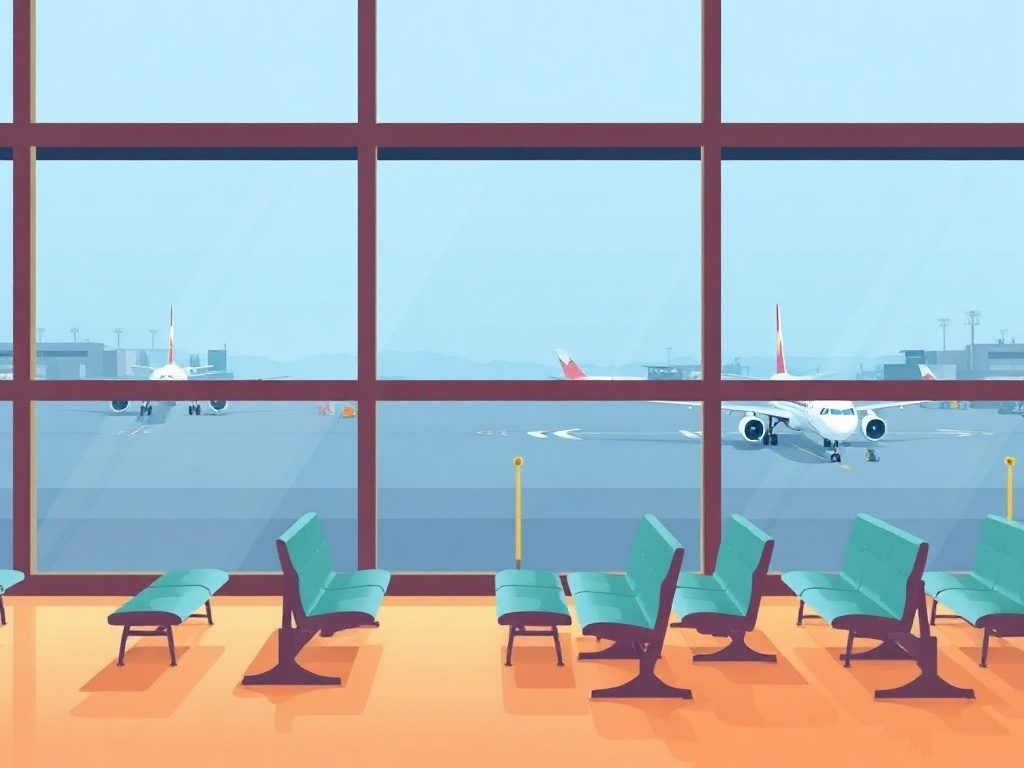
The airport games for kids below are for children between 5 and 7 — old enough to sit and play with words, but not yet reading fast enough to entertain themselves with a book. And they're for a very specific situation: an early July charter flight, an under-slept child, hand luggage, and zero room to run around.
Why "tire them out with a walk" doesn't work at 5 AM
The logic sounds reasonable: the child has energy, let them burn it off, then they'll sit still. In practice the opposite happens. A child who's just been woken up at half past three isn't full of energy — they're in that jittery state that looks a lot like energy but is actually sleep deprivation. Wandering between gates winds them up even more, and running around in an enclosed space ends with a collision into someone's suitcase and a "don't do that" repeated five times at full volume.
The other thing that doesn't work: games with points and a winner. At this hour, losing hits hard and the tears come instantly. So all the airport games for kids below skip the scorekeeping and skip the loser.
The goal isn't maximum fun. The goal is for the child to stay seated next to you, calm, and make it onto the plane without a meltdown. That's a completely different task.
The window game: guessing where each plane is going
If you've got a seat by the glass, this is the cheapest way to burn forty minutes. You look outside and make up stories about every plane that moves. There's no right answer, and no reading required.
Where's That Plane Going?
All you need is two seats by the window and a view of the runway. The game runs twenty to forty minutes and suits children aged 5 to 7. Take turns: one of you picks a plane, the other invents who's flying in it and why. "That yellow one has a man carrying a cake for his granny." Then swap roles. If the child gets stuck, help with a question — what's in the luggage, is there a dog on board, did someone forget their hat. It's worked when the child points to the next plane on their own and starts the story without being asked.
A quiet sitting-down game: "I Spy Something..."
The classic works at the airport too, with one tweak — not by colour, but by sound and detail. A departure hall is full of identical grey things, so the colour version runs out of steam in three minutes.
I Spy Something That...
Materials: nothing — just the two of you and somewhere to sit. Duration: 10-15 minutes, can be repeated calmly two or three times. Age: 5-7. How to play: you say "I spy something round and smaller than my palm", the child searches and points. Then it's their turn. For younger ones, drop a hint every ten seconds; seven-year-olds get none. It's worked when the child comes up with a riddle you can't guess on the first try.
When the child no longer wants to play
There comes a moment — usually around the forty-minute mark — when nothing lands. Don't offer a third game. Give them a job instead.
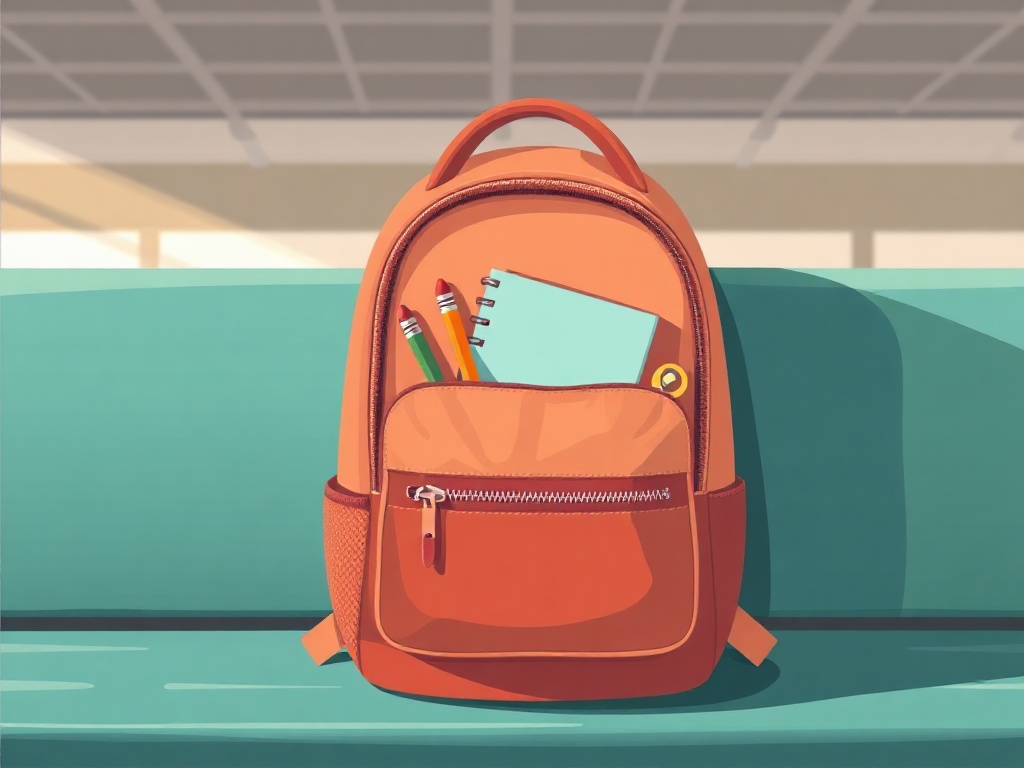
- "Keep an eye on the backpack, I'm off for some water. I'll be watching you from over there." — the child gets a role, not entertainment.
- "Tell me the moment our flight number shows up on the screen." Point out the flight number and let them track it. This often holds their attention for a good fifteen minutes.
- "Pick which treat we'll get at the seaside tomorrow." The choice is between two options you've already decided on, costing €1-2.
- Quiet counting: how many yellow suitcases roll past while we wait. No prize, just a number to report to Dad afterwards.
It's worked when the child starts reporting back to you without being prompted — the flight number, the suitcase count — because that means they've taken the job as their own.
The common mistake: the phone as the opening move
Many parents hand over the tablet the moment they clear the baggage check, just to buy some peace. The problem isn't the screen itself, it's the order. If the screen comes first, everything after it feels boring — no word game can compete with animation, and the child knows it. The result is that trying to take the phone back triggers a scene right at the gate, in front of a hundred people.
The reverse order works better: games first, and the screen saved for the last twenty minutes before boarding, or for the flight itself, when you'll be sitting still anyway. That way it's a tool, not a life raft thrown overboard too soon.
A second common mistake: promising a time. "Just a bit longer and we'll go" means nothing to a five-year-old, because they have no sense of how long "a bit" is. Only something visible works — "when that clock hand reaches the top" or "once we've finished the croissant and played two games".
The child doesn't ask "when are we leaving" to find out the time. They ask to check whether someone is in control of the situation.
What to pack the night before
Not a bag of entertainment, but three things that come out fast and take up no space. Pack them together with the child the evening before — the packing itself is half the preparation, because by morning they already know what's inside.
- A small notepad and two pencils. Not a box of thirty felt-tips that will spill under the seats.
- A piece of string or a shoelace — enough for ten minutes of knots and shapes.
- A snack that doesn't crumble or smell strong. Pretzels and water do the job.
And one thing that isn't an object: a story to tell. About last summer, about the first time you ever flew, about grandma and the seaside. A story told out loud holds a five-year-old's attention longer than any toy, and needs nothing but a voice. It's worked when the child is the one who opens the bag in the departure hall and knows exactly what they're reaching for.
The final twenty minutes before boarding
This is the hardest stretch — the queue has already formed, everyone's standing, and the child is tired. Games don't work here. A heads-up does: "In a minute we're going to stand up, we'll wait in line for about ten minutes, you'll carry your own backpack and hold onto my belt." Three concrete things, said before they happen. The child enters the queue with a script already in hand, not with a surprise. It's worked when the child stands up and picks up their backpack without being told twice.
One more thing: don't rush to board first. If the flight has assigned seats, five extra minutes sitting in the hall are worth more than five minutes standing in the jet bridge.