
The Child Is Afraid to Get Their Face Wet: Bath and Pool Games Before Swim Lessons (Ages 5–7)
The child screams the moment water reaches their face, and swim lessons start in early October. Here's a three-step plan of bath and pool games where the child decides for themselves when water gets to touch their face.
It's Saturday evening, the tub is full of bubbles. You say, "Tip your head back, I'm just going to rinse you off." Before the first cup of water even touches her, Mila squeezes her eyes shut, hunches her shoulders up to her ears, and shouts, "No! It'll get in my eyes!" There are three weeks left until the first swim lesson, and you're already wondering whether there's any point going at all.
This piece is for children aged 5 to 7 — the final year of preschool and the start of first grade, when many families sign their child up for their first swim course. Younger children need a different approach, and older ones have usually already been through this stage.
Why "they'll get used to it" doesn't work
The most common advice is: "Just pour water on them, they'll get used to it," or "The coach will sort it out." But a child who shouts "No!" is rarely scared of the water itself. What scares them is not knowing when it's coming or how to stop it. When you pour water on them by surprise, they learn exactly the opposite of what you want. They learn that water on the face arrives without warning, from someone else's hand.
So flip the order. The child gets control first, and the water comes second. Every game below follows one shared rule: the cup, the watering can, or the decision to dip their head is always in the child's hands. Your job is just to invent the game and count.
"I say when. And I say stop." Have your child repeat this before every game, until it makes them giggle how often they're saying it.
What the three weeks before lessons start look like
If you start in mid-September, three weeks with two or three short games a week will be plenty. By the end of the plan, you'll know exactly where your child stands — and you'll be able to sum it up for the coach in a single sentence.
- Week one: bath games where water reaches the hands, shoulders, and the back of the neck. The face isn't required yet.
- Week two: still in the bath, but now the child pours water over their own forehead and blows bubbles into the water with their mouth.
- Week three: one or two visits to a pool's shallow end, purely for play — no "lessons" involved.
Bath games where the child holds the cup
Rain Boss
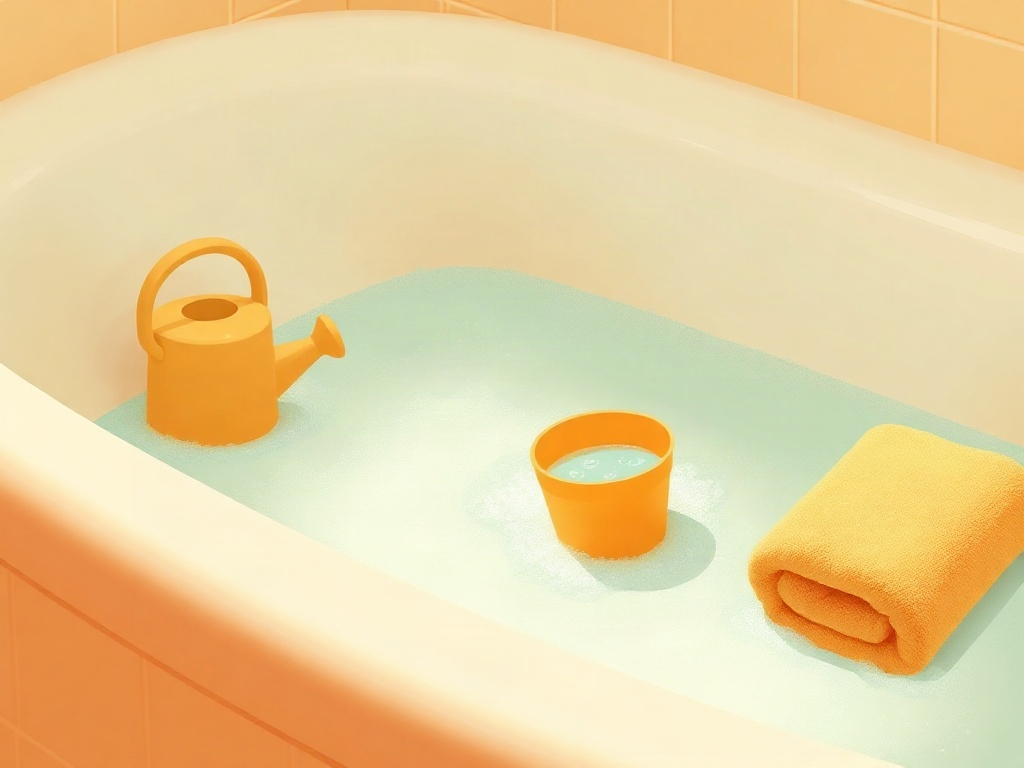
You'll need a plastic cup, a small play watering can if you have one, and a dry towel folded over the edge of the tub, in plain sight. The game takes about 10 minutes and suits children aged 5–7. The child is the "boss of the rain" and decides where it falls. Start with the palms, then move to the knees, shoulders, and the back of the neck. You just ask, "Where should it rain now?" When the child themselves suggests the forehead, count together "one, two, three," and they pour half a cup. If they say "stop," you stop immediately, even mid-count. Call it a win if, at least once, they choose on their own to pour water over their forehead or the top of their head and wipe their face with their hand instead of reaching for the towel.
When the water reaches their eyes, you'll hear "It stings!" or "I can't see anything!" Don't reach for the towel. Say calmly, "Blink three times and wipe your hand down your face." After a few evenings, the child will start doing this on their own, without being reminded.
Bubbles for the Fish
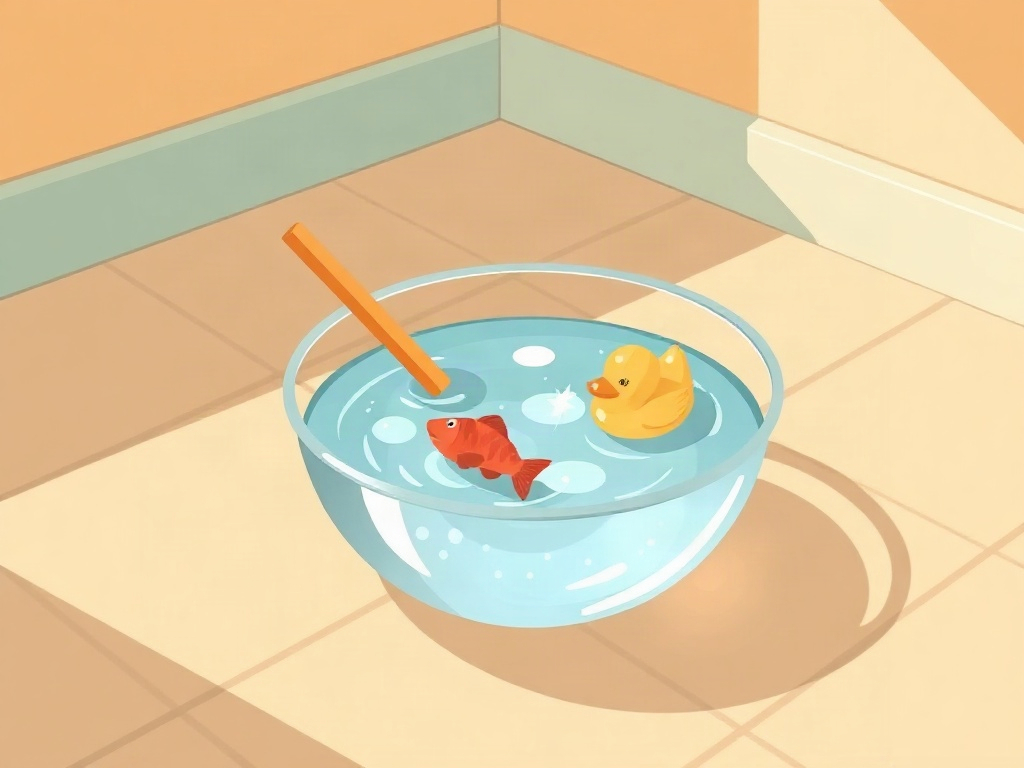
You'll need a straw, a plastic bowl of water, and a rubber fish or duck. The game takes about 8 minutes and suits children aged 5–7. First, the child blows through the straw into the bowl to "wake up the fish." Then they set the straw aside and blow bubbles directly, with just their lips touching the bathwater. You count out loud to three. The next step is the chin in the water, then the mouth and nose. If they want, the child can raise the count to five themselves. Call it a win if they blow bubbles with their mouth in the water for a count of three, and lift their head calmly rather than snapping it up in tears.
Bubbles do more work than they seem to. While breathing out, the child physically can't inhale water, and their body registers that without you having to explain it. It's also the exercise most swim lessons start with, so the child will already recognize something familiar on day one.
One pool game before the first lesson
Treasure on the Steps
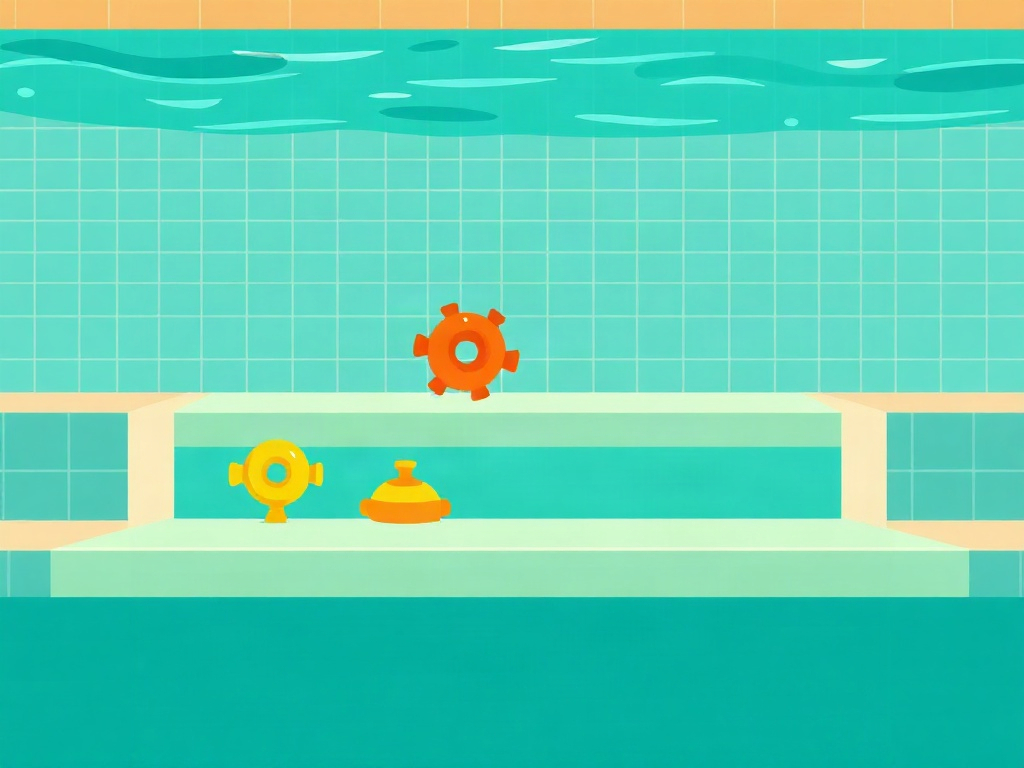
You'll need three or four brightly colored sinking toys. Colorful plastic spoons or aquarium pebbles work too, as long as they're big enough. Swim goggles are optional. The game takes about 15 minutes in the shallow end of the pool and suits children aged 5–7. Line up the "treasures" on the steps: the first at knee level, the second at waist level, the third a little deeper. The child chooses which to grab first. For the lowest one, they'll need to bend down far enough that their chin or mouth dips into the water. Call it a win if they retrieve at least one treasure with their chin in the water. If their whole face gets wet too and they keep playing anyway, you're ready for the course.
Mistakes that bring the fear back
- Surprise pouring ("Come on, it's almost over!"). One evening like this can undo a whole week of games, because the next bath starts with crying at the bathroom door.
- Grabbing the towel at every drop. This teaches the child that water on the face is an emergency. Their own hand does the same job, and it stays with them.
- Comparing: "Look, Leo isn't crying." The child doesn't become braver — they just start hiding their fear until it erupts during the lesson.
- Promising "You won't get your face wet at swim class." They will, and probably on day one. Then the child loses trust in both you and the coach.
- Treating goggles as the only fix. They help if the child is afraid of water in their eyes. If they're afraid of water in their nose or mouth, goggles change nothing.
What to tell the coach on the first lesson
Don't say "They're really scared of the water." After a sentence like that, the coach doesn't know where to start — and the child hears it and believes it. Instead, say exactly what your child can do: "She pours water over her own forehead with a cup and blows bubbles for a count of three. She hasn't dunked her whole head yet." The coach will pick up from there, and the child will hear that they can already do something.