
My Daughter Spent Her Allowance in 5 Minutes. Here's What We Did Next
A story about Mia, two euros and her piggy bank – plus two practical ways to turn one spent euro into real money understanding. For kids aged 6 to 9.
Mia walked out of the shop empty-handed. Well, not quite empty-handed – in her right hand she held a little plastic bag with six unicorn stickers, and in her left, nothing. The two euros her grandma had given her on Friday were gone. Five minutes. That's how long they lasted.

On the walk home she was quiet. Then she said the sentence every parent knows: "Mum, will you give me two more?" And that's the moment most of us cave – because it's hard to watch a disappointed child, and two euros are just two euros. Except that "two more" wipes out the whole lesson that just happened on its own.
Why spending it all at once isn't a mistake – it's the most useful day of the month
A six-year-old doesn't understand the word "budget." What she understands is the feeling of an empty hand. As long as the coins are in her pocket, money is an abstraction – shiny little discs that mum somehow always has more of. The second they're gone, and the stickers aren't quite as exciting anymore, the child connects two things for the very first time: I chose this, so I don't have that.
If we top up the allowance right away, that connection falls apart. The child learns a different rule instead, a much easier one: when it runs out, more appears. And honestly, that rule works for years – right up until it stops working, at a much more awkward moment.
It's not the money that teaches a child. It's the waiting between one euro and the next.
The piggy bank story – tell it at bedtime
That same evening I made up a story for Mia. We've told it at least ten times since, and by now she knows exactly who says what. Here it is, in short – tell it in your own words, and feel free to swap in your own child's name.
On a windowsill there once lived a clay piggy bank with a narrow slot on its back. It was very old and very patient. Every morning it waited, and sometimes it heard a "clink" – a coin dropping inside. The piggy bank loved that sound, because it knew something the little girl didn't: the more coins inside it, the heavier it got, and the heavier it got, the bigger the things it could buy.
One day the girl picked up the piggy bank, turned it upside down and tipped everything out. She bought stickers. The piggy bank became as light as a feather, and the windowsill suddenly went quiet. "It's so quiet," said the piggy bank. "I don't miss the money. I miss the sound of something on its way."
The next day the girl put one coin back in. Clink. And the piggy bank, even though it was made of clay and couldn't really smile, somehow smiled anyway. From then on they had a rule: two coins in, one coin out. That way the windowsill was never completely quiet again.
After the story, ask: "What would you do – tip everything out, or leave one coin inside?" Don't correct the answer. Just listen to it.
Three jars instead of one piggy bank
The Three Jars
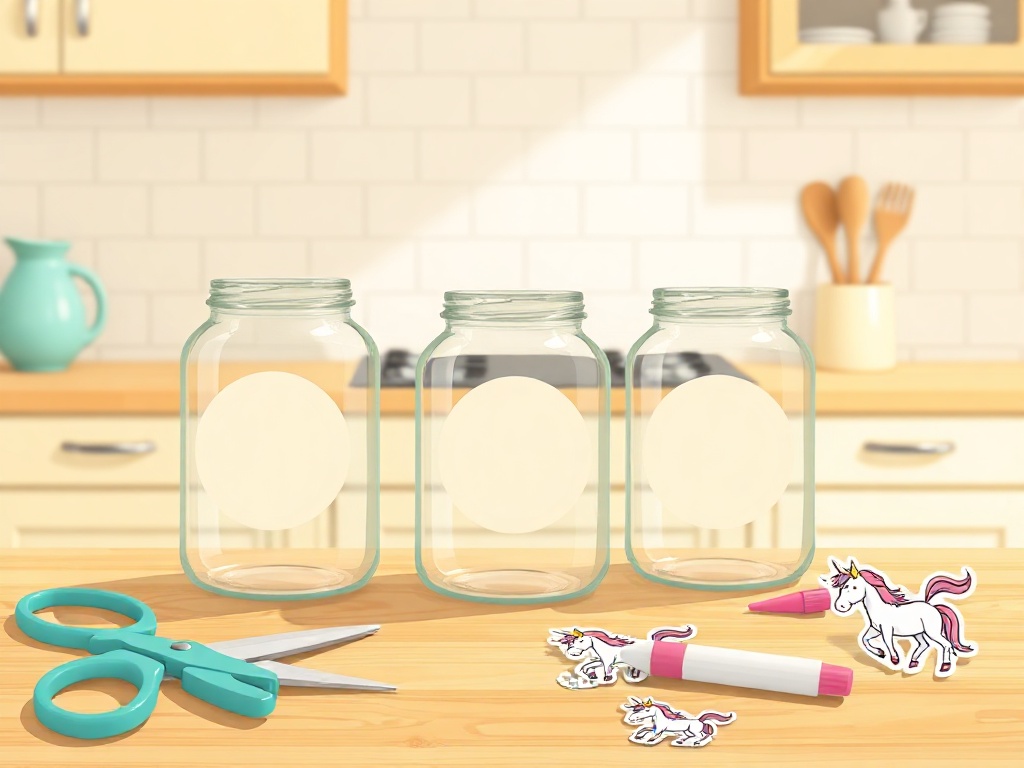
Get three empty glass jars or plastic tubs, a sheet of paper, blunt-tipped scissors, glue and a thick marker – everything you already have in the kitchen. It takes about 20 minutes to set up, then keeps working for months. Good for kids aged 6 to 8; younger ones will need help with the cutting. The child cuts out three labels and draws on them: on the first, something small and immediate (ice cream, a sticker); on the second, something big worth waiting for; on the third, a gift for someone else. Label them NOW, LATER and FOR SOMEONE ELSE. When she gets 2 euros, the child decides on her own how to split it, but with one rule: at least 50 cents goes into the LATER jar. The activity has worked when, two weeks later, the child can tell you – without opening the jars – which one has the most coins in it. That means she's tracking it, not just piling coins in.
The little trick here is transparency. A clay piggy bank is lovely, but you can't see inside it, and a six-year-old doesn't remember what she can't see. When the coins pile up right in front of her, the waiting becomes visible.
A game that teaches your child what things actually cost
The Neighbourhood Price Hunt
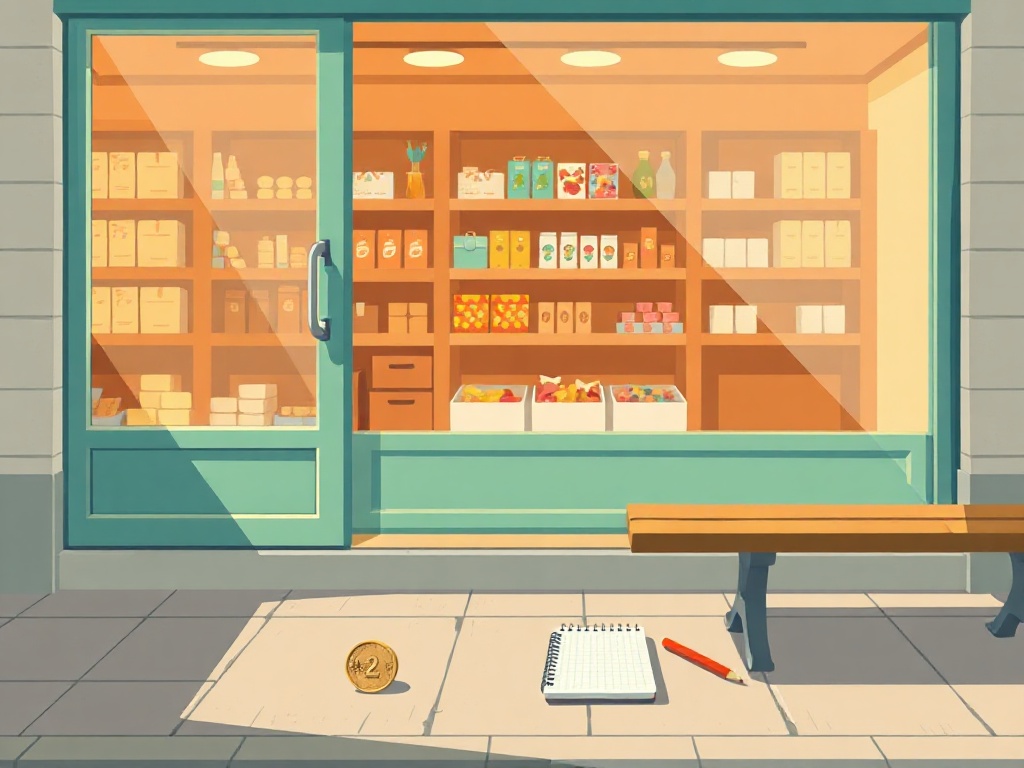
All you need is a sheet of paper split into two columns, a pencil, and one real 2-euro coin in your child's hand. Set aside 30 minutes for a walk to the nearest shop – ideally on a Saturday morning, when you're not in a rush. This game suits kids aged 7 to 9, since it involves reading numbers. The child walks around and writes down, in the left column, three things she could buy with 2 euros, and in the right column, three things that cost more. Don't comment on her choices. At the end, once you're back outside, ask just one question: "Which of the three from the left column would you still want tomorrow?" You've succeeded when the child crosses something off the left column on her own – that's the first genuinely voluntary "no" she's ever made.
The most common mistake: "I'll just give it to you early"
An advance sounds fair enough. The child wants something today, allowance day is Wednesday, so we give it now and "deduct it" later. The problem is the deduction never actually happens – by Wednesday everyone's forgotten, and if we do remember, it turns into a row over something that's already been eaten or stuck to a notebook.
Worse still, an advance removes the one thing that makes allowance useful in the first place: the time between wanting something and buying it. If I can get something before I have the money for it, money never really enters the decision at all.
- Instead of an advance, name the exact day: "Wednesday, after school." A date, not "soon."
- If the child truly can't wait, offer extra work outside her usual chores – washing the car, lining up the shoes in the hallway. Not a bribe, but a fair trade.
- Never take away allowance as punishment for a torn notebook or a bad grade. That turns money into a weapon, and the child stops thinking of it as hers.
- Keep the amount small and predictable. With 2 euros a week, mistakes are cheap – and it's the mistakes that teach the lesson.
What's left after a few months
Mia is seven and a half now. She still spends fast sometimes. But two weeks ago she did something new: she stood in front of the stuffed animal shelf, looked at the price tag, looked at her purse, and said, "I don't have enough yet. I'll come back." We left without a toy, and she didn't cry. Not because she'd become thrifty, but because for the first time she understood that "not yet" is different from "never."
That's the whole lesson. And it cost two euros, spent on six unicorn stickers.