
The First Week at Kindergarten: What to Do at the Door When Your Child Cries
Morning separation tears don't get fixed with promises, and they don't vanish if you sneak out quietly. Here are concrete games and an exact five-minute door script — for children between 5 and 7.
Quarter to eight, the hallway smells of new shoes, and your child is hanging off your sleeve, repeating the same thing over and over: "Just a bit more, just one more minute." The teacher reaches out a hand, you hesitate, you go back for a third hug — and that third hug is usually what sets you both off crying. Not because you did anything wrong. It's because the goodbye has no ending, and an ending is exactly what your child is looking for.
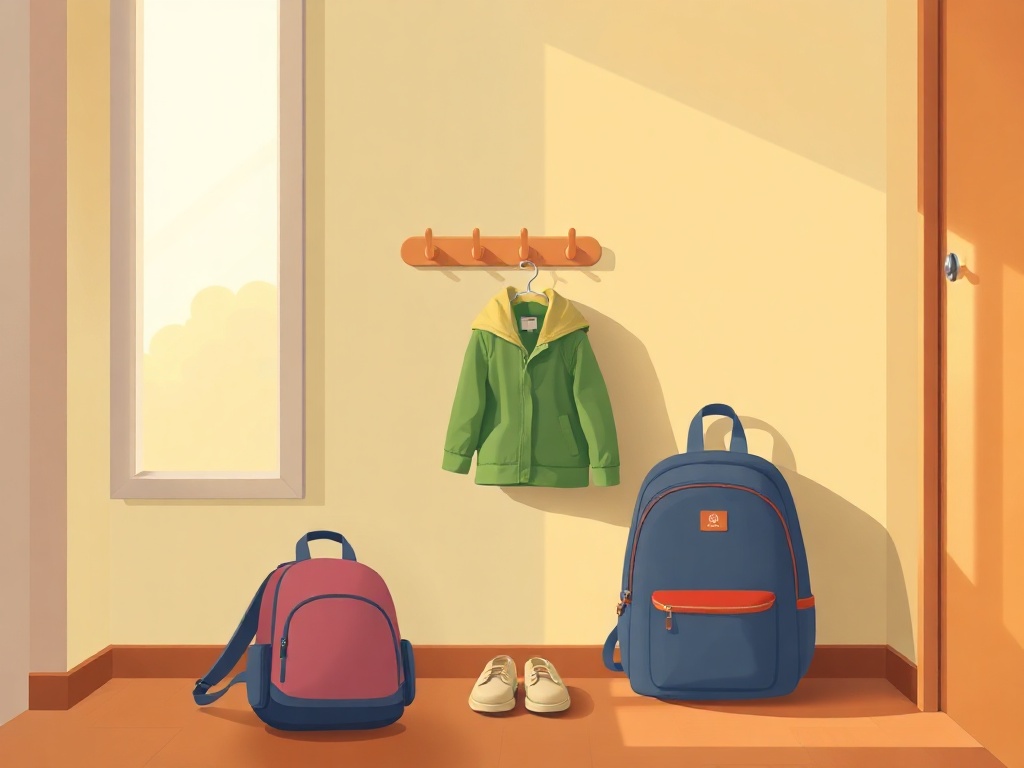
At 5–7 years old, children already understand promises and time, but only if that time is broken down into something they can picture. "I'll come in the afternoon" means nothing. "I'll come after nap time and after you've eaten your fruit snack" means a lot. That's where everything else in this article starts.
Why sneaking off "while they're not looking" backfires
Slipping away works once. Your child turns around, you're gone, nobody cries — and you leave feeling relieved. But the next day, they won't let go of your hand for a second, because they've just learned something new: Mum can vanish without warning. And that's how morning tears turn into an all-day watch on the door.
The same goes for the opposite extreme — lingering. A parent who stays for twenty minutes "just until they calm down" is actually teaching their child that crying buys more time together. And, quite logically, the child cries longer the next day. The way out isn't somewhere between these two extremes — it's off to the side of both: a short, clear, always-identical goodbye that your child knows by heart, because you rehearsed it at home on Saturday, not improvised it Monday morning at the door.
The door script: five sentences that never change
Build yourself a short ritual and carry it out exactly the same way every time — same words, same order, same length. Don't improvise, even on a good day.
- Stop at the same spot every time — say, by the third coat hook, not in the middle of the hallway.
- Crouch down to their eye level and say what happens next: "Now you're going in, and I'm off to work."
- Say when you'll be back using a landmark, not a clock time: "I'll come after your afternoon snack."
- Do the ritual — two hugs and a high-five, or whatever the two of you came up with together. Count it out loud: "One, two — off you go."
- Leave. No going back, no fourth hug, no "but are you really going to cry?"
Leaving is the hardest part, and it's exactly what your child will remember. If you go back, the whole script loses its meaning, because the ending becomes negotiable.
Rehearsing the goodbye with a teddy bear
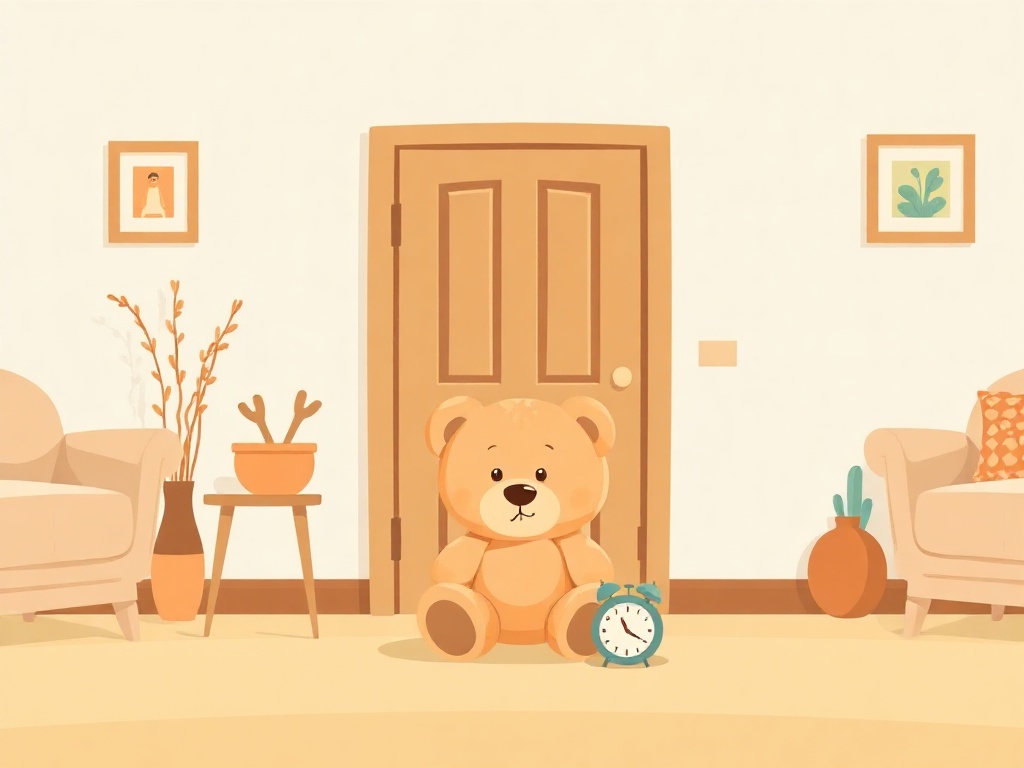
Play this at home, ideally on a Sunday afternoon when nobody's in a rush. All you need is a stuffed toy, a door, and a clock or a phone timer. Your child plays "the parent," the teddy bear plays "the child," and you play the teacher. Your child walks the teddy to the door, says the same five sentences they'll hear in the morning, hugs it twice, and walks away. Then swap roles — you walk your child to the door. Run through it three times and stop, even if they want more. It takes about 10 minutes and works well for ages 5–7. You'll know it's worked when your child can say, unprompted, when the grown-up is coming back — for example: "You're coming after my afternoon snack." If by the second run-through they can say the whole sentence on their own, the rehearsal has done its job.
The half-heart pocket
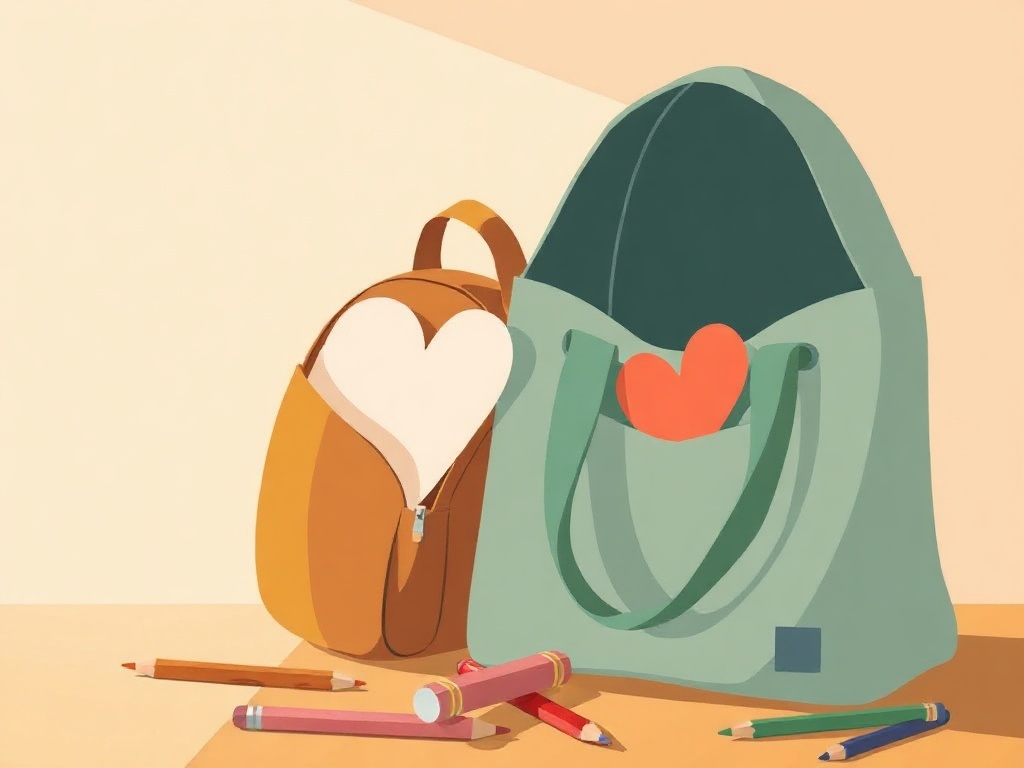
Grab a sheet of paper, scissors, and some coloured pencils. Your child draws something simple — a heart, a car, a dog — then you cut the drawing in two. One half goes into their pocket or a side pocket of their backpack; the other stays in your bag, and they need to watch you put it there. There's one rule: whenever they feel sad, they touch the paper in their pocket, and in the evening the two halves come back together on the table. It takes 15 minutes to set up once and then works every morning after that. Suitable for ages 5–7, with older kids able to cut it themselves using child-safe scissors. You'll know it's worked if, after two or three days, your child reaches for the pocket on their own instead of crying, or if in the evening they show you the paper and tell you when they touched it. Don't swap the drawing every week — the whole point is that it stays the same one.
The "Three Things" game for the walk home
In the afternoon, don't ask "How was your day?" The answer is always "Fine," and that's the end of the conversation. Instead, play Three Things: your child names one thing they ate, one thing they heard, and one thing that made them laugh. You do the same for your day. It takes five minutes on the walk home, and it turns kindergarten into a place with stories to tell — not just a place where they get left.
This is also, by the way, how you'll spot a genuine problem. A child who cries in the morning but rattles off five stories in the afternoon is adjusting just fine. A child who stays quiet both afternoon and evening, and on the third day still won't even say what they ate, is worth a word with the teacher — not to lay blame, but to ask what she's noticing during the day.
The most common mistake: rewarding stopped tears
"If you don't cry, I'll buy you something small from the shop this afternoon." It sounds harmless, and it can even work — exactly once. The trouble is that this turns crying into currency. Your child quickly figures out that tears have a price, and starts to negotiate: today they stopped crying for something small, tomorrow they want more, and the day after they cry harder, because the price has dropped. On top of that, the reward tells your child that their feelings are something wrong that needs to be switched off.
A better approach isn't a reward — it's marking the day. Make a calendar for the first ten days, and each evening your child adds a sticker — not because they didn't cry, but simply because the day is over. "Today was day four. Six more to go until the weekend." Counting makes time visible, and visible time is more reassuring than any promised treat.
Your child doesn't want you to promise it'll be easy. They want to know exactly when you'll show up at the door.
What not to say in those five minutes
- "You're a big kid now, big kids don't cry." — The crying doesn't stop, it just hides, and you lose the ability to tell how their day is really going.
- "Look, Sophie isn't crying." — Comparison doesn't motivate; it just adds shame to an already hard moment.
- "If you don't stop, I'm leaving right now." — This turns your leaving into a punishment, exactly when it needs to be something predictable and calm.
- "I promise I'll be the first one here." — Don't promise things that depend on traffic. One broken promise wipes out ten kept ones.
How long this is normal to last
For most children this age, the first few days are the hardest, and after that the crying gets shorter — from ten minutes to three, from three minutes to a sniffle at the door. The signal that matters isn't whether they cry, but how quickly they settle once you've left. Ask the teacher directly: "How many minutes before they joined the others?" If the answer is "they were at the building blocks within two minutes," everything's fine, no matter how dramatic it looked in the hallway.
One more thing that rarely gets said: Monday is almost always worse than Friday. After two days at home, the routine slips and needs rebuilding. So on Sunday evening, bring out the teddy bear and run the rehearsal one more time — ten minutes that save you twenty at the door.