
Home Renovation: How to Keep Your Child Busy When One Room Is Packed Up
A parent's guide to practical games for kids ages 5-7 during a home renovation, while the furniture sits in the hallway and half the apartment is in boxes. With exact materials, timing, and a way to tell when the game has worked.
The wardrobe is wedged crosswise in the hallway, the sofa is wrapped in plastic sheeting, and the kids' room has nothing but a bare wall and three boxes labeled "dishes." Your child has been circling between them for twenty minutes, repeating: "I'm bored, where's my box of animals?" You're on the phone with the contractor. That's exactly the moment this is about.
The usual advice is to hand over the tablet and wait for the renovation to pass. It works — for an hour. Then the child gets cranky, and falls asleep harder that night because they haven't moved all day. There's a better option, and it's literally right in front of you: the boxes, the plastic sheeting, the narrow paths between the furniture. That's props you'd normally pay money for on an ordinary day.
Why the Chaos Bothers Kids More Than You'd Expect
At age 5-7, a child remembers exactly where everything belongs. The pencil box sits on the second shelf on the left, and the stuffed dog sleeps against the wall. When all of that goes into a box, the child doesn't just lose toys — they lose the map of their home. That's where the questions every ten minutes come from, and the meltdowns over nothing.
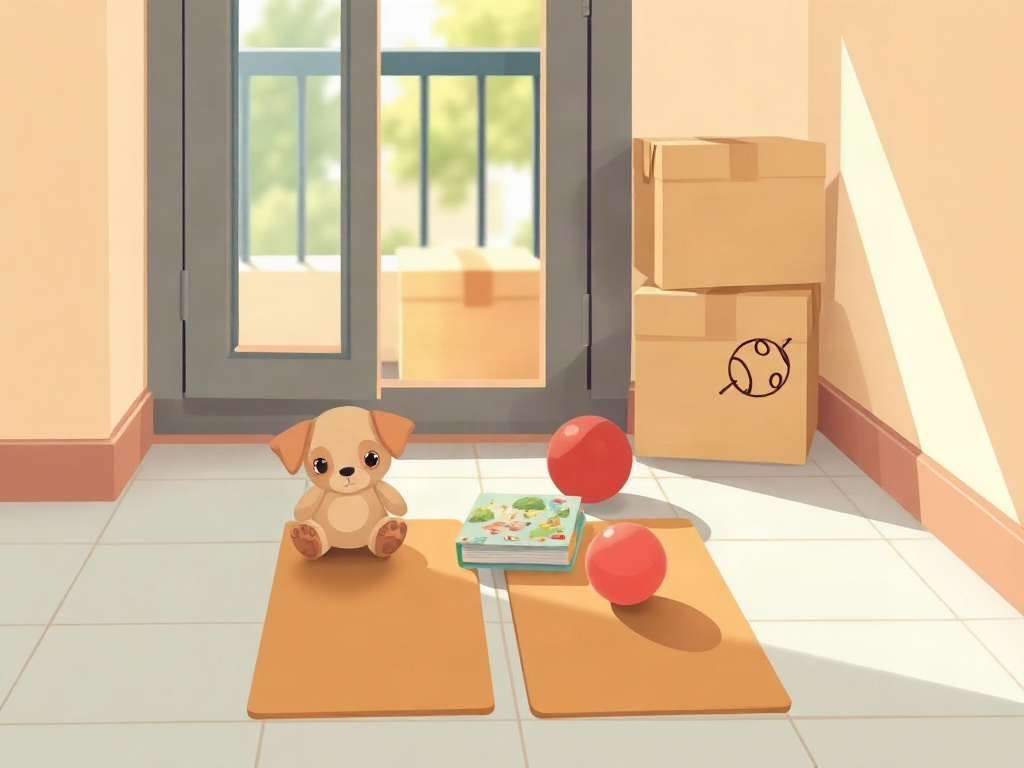
So the first job isn't to entertain them — it's to give them back one safe spot. Pick one place — a corner of the kitchen, two floor tiles by the balcony door — and say clearly: "This is your corner until Friday. No one is putting boxes here." Put three or four of their things there. Not ten. Three, chosen by them alone.
- Let your child decide alone which three things go in the corner — it's a decision they can make while you handle everything else.
- Label the boxes with a marker to show what's inside, and let your child draw a symbol on top — a ball, a little book. Then they'll be able to find what they're looking for on their own.
- Give a specific date, not "soon": "They're painting on Tuesday, we're bringing the bed back in on Thursday."
- If your child asks for something buried deep in a box, write it down on a "waiting list" and read it together when you unpack.
The Furniture-Filled Hallway Isn't a No-Go Zone — It's an Obstacle Course
The first instinct is "don't touch, don't go there." Understandable — there are sharp edges and glass. But the ban only lasts fifteen minutes, then the child is right there anyway. It's safer to turn the passage into a game with rules you invent yourselves.
The Hallway Maze
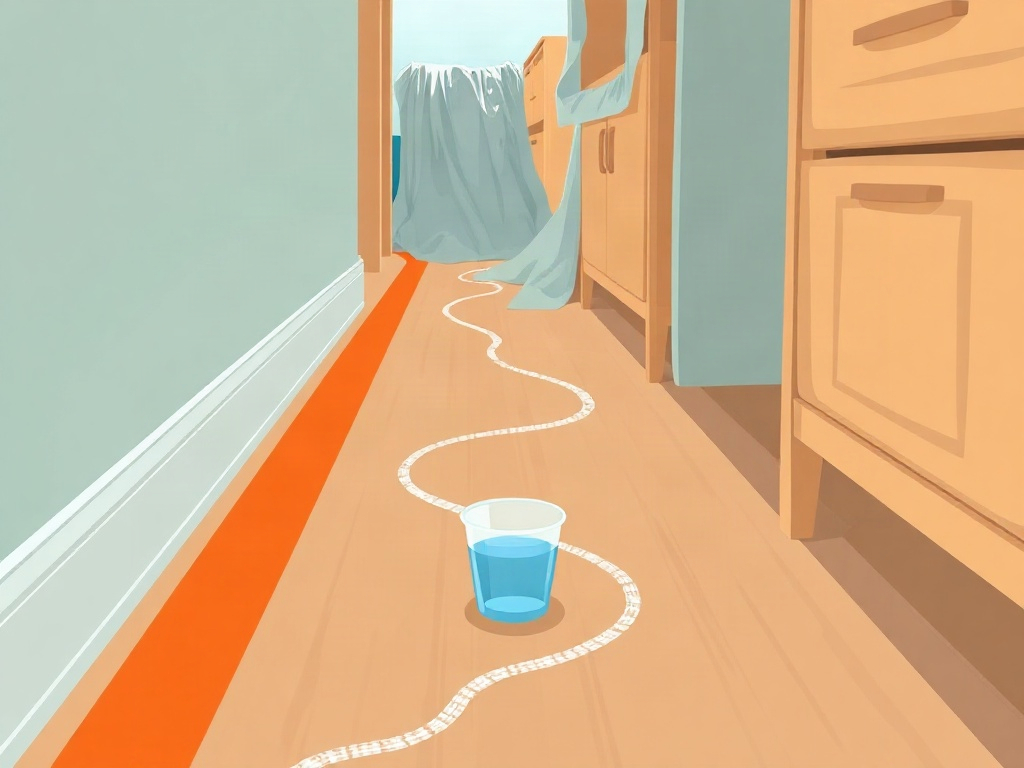
All you need is chalk or paper tape and about ten minutes to stick a path onto the floor between the furniture. The game suits children ages 5 to 7 and runs for roughly a quarter of an hour at a time. The child follows the path without stepping off it and without touching a single cabinet — slowly the first time, holding a cup of water the second time, hopping on one foot the third time. You count out loud. Materials: tape, chalk, a plastic cup with a little water. Cover any sharp edges beforehand with a towel or a piece of foam. The game has worked if the child asks to go again on their own, and if they start going through without glancing at you for permission.
One important warning: check whether any cabinet is propped unsteadily and whether there's any glass below waist height. If there is, move the game to another room. No compromise on this point.
Props on Hand: A Cardboard Box Does More Work Than a New Toy
A big box, open at both ends, is a tunnel. Standing upright with a window cut into it, it's a ticket booth. Turned upside down, it's a table. For a five- or six-year-old, that's not a consolation prize because of the renovation — it's exactly the kind of play they find most interesting: they get to decide for themselves what the object is.
The Little Shop Between the Boxes
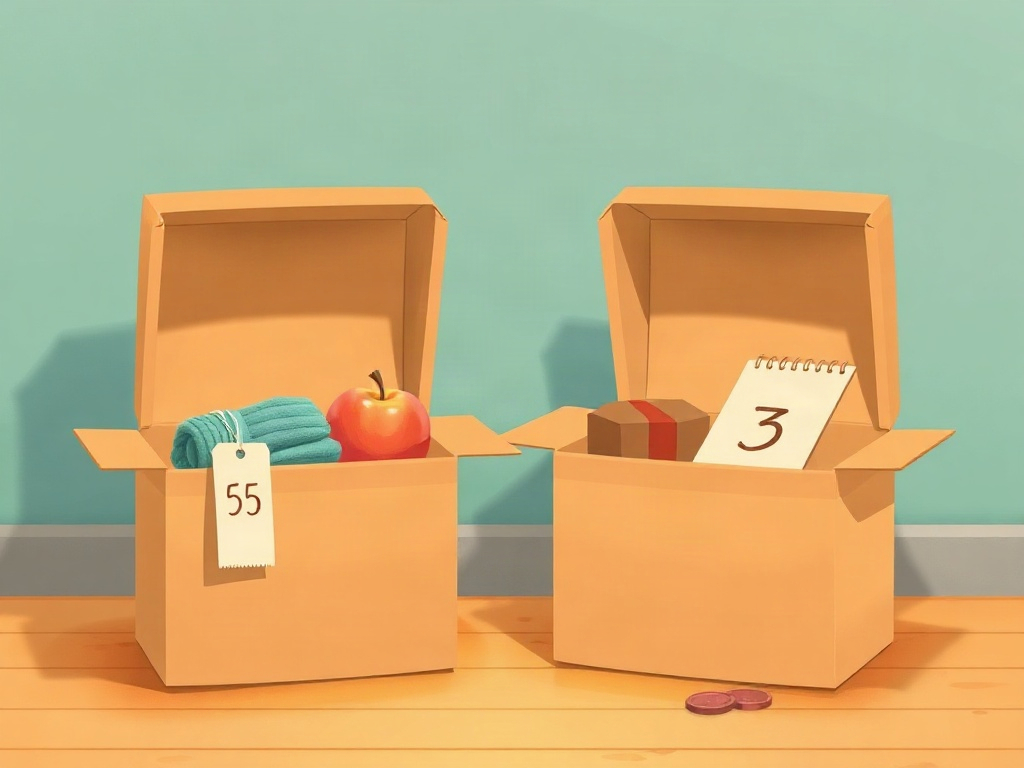
You'll need a couple of empty boxes, a sheet of paper and a pencil, and a handful of small coins — a euro's worth at most. The game suits ages 5-7 and usually holds attention for about half an hour. The child sets out "goods" on a box: an apple, a sock, a small box, whatever's at hand. They put a price on each item — 10 cents, 50 cents. You're the customer and speak out loud: "I'd like the apple and the sock. How much is that together?" Then you hand over 1 euro and wait for change. It's worked if the child gives correct change back at least once without being prompted, and if they come up with a third item to sell that you didn't suggest.
If a child hears "don't touch" twenty times a day, they stop hearing the words but don't stop touching. It's far more useful to give them one place where everything is allowed.
Which Day Is Hardest
Not the first. The first is exciting — people show up, there's hammering, everything is new. The hard days are the third and fourth, once the novelty has worn off but the room is still empty. If you're keeping a stash of ideas in reserve, save them for then. And if it's a day with paint fumes or a lot of dust, the child shouldn't be in the apartment at all — move the play outside or to grandma's, no discussion.
A Common Mistake: "I'll Explain It Later, Once We're Done"
Parents often decide not to bother the child with details — after all, it'll all make sense once they see the finished room. The problem is that the child doesn't wait quietly. They come up with their own explanation, and it's rarely a calm one: "They threw my bed away," "I won't have a room anymore." That's where the nighttime wake-ups during these days come from, and the sudden clinging to some old, ragged stuffed animal that hasn't been touched in months.
Another common version of the same mistake is promising "we'll buy you new things for your room" without anything concrete happening today. The child waits for something that won't arrive until Friday, and the whole week they're out of sorts. It's better to involve them right away in something small and visible: let them choose the color of the coat hook, stick a sticker on their own box, wipe down one tile with a damp cloth. Small, finished, today.
- Don't set up a "temporary kids' room" in the living room with all their toys — the child will get used to it, then have to go through the move all over again.
- Don't run a noisy tool while the child is in the next room — half an hour outside beats an hour of explaining afterward.
- Don't let the child carry plates or glass containers, however much they want to help. Give them socks, books, soft toys — things that don't break.
Three Sentences That Actually Work While the Work Is Going On
When the child asks for the tenth time when it'll be over: "Today is Wednesday. Two more dusty days, then we bring the bed back in. Want to cross off Wednesday on the calendar?" When they're upset that their things are in a box: "The box with the animals has a blue mark on it. That's the first one we open tomorrow morning." When they want to help but shouldn't: "You watch the door — tell me when someone's coming up the stairs." The job is invented, but it's a real task, and the child can feel that.