
How to Teach a Second Grader to Tell Time: Games with the Kitchen Clock and a Cardboard Clock Face
Four weeks of games for children aged 7–8. You start with just the hour hand and check the cardboard clock against the real one in the kitchen, so the child doesn't learn a picture that never actually appears.
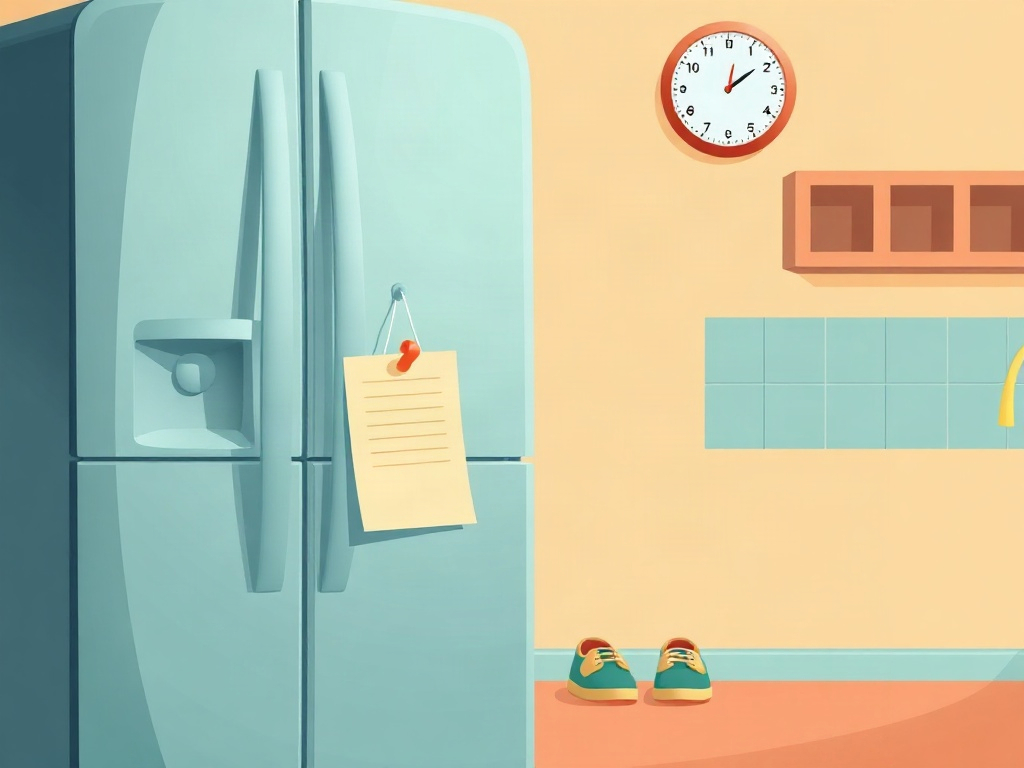
It's seven forty in the morning. Mira stands in front of the fridge with one shoe on, looks at the clock above the door, and says: "The long hand is on the eight, the short hand is almost on the eight too... So it's eight-eight?" The child knows her numbers and knows which hand is which. But what each one actually shows, she hasn't figured out yet.
This piece is for children aged 7–8, meaning the first month of second grade. By the end you'll have three games, each taking two to ten minutes, plus a four-week plan. It starts on the first day of school in mid-September and wraps up right before the autumn break.
Why an Ordinary Cardboard Clock Confuses the Child
The usual advice is simple. Make a clock face out of cardboard, attach two hands, and practice the exact hours first, then the half-hours. The problem shows up at half past three. The child puts the long hand on the six and the short hand right on the three. On the cardboard, that takes one motion. On a real clock, it never happens, because at half past three the hour hand sits halfway between three and four.
This is how the child memorizes a picture that doesn't exist. Then she looks at the kitchen clock, where the short hand is "between" numbers, and gets confused. That's where "eight-eight" comes from. So we suggest the opposite order: first just the hour hand, roughly and in words. Then the minute hand. The cardboard clock is still useful, but only if you check it against the real clock after every game.
The First Week: A Clock With Only One Hand
We adults are used to reading the time down to the minute. But people lived for a long time with clocks that had only an hour hand. You could still say with one "it's still early" or "almost noon." A child who learns to read the short hand alone already knows half the job. The minute hand later just fine-tunes something she already understands.
The "Exactly, A Little After, Almost" Game
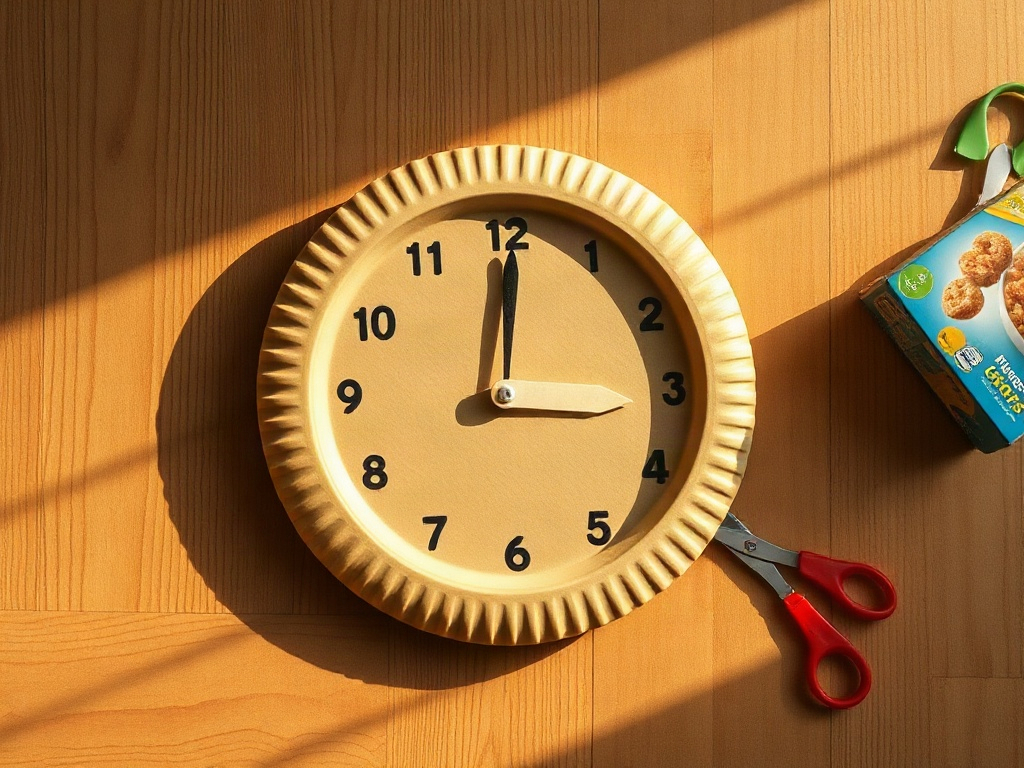
You'll need a paper plate or a cardboard circle, a marker, a short hand cut out of a cereal box, and a brass paper fastener so the hand can turn. Write the numbers 1 through 12 and don't add a minute hand. The game takes about five minutes and is for children aged 7–8. You set the hand, and the child answers with one of four phrases: "exactly four," "a little after four," "halfway between four and five," or "almost five." Then swap roles: you say "almost nine," and the child sets the hand. In the evening, finish up with the real clock. Have the child point to the short hand and say "about what time" it is. Success is when the child correctly names at least eight out of ten positions in a row without looking to you for help.
How the Minute Hand Joins the Game
In the second week, add the long hand. But don't put it on the cardboard clock first — put it on the kitchen clock. Most battery-powered wall clocks have a small wheel on the back for setting the time. When the child turns it, both hands move together. This way she sees with her own eyes that while the minute hand makes a full circle, the hour hand crawls from one number to the next. No explanation shows this better.
The "Clock Dictates, Cardboard Repeats" Game
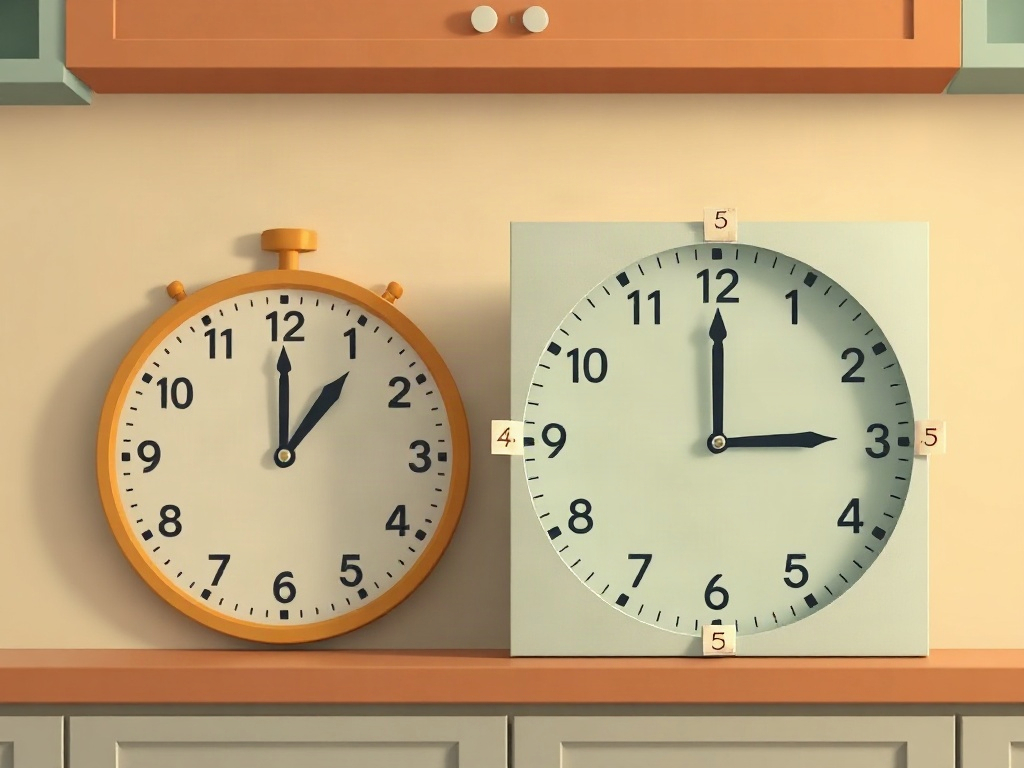
You'll need the kitchen clock, the cardboard clock face now with both hands, and twelve sticky notes with the numbers 5, 10, 15, and so on up to 55, stuck around the edge of the cardboard next to each number. The game takes about ten minutes and is for children aged 7–8. Take the clock off the wall. The child turns the wheel until you say "stop." Then she sets the same time on the cardboard clock and says it out loud: "ten past three," "half past five," "six forty-five." Compare the two clocks side by side. If on the cardboard the short hand sits exactly on a number while on the real one it's between two, fix it together. Success is when the child sets the cardboard clock correctly at least five times out of six, with the hour hand in the right spot between the numbers.
How the Clock Becomes Part of Daily Life
Exercises at the table help, but a child remembers the time best when something actually depends on it. That's why the third game is short, uses no cardboard, and is played every day.
The Family Clockkeeper Game
You'll need a magnet, a sheet of paper on the fridge, and the real clock. Set aside two minutes every day. The game is for children aged 7–8. In the morning, write one event and its time on the sheet: "We leave for swimming at half past five" or "Grandma arrives at quarter to six." The child is the clockkeeper. She has to notice on her own when the hands get close to that time and announce: "Ten minutes left!" or "It's time!" Don't remind her. Success is when the child announces the time on schedule three days in a row, no more than five minutes late.
The Mistakes That Slow Things Down Most
- If you ask "What time is it?" on the very first day and wait for the exact answer down to the minute, the child starts guessing. Guessing quickly becomes a habit, and it's hard to unlearn later.
- If you move the cardboard hands separately, the child learns that at half past three the short hand sits on the three. The fix is simple: after every position you set, check it against the kitchen clock.
- The rule "long hand on the twelve means exactly" without understanding the short hand leads to mistakes like "eight-eight." The child reads the numbers but not the relationship between the hands.
- If you swap the hands for a phone's clock display, the child reads "7:40" but doesn't understand why we'd say "twenty to eight." A digital clock shows digits, not how much time is left until the next hour.
- Testing her in the morning while everyone's rushing turns the clock into an unpleasant chore. Better to play in the afternoon, and in the morning just say: "Look, the short hand is almost on the eight."
Plan for the First Four Weeks of the School Year
- Week one: only the hour hand, and the "Exactly, A Little After, Almost" game, five minutes a day.
- Week two: exact hours and half-hours. The child turns the wheel on the kitchen clock and repeats it on the cardboard clock.
- Week three: minutes in steps of five with "past": "five past four," "twenty past four." The Family Clockkeeper game also begins.
- Week four: "to" and "quarter": "ten to five," "quarter to six." Ask the child how many minutes are left until the next hour.
"The short hand tells me what hour it is, and the long hand tells me how much of it has gone by." When the child says this in her own words, the main thing has been learned.