
The Missing Bricks and the Puzzle With Three Pieces Gone: Games for a Rainy October Evening With Kids Aged 6–8
Building blocks found under the couch and a puzzle missing a few pieces aren't trash. Missing pieces can become the rule of a brand-new game. Here are three games for a rainy evening at home, each with a clear sign of when your child has nailed it.
Tuesday evening. It's been raining since five, and the vacuum cleaner clatters under the couch. You reach in and pull out a handful of odds and ends: two red bricks, a wheel, a little figure missing its hat, and three puzzle pieces. Nobody remembers anymore whether that puzzle had giraffes on it or a train. Your first instinct is to toss them in the bin or dump them in the "maybe someday" box. Before you do, call your child over.
This piece is for children aged 6, 7, and 8. At this age, they can already count comfortably to a hundred, read short words, and love arguing over the rules. At the same time, they can still happily play for an hour with nothing but a shoebox lid.
Why an Incomplete Toy Isn't a Broken Toy
The usual advice goes like this: if a puzzle is missing pieces, toss it, since it'll only frustrate the child. And scattered blocks should be sorted and put back in their proper boxes. That advice is only half right. A puzzle meant to be assembled into the picture on the box really does lose its point without every piece. But the moment we stop seeing it as an unfinished task, the gap becomes the rule of the game. When there's no blue brick, the child has to decide what to use instead. When there's a hole in the puzzle, they have to imagine what used to be there. That's harder than assembling a ready-made picture — and that's exactly what makes it more interesting.
"There's no blue, but the yellow one can be a window with a lamp shining through it."
That's exactly the kind of sentence you're hoping to hear tonight.
What to Do in the First Five Minutes
- Tip all the finds into a baking tray or a shoebox lid so they don't roll all over the floor.
- Have your child count them out in stacks of five. Six-year-olds can count aloud; eight-year-olds can write down the total.
- Check together for broken or sharp pieces and remove them right away.
- Separate the puzzle pieces from the building blocks, since each gets its own game.
- If there's a child under three at home, only play at the table, and count all the pieces again at the end.
Three Games With What You Found
Museum of Lost Things
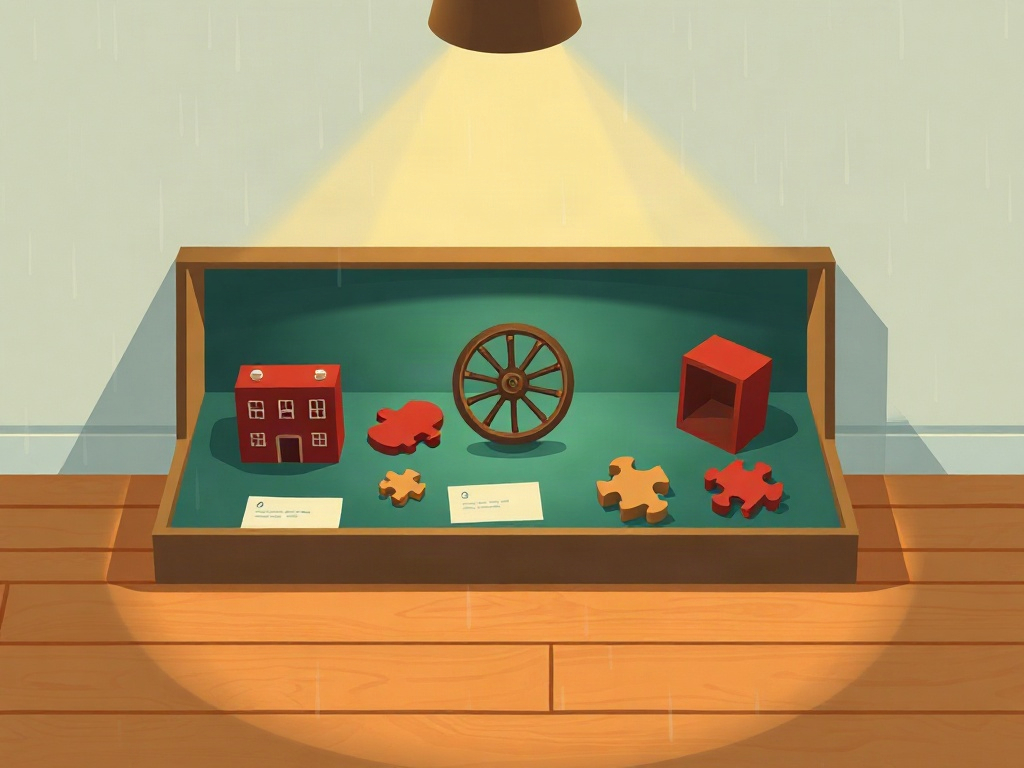
All you need is your collection of finds, a shoebox lid to serve as the gallery, a sheet of paper, a pencil, and scissors. The game runs 20–30 minutes and suits 6–8-year-olds. The child arranges the finds in the lid like museum exhibits. For each one, they cut out a small label and write its name and where it was found, for example "The Runaway Wheel, found by the slipper." Six-year-olds can draw the label instead of writing it. Then your child gives you a tour of the museum while you play the visitor asking questions: "Why doesn't this little figure have a hat?" We'd call it a success if the museum has at least five labeled exhibits and the child can tell you something about each one without being prompted.
The Puzzle With Holes
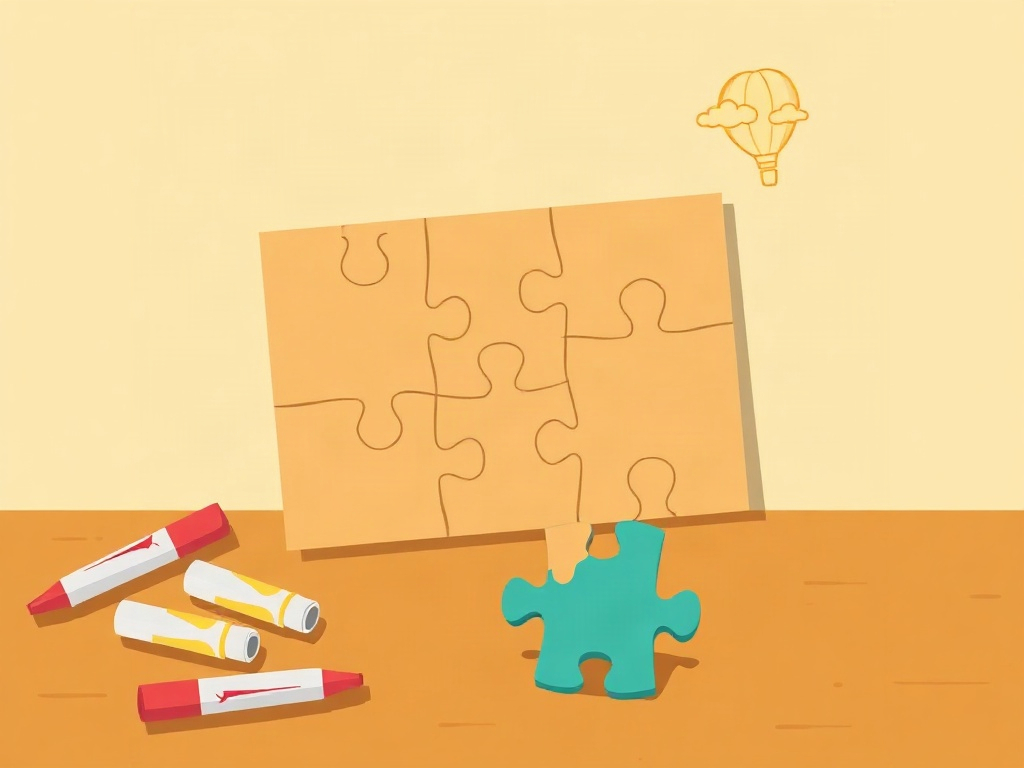
You'll need an incomplete puzzle of up to 100 pieces, a piece of cardboard from a cereal box, felt-tip pens, and scissors. Set aside 30–40 minutes. This game suits 7–8-year-olds better, since tracing the outline takes a steady hand. First, put together whatever pieces you have. The child then sits in front of the gaps and answers the question of what belongs there. The goal isn't to guess the original picture — it's to invent something that continues the lines around the hole. If there's a cloud on one side and a roof below, the answer might be "a balloon must have flown through here." The child then places the cardboard under the puzzle, traces the hole, cuts out the piece, and draws on it. We'd call it a success if at least one cardboard piece fits into a hole and the drawing on it continues at least one line or color from the neighboring pieces.
Build by the Draw
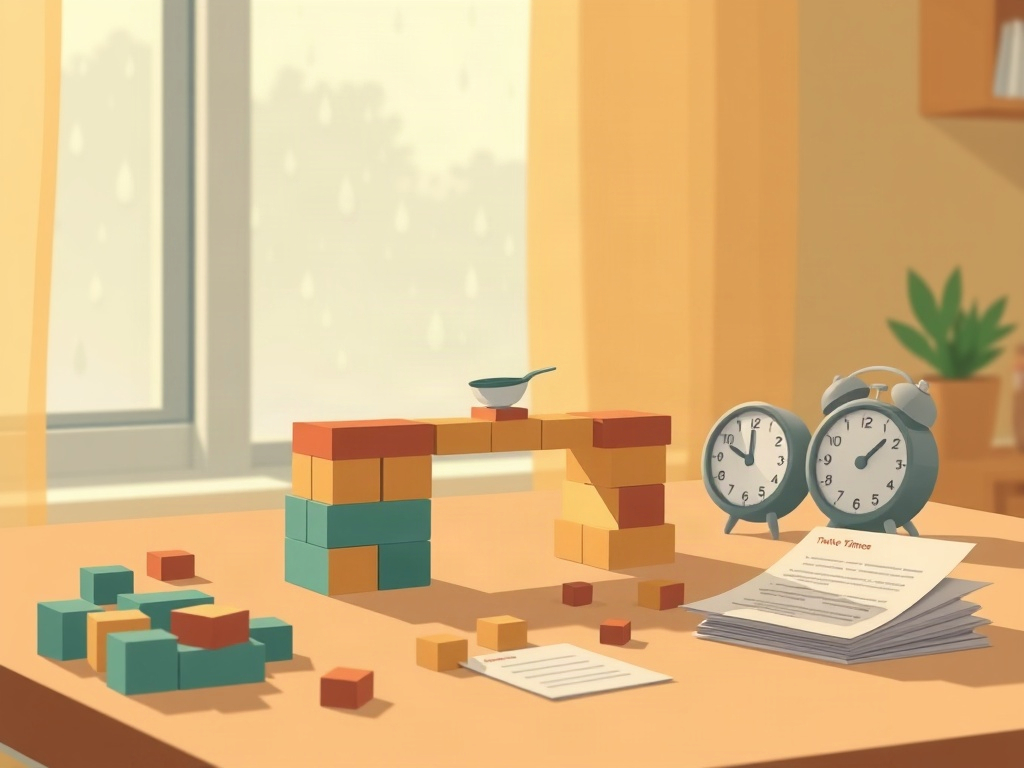
You'll need 30–50 random building blocks, five or six slips of paper, a small bowl to draw from, and a timer. One round takes 15–20 minutes, and the game suits 6–8-year-olds. Before starting, write challenges on the slips: "a bridge made of 12 pieces," "a tower using only two colors," "a car for the hatless figure to ride in," "something balanced on a single wheel." For six-year-olds, draw the challenges instead of writing them out. The child draws a slip, starts the timer, and builds. Then comes the test: the bridge has to hold up a teaspoon, and the tower has to stand for ten seconds while you count out loud. We'd call it a success if the build meets the challenge and passes the test. If it doesn't, the child gets three more minutes to fix it.
Mistakes That Ruin the Game Before It Starts
The first mistake is finishing the job for your child. The moment you see the tower wobbling, your hand shoots out to steady it. At that point, the task has become yours, not theirs. Better to ask: "What could go underneath to keep it from falling?"
The second mistake is dumping every bin out on the floor and saying "build whatever you want." It sounds generous, but faced with three hundred loose pieces and no challenge at all, plenty of kids this age put together very little before giving up. That's why the draw-a-challenge game works: the constraint narrows the choice and the child knows exactly where to start.
The third mistake is disguising tidy-up time as a game: "Let's race to see who can put the boxes away faster." A seven-year-old catches on to that trick within a minute, and the evening starts off on the wrong foot. If you want things tidied, just say so plainly and keep it separate from the game.
The fourth mistake is struggling with a puzzle that's missing more than half its pieces. There's nothing left there to fill in. Use the pieces as a mosaic instead: the child glues them onto cardboard and makes a frame for a drawing.
Where the Pieces Should Go After the Evening Is Over
Put a jar on the shelf and let your child name it whatever they like. In our house, it's called "the box of lost things." Every piece found afterward — under the couch, in a jacket pocket, in the car — goes straight in there. Once twenty things have piled up in the jar, you've got ready-made material for another evening. The museum will have a new wing, and the draw-a-challenge bowl will have new tasks.
School started a month ago, and the evenings keep getting shorter. A jar, a tray, and a bit of cardboard are all you need to fill them.