
Potatoes, Onions and a Plastic Bag: A Parent's Guide to Market Games for Kids
A guide for parents and carers: the September market is noisy and children get bored fast. Two games turn a bag of potatoes and onions into real work — at the stall and in the kitchen.
It's half past nine on a Saturday morning, the market smells of plums and roasted peanuts, and you're standing in front of a stall piled with sacks of potatoes trying to judge which ones are driest. That's the moment your child tugs your sleeve for the third time. The usual answer is "Just a bit more, hang on." It rarely works — and it probably never has.
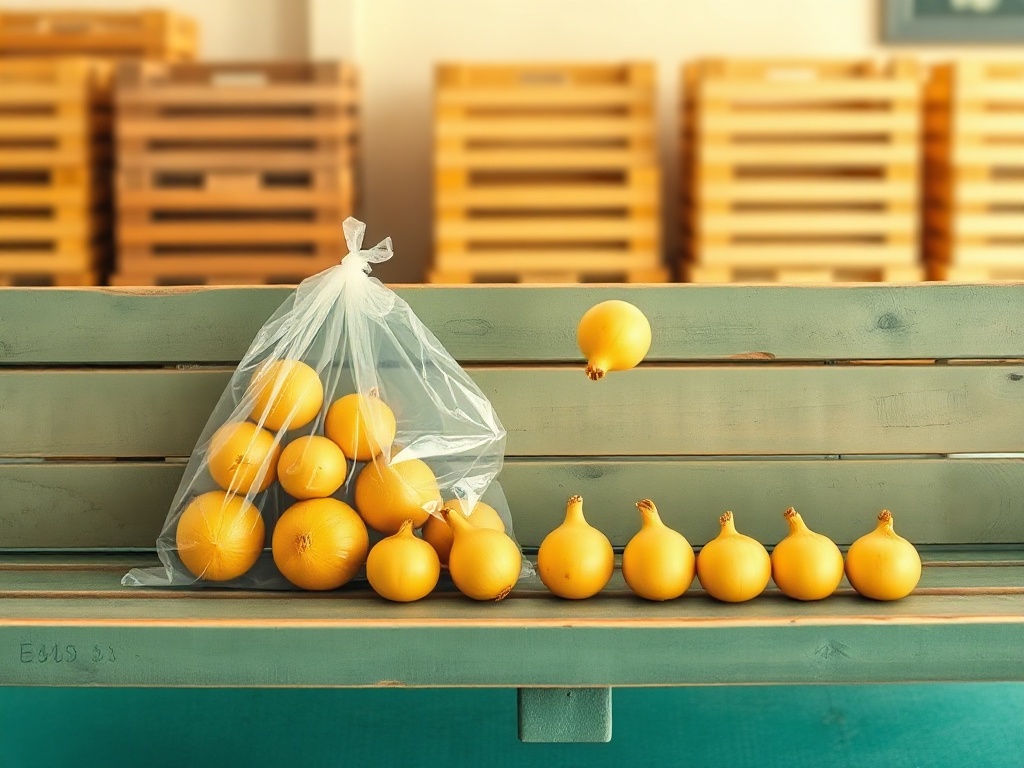
Something else tends to work: the bag. Hand it over. Not an empty one to swing around — the full one, the heavy one, with the potatoes and onions inside. From there, almost anything can become a game, and the best market games for kids need nothing you'd have to bring from home.
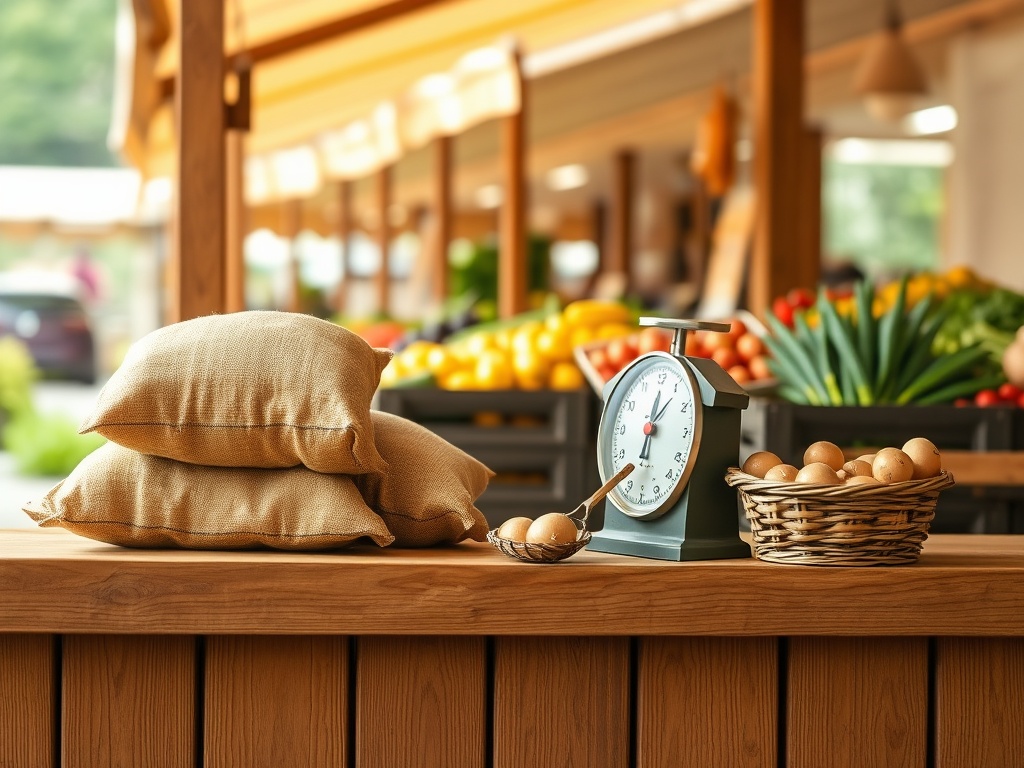
Why the usual distractions flop
Parents often prepare in advance — a phone game, a packet of biscuits, a list of riddles. All of that is something the child does INSTEAD OF the shopping. Many children pick up on this quickly. An eight-year-old is rarely fooled for long when they're handed a distraction to keep them out of the way — which may be why their interest often fades after just a few minutes.
A real task tends to work the other way round. When a child is holding the bag, counting the potatoes and telling the stallholder "Two more, please," they're not playing a part — they're doing actual work. You can often see the difference in how they stand: the child with the phone is hunched over, the child with the bag stands up straight and watches the stall.
Who these market games for kids are built for
Everything below is aimed at children between 6 and 8 — old enough to count confidently to twenty, carry about two kilos over short distances, and understand "heavier" and "lighter" without you explaining it. For under-sixes the bag will often end up on the ground; for over-eights the counting games may be too easy — give them the change to work out instead.
Two market games for kids: one at the stall, one at home
Game 1, at the stall: lining up the potatoes
Which Potato Is the Champion
Shortly after filling the bag, step aside from the stalls. All you need is the bag of potatoes and one free hand. The child takes the potatoes out one by one and lines them up on the ground or on a bench from smallest to biggest — that's the whole game, but it's trickier than it sounds, because two potatoes next to each other often look the same size and need to be weighed in each hand. Most children stay with it for somewhere between six and ten minutes, which is about as long as a pavement game needs to last. You'll know it has worked when they line up at least eight potatoes in the correct order and can point out which two were hardest to compare. Mixing up two neighbouring potatoes doesn't count as a mistake — that's exactly the interesting part.
This game often has a side effect: the child starts handling the vegetables carefully. A potato that's been dropped on the cobblestones a few times can bruise and darken over the weeks it sits in the pantry — and they learn that from their own bag, not from a lecture.
Between the two games: buying without holding up the queue
This is what worries parents most, and fairly so — there are people waiting behind you. That's why the child's task needs to be short and agreed in advance, while you're still walking up to the stall.
- Give them one specific line to say: "Three kilos of potatoes, please." Rehearse it once on the way over.
- Let them hold the bag open while the stallholder fills it — it gives them a physical role and is usually faster for everyone.
- Hand them a €1 or €2 coin for the onions and let them be the one who pays for that single item.
- Their job after the stall: check the bag for any onion with a peeling or damp skin, and set it aside.
That last point isn't a made-up chore. A damp onion can spoil the rest of the sack while it's stored, so the child is doing something you'd otherwise have to do yourself.
Game 2, at home: balancing the two bags
The Bag Scale
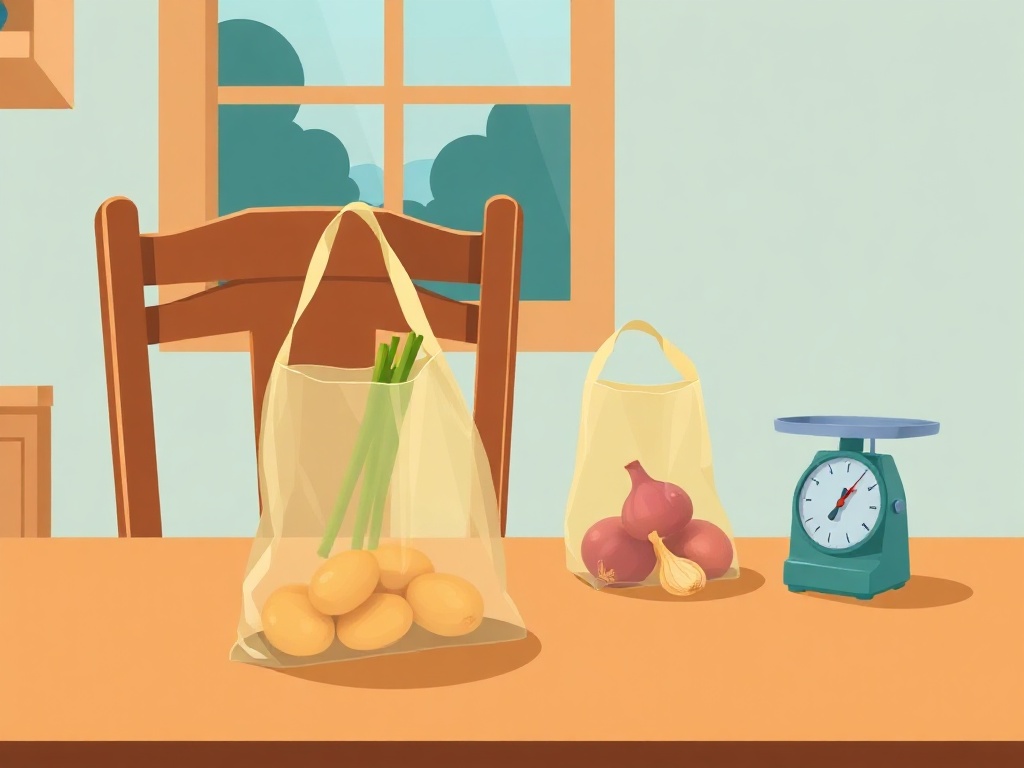
This game is for home, the same day, while you're unpacking. You'll need the two plastic bags from the market, the potatoes, the onions, and a kitchen scale if you have one. The child puts potatoes in one bag and onions in the other, and tries to make them equally heavy using only their hands, without counting. Then you check on the scale. Play three rounds, guessing differently each time — a quarter of an hour at the kitchen table is usually enough. By the third try, most children get the two bags within a couple of hundred grams of each other, and that's the moment worth celebrating. If you don't have a scale, compare "by feel" by hanging the handles on two matching kitchen hooks or on the backs of two identical chairs.
"This one's heavier, but it's smaller. How does that work?" — a question many children ask by the second round. The answer is simple: potatoes are dense and full of water, while onions are made of layers with air trapped inside.
The most common mistake: turning the market games into a test
After the first two games go well, there's a temptation to add questions. "What's 3 times 4? And if we buy two more kilos, how much is that?" The market turns into an exam and the child clams up. You'll usually notice it because the answers turn into single words, and then they start asking when you're leaving.
The reason is specific: the bag games work because they produce a visible result — the row of potatoes, the balanced bags, the paid-for onions. A spoken question produces no result, only a grade. So if you want to bring in some maths, give it to them as a task with an object in hand: "Split the potatoes into two piles — the ones for roasting and the small ones for soup" — not as a bare question with nothing to hold.
A second, quieter mistake is correcting the order. If the child puts a medium potato before a small one, wait. More often than not they'll notice within half a minute and move it themselves — and if they don't notice, the world won't end over one potato.
What sticks after the market
In the evening, once the sack is in the pantry, ask them one thing: "Which onion did we set aside, and why?" If they remember, the task was real. By the following Saturday, you may not even need to ask if they want to come — they'll be holding the bag before you've got your shoes on.
And since September is also the month school starts: these games — counting, sorting and weighing — fall around the time when many Year 1 and Year 2 classes are working on sequences and comparisons. Not because the market replaces the textbook, but because a child who's held eight potatoes in their hands may grasp "arrange from smallest to biggest" that much faster.