
A Parent's Guide to the First Week in a New Neighborhood: Games for a Child Who Doesn't Have Anyone to Play With Yet
A guide for parents: concrete games and phrases to use with children aged 5 to 7 during the first seven days in a new place — without the pressure to make a friend right away.
This guide is written for parents. The moving boxes are still in the hallway, and the child is standing by the window watching three boys kick a ball down below. They don't want to go down. If they do go down, they stand two steps away from the bench and stay quiet. Then they come back and say, "Nobody wants to play with me." This is the fourth day since the move, and this is often the point where many parents reach for the same solution — they start arranging playdates.
Between ages 5 and 7, many children don't join a group through conversation yet. They tend to join through action: digging in the sand next to someone, chasing a ball, climbing onto the same slide. But to do anything at all, they first need to know where they are. Which entrance is which, where the yard ends, where the branch that looks like an antler is. The first week is usually better spent on the map than on friends.
Why "go say hello" backfires
When you say "go on, go over and ask them their names," you're handing out a task few children on the playground actually perform. Kids this age rarely introduce themselves. They show up, stand nearby, and at some point someone hands over a shovel. If your child walks up with a rehearsed line and it doesn't land, they may draw their own conclusion: "I tried and it failed." After a couple of attempts like that, some children refuse to go down at all.
The other thing that tends not to help: comparing it to the old place. "Back home you made friends right away." That was with two years' head start. Here you've got four days.
Game one: mapping the new place
The goal is to turn unfamiliar territory into something the child owns. A child who can say "that's my bench" often stands taller than one who's simply been taken outside.
Ten-Sign Scavenger Hunt
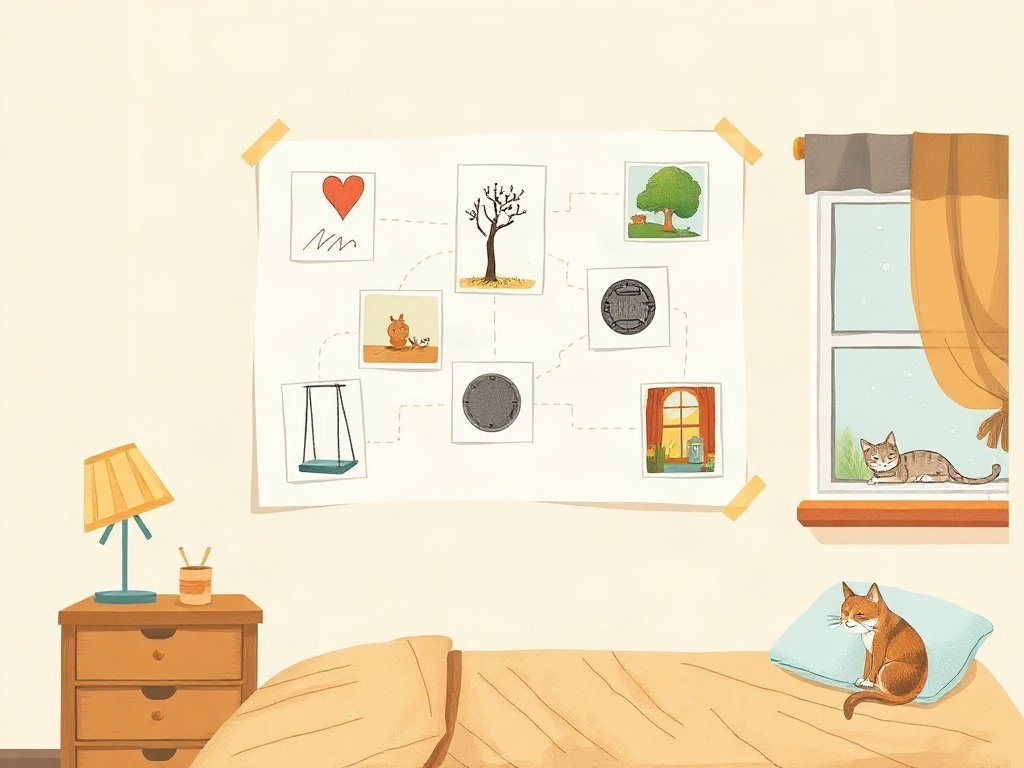
All you need is a sheet of paper, a pencil, and your phone if you want photos. Walk together around the yard and building, hunting for ten things the child picks out themselves — a heart scratched into a wall, a tree with a forked branch, a manhole cover with lettering on it, the squeakiest swing, a cat that always naps on the same windowsill. The child draws them or you snap photos, then stick them on the bedroom wall that evening. Takes about 25 minutes a day, three days running. Suited for ages 5–7. It's working if, by day four, the child is leading you: "Come, I'll show you where the forked tree is."
On day three, add one rule: one of the ten signs has to be a spot where other children are. You don't go over to them. You just mark it on the map. That way the playground joins the list of familiar things, without being a test.
Game two: the game that plays itself but pulls others in
Some activities look so interesting from the outside that other children wander over on their own. For many children that works better than starting a conversation. The child does their own thing, and the group comes to them.
Chalk Obstacle Course
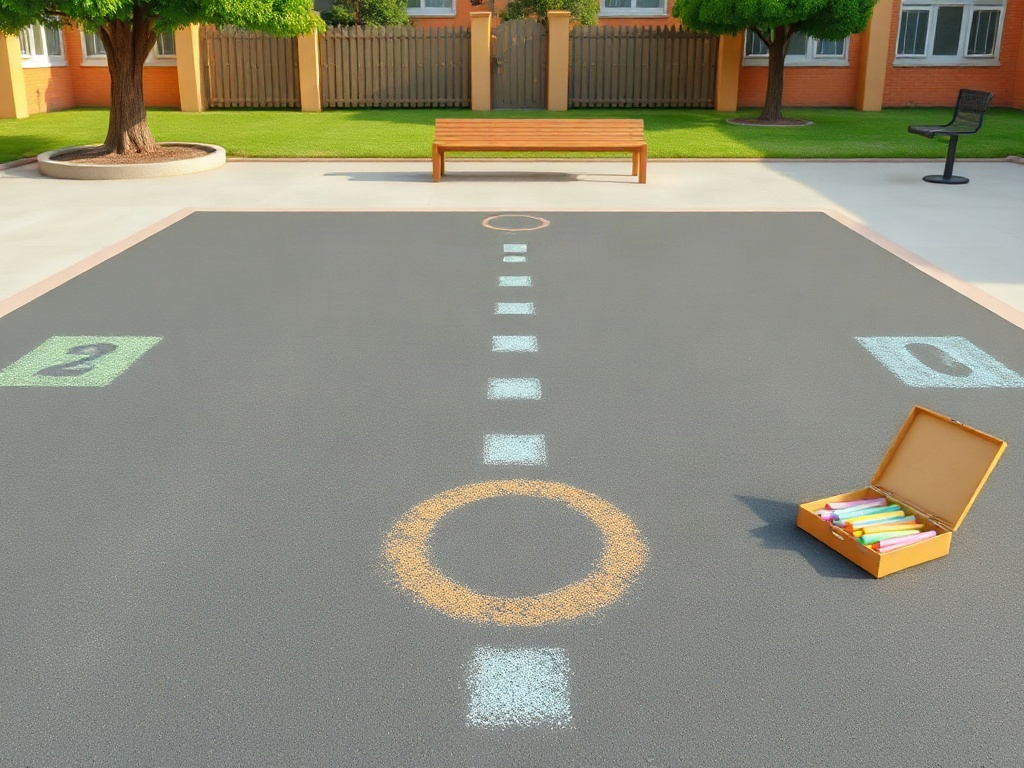
You'll need a box of coloured chalk and a bit of flat pavement. The child draws a course: squares for hopping on one foot, a line to walk like a tightrope, a circle to spin around twice in. They play it alone, counting out loud. Sit on the bench and don't join in. Twenty minutes is enough. Suited for ages 5–7. It's working if at least one other child stops and watches — even without joining in. If they ask "what's this," the child already has a ready answer: "It's a course. Try it from here."
Rehearse exactly these two lines at home. Not "hi, I'm..." but "Try it from here" and "You can do it too." Short lines tend to land; long ones get lost in the excitement.
What to do when the child refuses to go down
- Don't ask more than once. A second attempt at persuading can sound like begging, and the child senses it matters a lot — which can make it feel even scarier.
- Offer a task, not social contact: "Let's go check if the cat's still on the windowsill." Going outside gets a purpose and an endpoint.
- Set a time limit yourself: "Ten minutes and we head back up." Many children go down more easily when they know there's an exit.
- Bring something shareable — chalk, pine cones, two balls. The object does the work instead of words.
- If the child stands off to the side watching other kids, don't push. Watching is often the first phase of joining in, not a refusal.
Common mistake: a birthday party on day seven
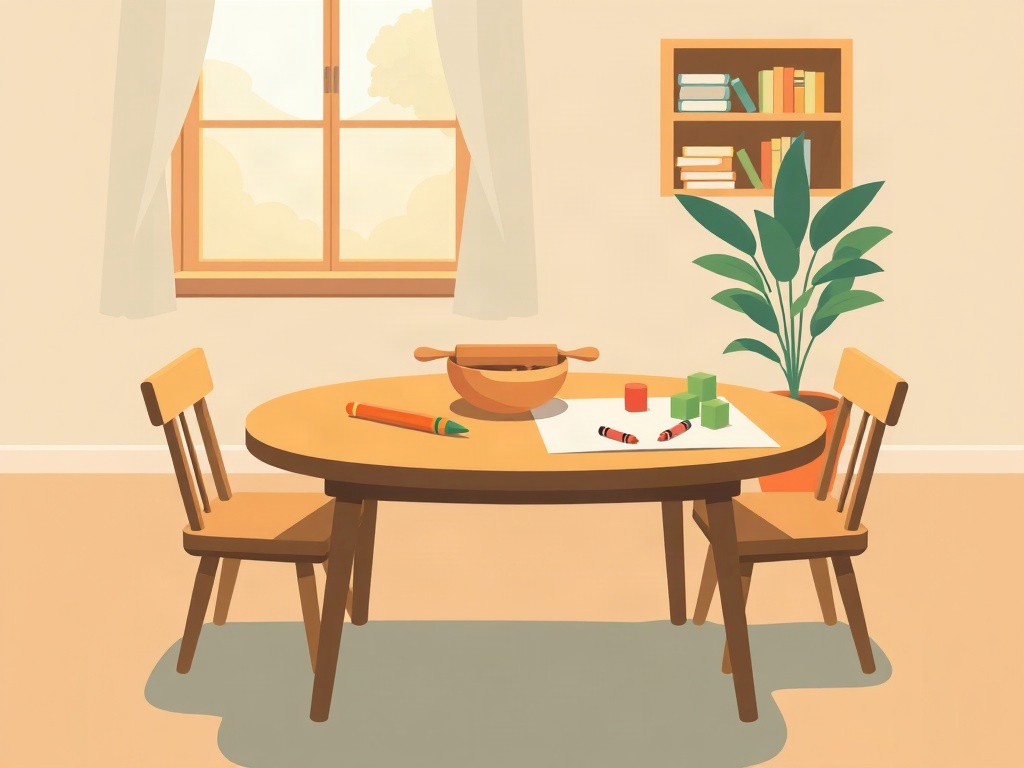
Parents invite three unfamiliar kids from the building over for pancakes to "speed things along." It often backfires. The guests may already know each other and play together, while your child stands in their own room like an outsider. Consider inviting one child instead. Just one. For forty minutes, with a clear activity — dough, building blocks, drawing on one big sheet of paper. Two people have a conversation; three can already form a majority.
Another common misstep is signing the child up for three activities right away "so they'll socialize." That first week, much of their energy goes on a new bed, new sounds, and a new route to the shop. Consider giving it a week or so before adding a schedule.
"Nobody wants to play with me" in the first week often means "I don't know how to get in here," rather than "they don't like me."
What a good end to the week looks like
Don't look for a friend. Look for three things: the child goes down without being talked into it, has at least one spot downstairs they call their own, and has traded some kind of action with an unfamiliar child — a passed ball, budging up on the swing, hopping into a square together. That's enough. Friendship often takes a few more weeks — and if the move happened over summer, it may not come until school starts, when the neighborhood kids fall into the same daily route together.
And one more thing that often gets skipped: tell the child your own version. "I don't know anyone here yet either. Today I got confused about which door is ours." When the adult admits they're still learning the new place too, it can help the child stop counting their own unease as their own failure.