
For Parents: Christmas with the Whole Family — How to Manage Presents Without Spoiling Your Child
A guide for the grown-ups — a parents' article, about children aged 6 to 9 — on how to space out gifts from grandparents, aunts, uncles and godparents so the holidays don't turn into an avalanche of wrapping paper and disappointment.
It's Christmas Eve, quarter to seven. There is a small mountain of presents under the tree, the child has already torn through several of them in a matter of minutes and is asking who's next. Grandma is taking photos, the godmother is waiting for a reaction to her gift, and it's sitting unopened under three others. Nobody did anything wrong. Nobody just agreed on anything beforehand.
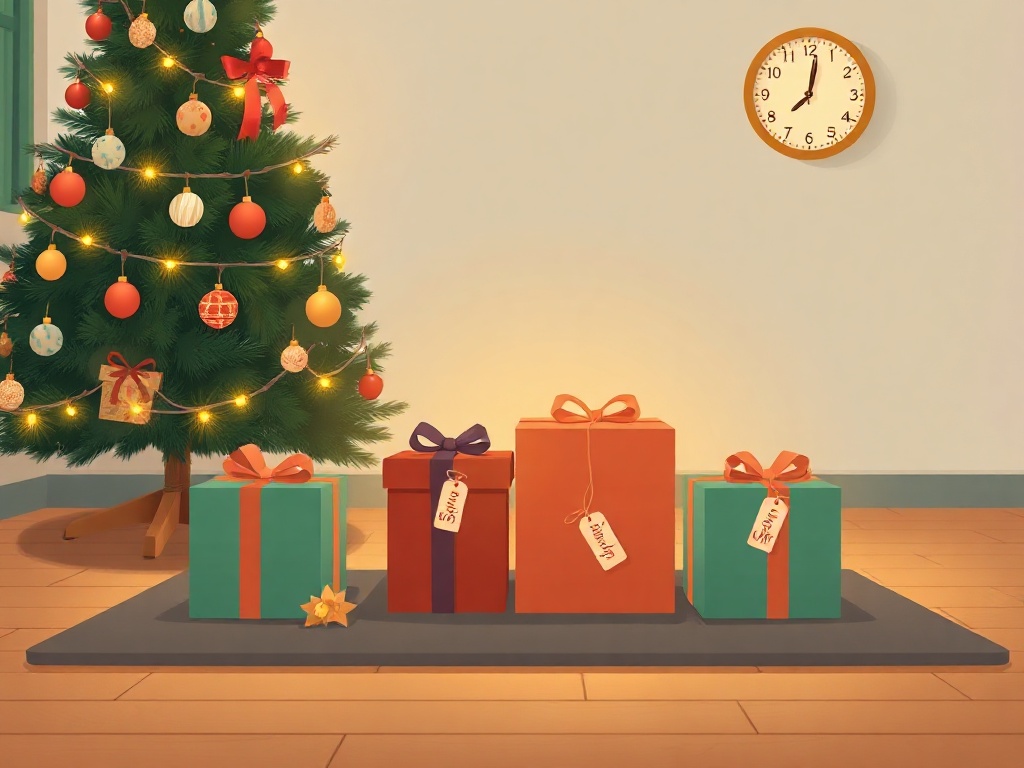
A quick note before we start: this piece is for the grown-ups. It's a parents' guide, written about children aged 6 to 9 — an age when kids count, compare, and remember exactly who gave what last year. I'm not here to convince you to buy fewer Christmas presents. I'll give you a concrete plan for spacing them out.
Why "fewer presents" almost never works
The standard advice is to limit the number of gifts. It sounds sensible and falls apart on the very first phone call with Grandma, because for her the present isn't an object — it's her way of saying she loves her grandchild and has a place in the family. Ask her not to buy anything, and what she hears is: we don't need you. She'll often buy something in secret anyway, which is worse than anything else.
Besides, it's not the number that spoils a child. What spoils them is the feeling that gifts appear out of nowhere, are endless, and require nothing in return — no waiting, no attention, no thanks to a specific person. A child who unwraps a whole pile in one rushed sitting will barely remember any of it. A child who unwraps the same pile across four different moments, each gift with a name and a face attached, tends to remember far more of them.
Stretch Christmas over four days
The strongest move is logistical, not disciplinary. Instead of all the Christmas presents landing on one single day, spread them across days and people.
- 23 December — the gift from godparents or family friends, opened calmly in the afternoon.
- Christmas Eve, 24 December — only the presents from parents, a few at most, opened one at a time.
- Christmas Day lunch, 25 December — presents from grandparents, each one opened in the presence (or on a video call) of the person who gave it.
- 26–30 December — anything that arrives later, or from relatives you see after the holiday itself.
The effect is immediate. Every gift gets its own few minutes instead of drowning in the pile. And the child has something to look forward to on day three of the holidays, instead of the excitement being over by the evening of the 24th.
The conversation with relatives: when and how
Call at the start of December, not a few days before Christmas. And don't open with "please don't". Open with direction instead.
A sentence that works: "This year Oliver is mad about dinosaurs and anything he can build. If you're thinking of getting him something, that's where you'll hit the mark." The relative gets something concrete, you get control over the content, and nobody's feelings are hurt.
If Grandma insists on something big, suggest splitting it: "Instead of three small things, get one nicer thing and come round to build it together." Time spent together is what a child this age actually remembers — and that's not sentimentality, it's a practical way to cut down on volume.
The Thank-You Cards
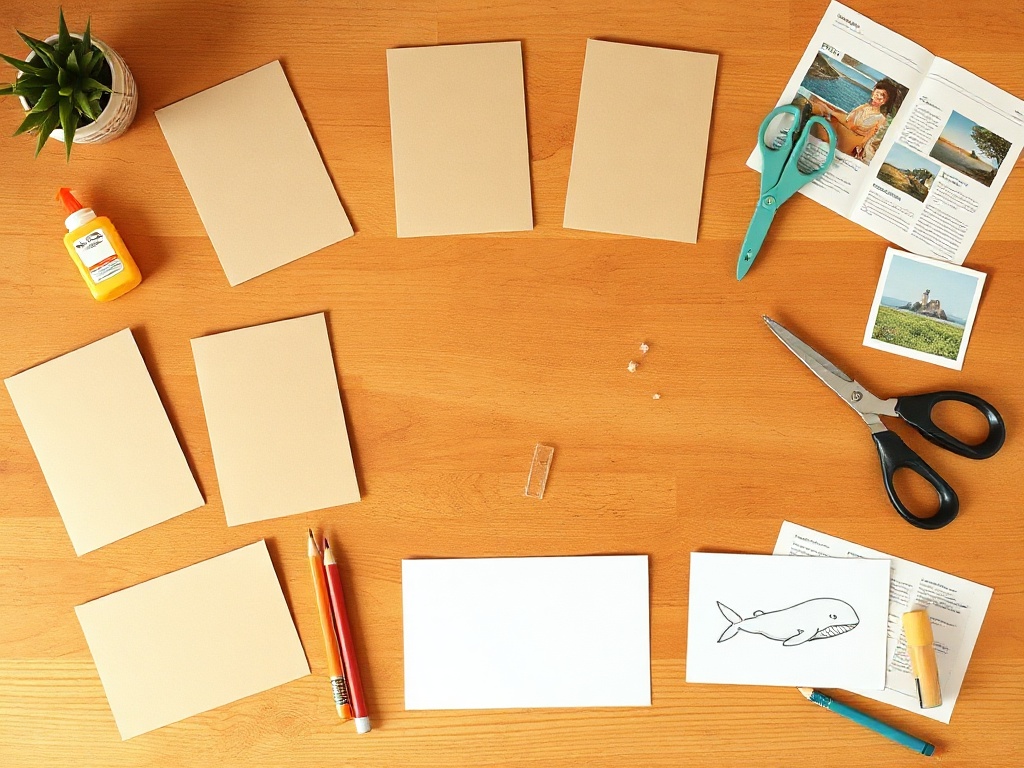
Shortly after the presents are opened, sit down at the kitchen table with your child and make one card for each person who gave a gift. Lay out a sheet of A5 paper or cut-up cardboard for every gift-giver plus a couple of spares, coloured pencils, glue, and — if your child likes cutting things out — a couple of old magazines. On each card, the child draws the gift and writes one sentence about why they like it: not "thank you", but something specific like "The whale jigsaw is the hardest one I've ever done". Set aside about half an hour after lunch, when the first excitement has died down; a six- or seven-year-old will want you to spell the harder words. You'll know you're finished when every gift-giver has their own card and your child can reel off, without checking the pile, who gave them what.
What to do with duplicate and unwanted presents
Every year at least one of the gifts is something the child already has or will never touch. Don't hide it and don't quietly throw it away — a seven-year-old will notice.
Make it part of the plan. At the start of the holidays, explain in advance: anything new that comes into the room means something old has to leave. The child chooses what, on their own. The rule works because it's announced before the presents arrive, not after a meltdown has already started over the toy truck.
The "Pass It On" Box
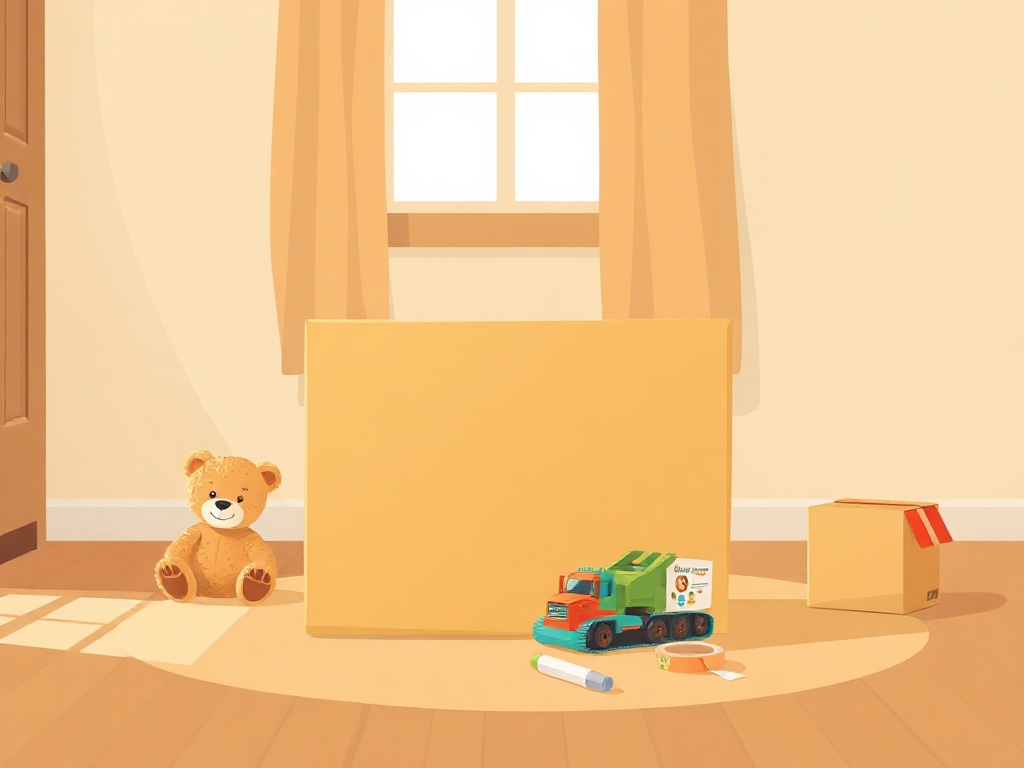
Do this one in the middle of December, before the new gifts arrive and while the shelves are still full of last year's toys. The setup is deliberately plain: a medium cardboard box, tape for the corners, a marker pen your child holds — they write the label themselves — and an hour with nothing else in the diary. After that, the whole thing runs on a single question, which you ask and keep asking as they walk round the room: "when did you last play with this?" The answer decides whether the toy goes in the box, and the answer is theirs, not yours. Some children are done in twenty minutes; others circle the same shelf three times, and that slowness is usually a good sign. Six- to nine-year-olds handle this best, because they can still remember which toys they asked for, and remembering makes the decision an honest one. A box holding four things your child can explain beats a box a parent filled in ten minutes.
The most common mistake: using presents as a behaviour tool
"If you don't behave, Santa won't bring you anything." The line is tempting because it works instantly — the child sits back down, the holiday carries on.
The problem shows up on the morning of the 25th. The presents arrive regardless of behaviour, because no parent actually takes them away. The child draws a perfectly logical conclusion: the threat was empty. Next time you say something serious, they already know your words don't carry consequences. It also ties the gift to fear rather than to the person giving it — the exact opposite of what you want.
If you need a consequence in the moment, make it small, immediate, and doable: five minutes out of the room, the film postponed until after dinner. Christmas isn't a discipline tool.
Pocket money and cash gifts
More and more relatives give money instead of something to unwrap. For a child aged 6–9, a small amount — roughly what a comic or a modest toy costs where you live — is usually plenty and easy for them to grasp. Larger amounts are best split: part stays with the child to spend, the rest goes into a box or account you tell them about openly.
It helps not to rush the spending. Open the envelope, count the money out loud together, and decide what happens to it a few days later. This way the child learns to tell the difference between having money and spending it straight away — a skill that's usually far easier to learn at seven than at seventeen.
A child doesn't remember how many presents they unwrapped. They remember who sat next to them while they did.
What's left after the holidays
Take stock briefly in early January, before school starts again. Which gifts get used every single day? Which ones never left the box? Write the answers down somewhere — next December, that list will save you both money and arguments, because you'll be able to tell an aunt with full confidence what actually gets played with and what just sits there.