
Wednesday Laundry Night: 6 Sorting Games for a 5-7-Year-Old
How to turn weekly laundry in the basement or bathroom into a twenty-minute game of sorting by color, smell, and wash cycle — without stretching out the evening.
Wednesday, almost eight o'clock. The hamper is full, the machine in the basement is waiting, and your child is circling you asking when you're finally going to play. Usually one of two things happens here: you send them off to another room with a tablet, or you let them 'hand you' clothes one at a time, which actually stretches the laundry out by fifteen minutes. But there's a third option — one where the child doesn't just hand things over, but decides.
Why 'help me with the laundry' usually doesn't work
Helping is boring because it involves no choice. Handing over socks is an assembly line — the child isn't thinking, just moving their hands. Sorting is the exact opposite: it's a decision that can be right or wrong, and the child feels that instantly. That's why the games below aren't chores in disguise. Each one requires a 5-7-year-old to observe something (color, label, smell, weight) and place it into a group.
One more thing about the setting matters. The basement and bathroom aren't neutral rooms — there's detergent, pods, fabric softener around. The first rule you say out loud before you even start is simple: 'You touch clothes. I touch bottles.' Repeat it every Wednesday until it becomes automatic. The games below are built so the child never has a reason to reach for a bottle.
How to sort by color when your child only sees 'colorful'
Adults sort into whites, darks, and colors. For a five-year-old that's an abstraction — they see a blue T-shirt with a yellow teddy bear and have no idea where it goes. So don't ask 'what color is this,' ask 'is this more dark, or more light?' The either-or question solves the problem instantly, and by around age seven kids start telling the third pile apart on their own.
The Three Islands
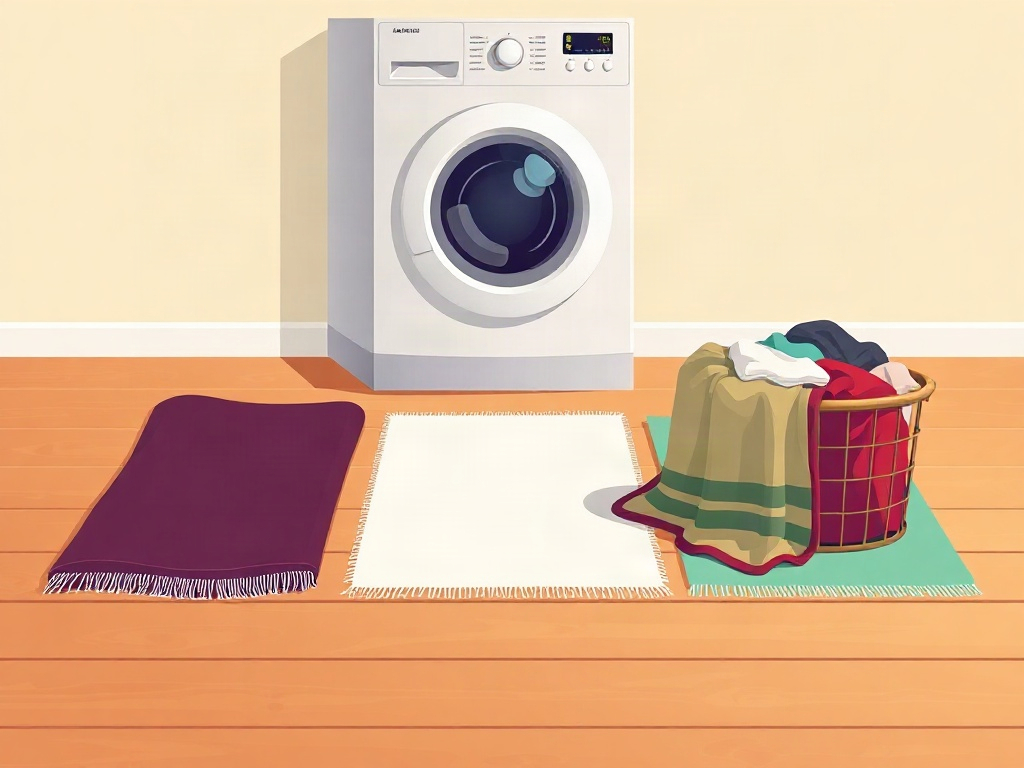
You barely need anything: three towels or three old pillowcases spread on the floor in front of the machine, and the hamper of laundry. It takes 8 to 12 minutes and works for children aged 5 to 7. Lay out the towels and name them out loud — White Island, Dark Island, Rainbow Island. The child pulls out one item at a time and tosses it onto its island, while you count together out loud: 'Twelve on Dark Island!' If they hesitate, ask the either-or question. One rule that saves the evening from arguments: once an item has landed on an island, it doesn't get moved. If it's wrong, moving it is your job, and you do it quietly while the child is already pulling out the next item. Call it a success if the child has sorted at least ten items on their own and named the island before letting go of each one.
Smell is a sense nobody ever makes a game out of
Children tell smells apart far more confidently than they can describe them. That's what makes laundry such a handy setting — the smells here are clear and safe: a sweaty T-shirt from playing outside, a dry clean towel, a damp cloth forgotten since yesterday. You never ask the child to smell detergent — ever. You only work with fabric.
The Nose Knows
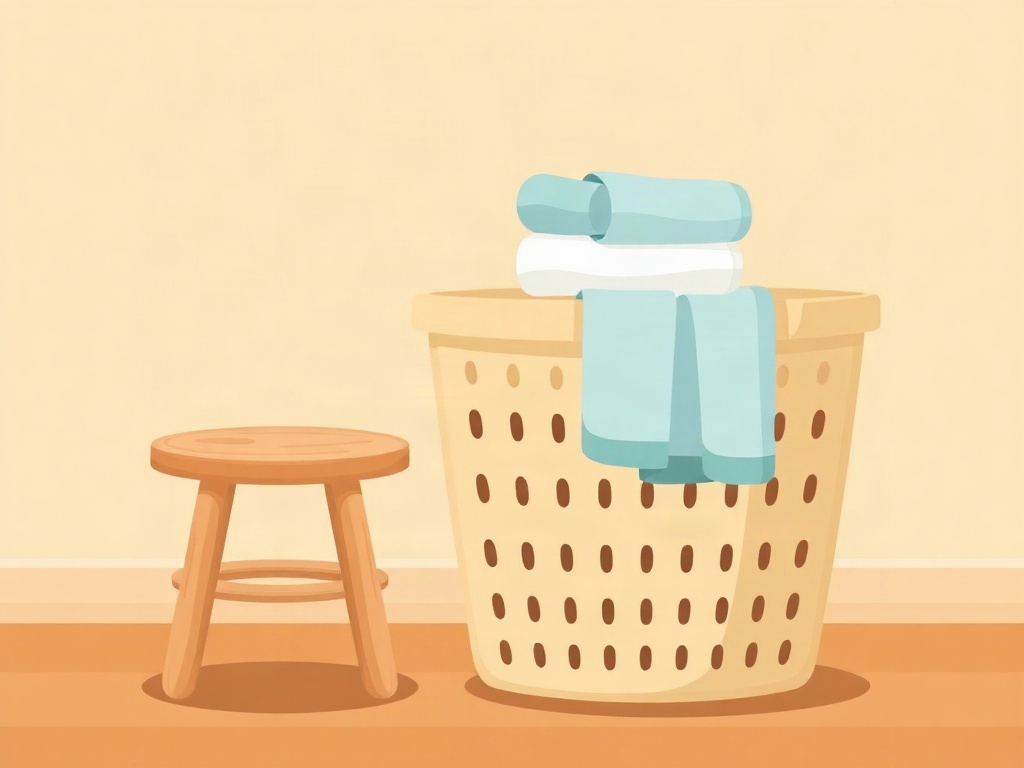
You'll need four items from the hamper and two clean ones from the closet, plus a stool for the child to sit on. It takes ten minutes, works for ages 5-7, and gets even more fun from age six on, since the child starts inventing their own descriptions. Hold up an item, the child sniffs it from about a hand's width away and rules with just two words: 'needs washing' or 'clean.' Then add the question that actually builds vocabulary: 'What does it smell like to you?' The answers will be funny, and that's exactly why they stick: 'like the playground,' 'like chalk,' 'like Grandma.' The two clean items are your control check — if the child identifies both correctly and doesn't mix up the damp cloth with the clean one, the game's a success. If they struggle, that's normal — just try again tomorrow with two different items.
The washing machine's programs as a secret code
A washing machine's control panel is full of symbols even adults don't fully understand. For a child, that's a ready-made alphabet. Don't let them press the buttons — let them read the labels and check whether the number on the label matches the number you've selected.
The Label Detective
You'll need five items with tags sewn in, a sheet of paper and a pencil, and about 12 minutes. This game is for ages 6-7, since it requires recognizing numbers up to 60. The child finds the tag — which is itself a small task, since tags hide in the collar or side seam — and looks for the circle with the number in it. They write the numbers down one under another. At the end, look for the smallest one together: 'This T-shirt wants 30 degrees. So the whole load washes at 30, or it'll come out too tight.' Make the mistake on purpose once, out loud, so there's something for the child to correct. It's a success if the child found at least three tags on their own and correctly pointed out the lowest number.
Three quick games for when you don't have twenty minutes
- Heavy and light: the child arranges the wet clothes pulled from the machine from lightest to heaviest before you hang them up. Takes three minutes and works surprisingly well even with five-year-olds.
- Match the pair: dump the socks on the floor and time one minute. How many pairs can they match up? The next Wednesday, compare it to last time's score — the number sticks in their head all week.
- Guess the next one: before you reach into the hamper, the child guesses what item you'll pull out. Getting one in five right is a good score, and they know it.
The most common mistake: turning the game into a chore
After two successful Wednesday nights, it's tempting to say, 'Right, sorting is your job now.' From that point on, the game dies within about a week. The reason is simple: while the child sorts because it's fun, they put in effort; the moment it becomes a chore, their only goal is to finish fast, and the piles get sloppy. Protect the structure: you announce that you're starting, the child joins in if they want to, and the evening carries on the same way either way.
A second common mistake is correcting them out loud. A child tosses a gray T-shirt onto the whites pile, you say 'no, that's dark,' and the mood drops a notch. Gray really is debatable — even for adults. Move it quietly, and only comment on what came out right.
'Mom, this one smells like the garden, and this one smells like nothing. So the one that smells like nothing is clean.' — a 6-year-old girl, after her third Wednesday
What's left after five weeks
Don't expect your child to start doing the laundry. Expect something more useful: by around the fifth or sixth Wednesday, they'll show up in the basement on their own, glance at the hamper, and announce how many piles it'll make. That's prediction based on a pattern — the same skill they'll later need for sorting colors in a math problem. And there's more: their clothes stop ending up under the bed, because now it's clear where things go. If you want to track the progress, tape up a sheet of paper on the wall and add a tally mark every Wednesday — after ten marks, a small treat worth a few euros from the bookshop is plenty, but the sheet itself usually works better than the reward.