
Rusty the Dog's Story: How to Help a 5-to-7-Year-Old Stop Being Afraid of Neighborhood Dogs
A story about a dog who's scared too, plus two concrete ways to turn fear of dogs into a skill for meeting them calmly. For children ages 5 to 7.
A big brown dog is standing on the corner by the shop. Your child grips your hand and pulls back. You say, "Don't be scared, he's friendly." And next time it all happens again, exactly the same way — only louder.
The reason usually isn't that your child doesn't believe you. It's that "don't be scared" isn't an instruction. It doesn't tell the legs what to do, the hands where to go, the eyes where to look. Children this age tend to respond better to a clear action than to a judgement. So if your child is afraid of neighborhood dogs, here you'll find a story that gives fear a face and a name, followed by two ways to practice the movement at home — before you hit the street.
Rusty the dog's story: the dog who was afraid of children
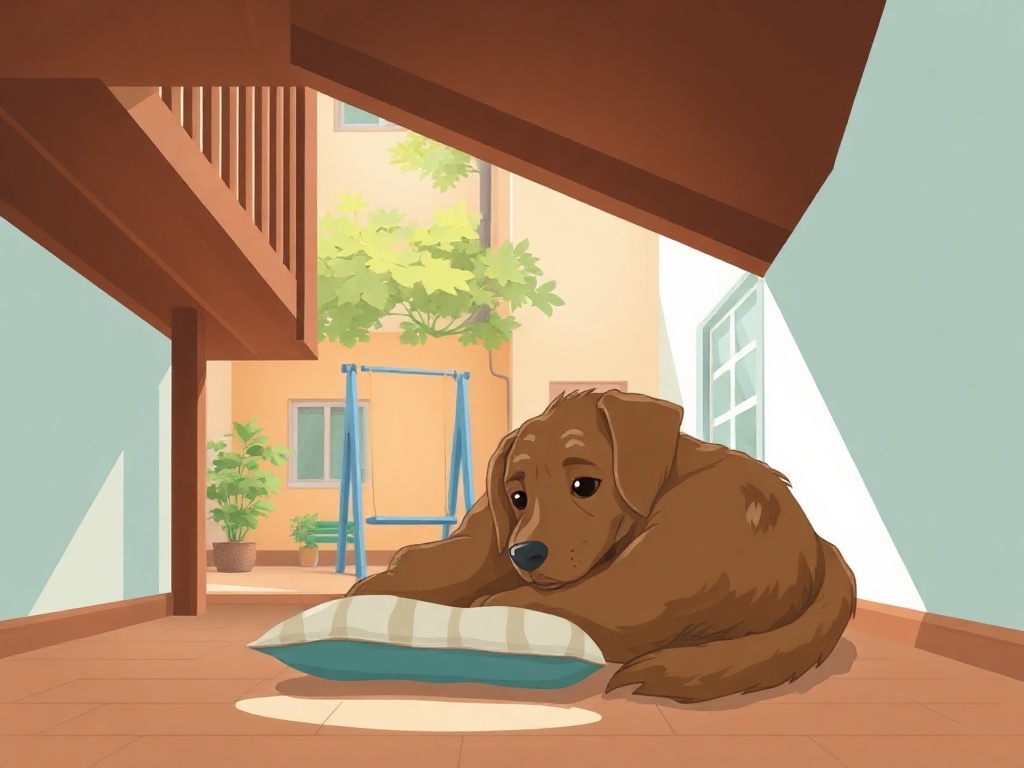
Rusty lived in the yard behind the block of flats, under the stairs, where it was warm. His fur was shaggy like a dropped-off sock, and his ears — one stood up straight, the other always flopped to the side.
Rusty was scared. Not of thunder, and not of vacuum cleaners. Rusty was scared of children.
Because children moved strangely. They'd suddenly bolt. They'd shriek with joy the same way Rusty only shrieked when he was hurt. They'd reach their hands straight for his head, and Rusty couldn't see what was in those hands. So the moment he heard a child's voice, he'd dart under the stairs and wait.
One day, Mira came into the yard. Mira was scared too — of dogs. The two of them spotted each other and froze: Rusty under the stairs, Mira by the swing. Neither of them moved.
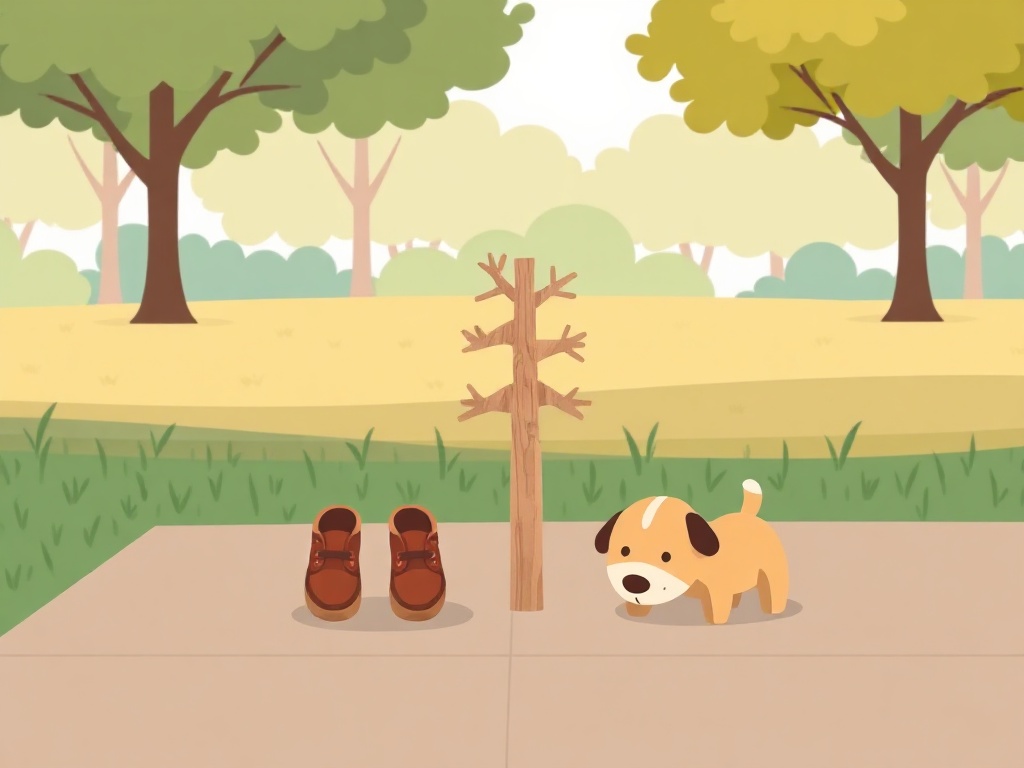
Then Mira's grandad sat down on the bench and said quietly, "Mira, stand like a tree. Arms down at your sides. Feet still. Look at your shoes, not into his eyes. Trees don't chase anyone, and no one chases trees."
Mira became a tree. She breathed and counted silently to ten.
Rusty poked his nose out from under the stairs. No one was running. No one was shrieking. No one was reaching a hand toward his head. He took three steps, sniffed the air around Mira, and sat down two metres away — just far enough to make a run for it if he needed to.
"He's scared of me," Mira whispered, surprised.
"Exactly," said her grandad. "You're both scared of the same thing — being taken by surprise."
From then on, Mira knew something a lot of grown-ups don't: you don't have to love dogs. It's enough to know what to do with your hands.
Why "he doesn't bite" doesn't work when a child is afraid of dogs
The line "don't be scared, he doesn't bite" asks a child to swap out their feeling on the spot, on command. That's hard even for an adult. It's also a promise no one can really guarantee — and children can remember broken promises for a very long time.
What tends to work better is replacing the feeling with a procedure. A child who is afraid of neighborhood dogs doesn't need to stop being scared. They need to know the three things their body does while the fear passes. Here they are, in words simple enough for a child to repeat alone:
- I stop. I don't run, because running can make the dog chase me — to him that may be a game, not an attack.
- Hands down, glued to my sides. No waving, no pointing, no covering my head with my hands.
- I look away or at my shoes. A long stare into the eyes can read as a challenge to many dogs.
- I count slowly to ten and wait for the grown-up to say we can go.
- If I want to pet him, I ask the owner: "May I pet him?" And if they say no, I say "okay" and move on.
- A grown-up stays with me. These steps help me stay calm, but they aren't a guarantee — any dog can behave unpredictably, so I never walk up to a dog on my own, not even one I know.
The goal isn't for your child to fall in love with dogs. The goal is for your child to walk past a dog without their heart deciding the world is ending.
The "I Am a Tree" Game
You barely need anything: a clear bit of floor space, a chair for you, and a soft toy — a plush dog if you have one, but a pillow works too. The game takes about 10 minutes and is for children ages 5 to 7. You slowly bring the toy toward your child, making a quiet "woof," and your child becomes a tree: arms down, feet planted, eyes on their shoes, counting to ten out loud. Then you swap roles — your child leads the toy, you're the tree — and they get to see just how boring a tree is to a dog. Three rounds a day is usually plenty. You can count it as progress when your child holds the count of ten without raising their arms or stepping back — three times in a row, on three different days.
The second game moves outdoors — but not right up to the dogs, not yet. Both games are practice, not protection: an adult should always be present around real dogs, and any encounter with an unfamiliar or unleashed dog is a grown-up's job to manage.
The Notebook Walk
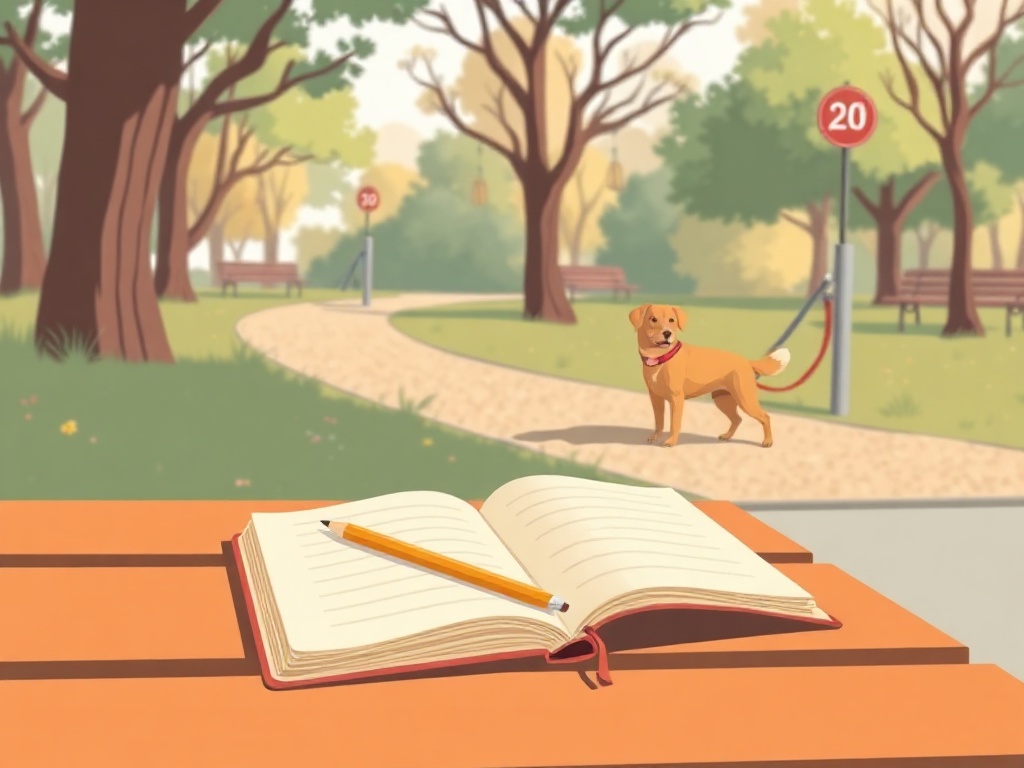
You'll need a small notebook and a pencil, about 20 minutes, and a park bench with a view of dogs at a distance of at least twenty paces. For children ages 5 to 7. Sit down together, and your child writes or draws what each passing dog is doing: is its tail wagging, does it stop, does it sniff the ground, does it look at its owner. You don't approach at all — this walk is for watching only. By the fourth or fifth walk, many children will say on their own, "That one over there is calm." You can count it as progress when your child can point out the difference between a dog that's playing and a dog that's tense, and explain how they could tell.
The most common mistake parents make with a child who is scared of dogs: "go on, touch him so you can see"
It's understandable — you want to prove there's nothing to be afraid of, so you take your child's hand and place it on a calm dog's back. The trouble is, in that moment your child has no choice. They can't stop, and they can't pull back — and choice is often exactly what's missing when fear takes over.
The result is often the opposite of what you intended: the fear stays, but now distrust of you gets added on top. Next time, your child may not tell you they're scared — they'll hide it, so you can't make them do it again.
The other common mistake is laughing. "But he's tiny, no bigger than a slipper!" Size has little to do with fear. A child who's been laughed at often stops talking about their fears and starts handling them alone — usually by running away.
A gentler approach is the opposite: your child decides when, and whether. You go first, ask the owner, pet the dog yourself, and say, "I petted him. You can just watch from there." Plenty of children end up reaching out on their own by the third or fourth try. Some never do — and that's completely fine, as long as they can walk down the street calmly.
How to tell Rusty's story so it helps your child stop being afraid of dogs
- Tell it in the evening, not right after your child has been frightened on the street — in the moment, they're still shaking, not listening.
- Pause at the part where Rusty hides under the stairs and ask, "What do you think he's afraid of?"
- Let your child name the dog from your own neighbourhood. A thing with a name is often less scary than "a dog."
- Repeat it five or six times over two weeks. Children this age usually pick up the procedure through repetition rather than explanation.
- When you're out and your child manages to stay a tree, say exactly what they did: "You didn't run, and you kept your hands down." Not just "good job."
One more small but important thing: if your own fear is real, your child may feel it through your hand. A tight grip is a signal. If you notice yourself tensing up, silently run through the same three steps yourself — stop, hands down, breathe. Many grown-ups find it helps them too.
Every child and every dog is different. If your child's fear is intense, lasts for months, or gets in the way of everyday life, it's worth talking it over with your paediatrician or a child psychologist.