
30 Minutes in the Dentist's Waiting Room: Games That Work with 5-7-Year-Olds
How to turn the wait before a baby-teeth checkup into something bearable — with two screen-free games that need no props and no promise of a treat.
You're sitting in the three free chairs by the door. Your child is gripping your hand, feet not reaching the floor, swinging faster and faster. From inside comes the quiet whirr of the drill, someone leaves, someone else goes in, and you glance at your watch — still twenty-five minutes to go. And this is the moment most parents do the same thing: hand over the phone.
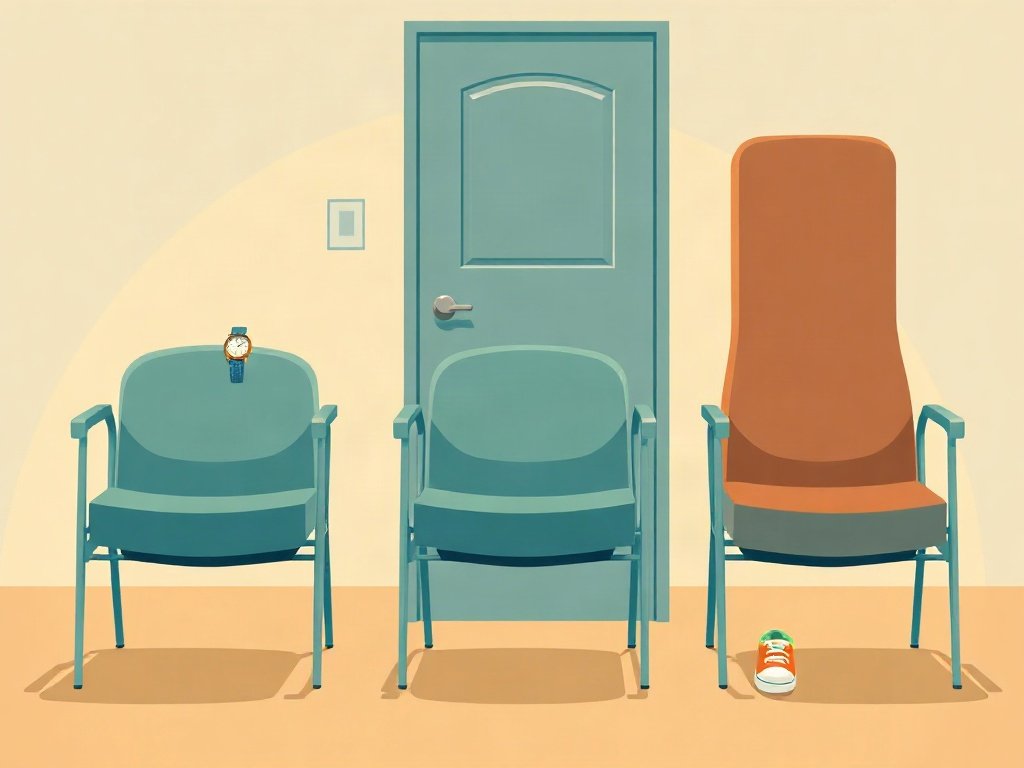
The phone works exactly until you take it back. Then the child steps out of it dazed and lands right back where they were — scared, only now also annoyed that their screen got taken away. The problem isn't boredom. The problem is that the child has no control at all over what's about to happen to them, and a screen doesn't give control — it only gives a pause.

Why distraction isn't enough
By age 5-7, children already understand sequence: first we wait, then we go in, then the dentist checks our teeth. What stresses them is that in this sequence they have zero say. That's why the games that actually work in a waiting room share one trait — the child is the one choosing, counting, giving orders, or guessing. Not you. You just keep the game from falling apart.
One more thing people often miss: the game needs to be able to stop mid-round. If the nurse calls your child's name right when it's their turn, and the game only works if it's finished, you've just handed yourself a second meltdown on top of the first. So: short rounds. So: no score that needs saving.
Who's Going In Next
All you need is the waiting room exactly as it is — people, a door, and your whisper. The game takes 5 to 10 minutes and works well for children aged 5 to 7. Catch your child's eye and each of you quietly says who you think is about to be called: "I think it's the woman with the red bag." Then you both watch the door. Whoever guessed right holds up one finger — that's the point, nothing gets written down. If your child is shy about speaking out loud, let them point with their eyes or whisper in your ear. The game has done its job once your child starts glancing at the door on their own at the next opening and announces who guessed right — which means their attention is now on the door as part of a game, not as a threat.
The second game is for when the first one runs its course — usually after the door has opened three or four times. Here we shift from watching to hands, because around the ten-minute mark the child gets physically restless and needs to do something with their body.
You're the Boss of My Fingers
You need nothing but your two hands and about 7 minutes; it suits ages 5-7, with younger ones enjoying it most. The child gives orders: "Lift only your pinky." "Make the letter O." "Hide your thumb." You do exactly as told — including when it's impossible, and then you say honestly: "I can't, my hand doesn't bend that way, give me another order." Then swap roles for a few rounds. Count it a win if the child gives at least five orders in a row without turning to look at the door — that means for a few minutes the whole room has shrunk down to just your two hands.
The small things that carry you through
- Tell your child in advance how long the checkup takes, in terms they can measure: "About as long as one bedtime story." Minutes mean nothing to them.
- Sit so your child faces you, not the surgery door. A clear view of the door keeps the tension high for the full thirty minutes.
- Give them one real choice: whether you go in together or wait outside, and whether they sit in their own chair or on your lap.
- Prepare one sentence your child can say to the dentist on their own: "Can you show me the little mirror first?" Practise it twice in the waiting room.
- If your child goes quiet and doesn't want to play — don't push it. Sit close and narrate out loud what you notice in the room. That's a game too, only you're the one holding the ball.
The most common mistake: promising a reward
"If you're good in there, I'll buy you something after." It sounds harmless and it works for exactly zero minutes. First, the reward doesn't lower the tension — it puts a price tag on it, and the child starts worrying about what happens if they don't manage. Second, you've just confirmed that something unpleasant enough to be paid for is coming. If things get hard inside, the child isn't just upset — they also feel they've let you down.
If you want to mark the day with something, do it — just not as a deal. Say it after the checkup: "Let's go to the bakery, because we got through it." A hot chocolate or a biscuit for €1-2 does exactly the same job as a big toy, as long as it wasn't promised beforehand.
The other common mistake is a long explanation in the waiting room. The parent who describes in detail what the dentist will do with each instrument usually watches their child grow even more tense. Explanations belong at home, the day before, said calmly. In the waiting room, information is already too much — what's needed there is something to do.
A child doesn't calm down because you explained what's about to happen. They calm down because for the next five minutes there's something they get to decide for themselves.
What to expect if they cry anyway
Crying in the waiting room doesn't mean the game failed. It means the tension peaked right there, not in the surgery — which is actually the better place for it. Set the game aside; don't force it to finish. Crouch down next to your child and name what you see: "You're scared and you feel like crying. I'm right here and I'm not going anywhere." Then hand them one small decision to bring back the sense of control — which chair to sit in, or holding your keys. That small decision does more than you'd expect.
And if there are only two minutes left, don't start a new game. For the rest of the time, just count something in the room out loud together — the tiles, the lights, the chairs. Counting out loud gives you both a rhythm to hold onto.
You leave this page with two games that need nothing but your hands, one rule to avoid (no promising a treat in advance), and one sentence your child can say to the dentist on their own. That's enough for thirty minutes.