
Games for Visiting Grandma and Grandpa: Quiet Activities Without Toys or Running Around
When you visit older relatives and there isn't a single toy in the house, a child between 7 and 9 doesn't need things brought from home — they need a role to play. Here are seven games you can play sitting down, at a table or on the sofa.
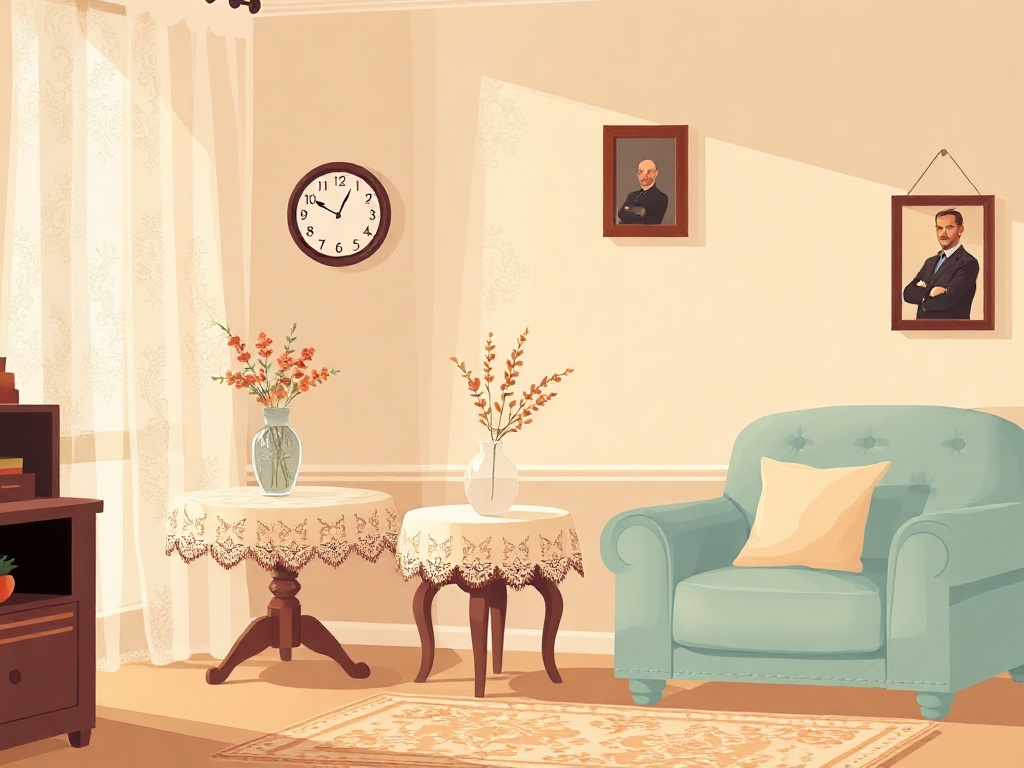
You walk into the hallway, the child takes off their shoes, and before they've even sat down, they whisper, "When are we leaving?" In the living room there's a crystal vase, a lace tablecloth, a TV playing the news, and zero toys. The rules pour out all at once — don't run, don't touch, keep your voice down. Twenty minutes later the child is draped over the back of a chair, sighing loudly enough for everyone to hear.
The usual advice is to pack the bag: a book, some markers, a small toy car, and a phone just in case. It works for about half an hour. Then the puzzle's finished, the marker has rolled under the sideboard, and you're right back where you started — except now you also feel like you've failed.
Why toys from home don't solve the problem
A seven- to nine-year-old isn't bored because there's nothing to touch. They're bored because there's no role for them in that room. The grown-ups talk about things that don't concern them, only ever ask two questions — "How's school?" and "Haven't you grown!" — and after that the child fades into the furniture. A toy from home only isolates them further: they sit in a corner playing alone while the conversation drifts on above their head.
The opposite works better. Give them a task that makes them a participant — asking questions, counting, taking notes, handing things round. Then sitting quietly stops being a rule and becomes part of the game. And there's a bonus: almost every game below needs Grandma, Grandpa, an aunt or a great-uncle to join in. That's exactly the point. The relative who's had no idea what to do with this child for the last two hours suddenly has lines to say.
The game that does the most work: "Twenty Questions About the Old Days"
This isn't a shy little interview along the lines of "Tell me about your childhood." It's a game with points and a clear finish line — and the side effect is that the child learns things no one in the family ever wrote down.
Twenty Questions About the Old Days
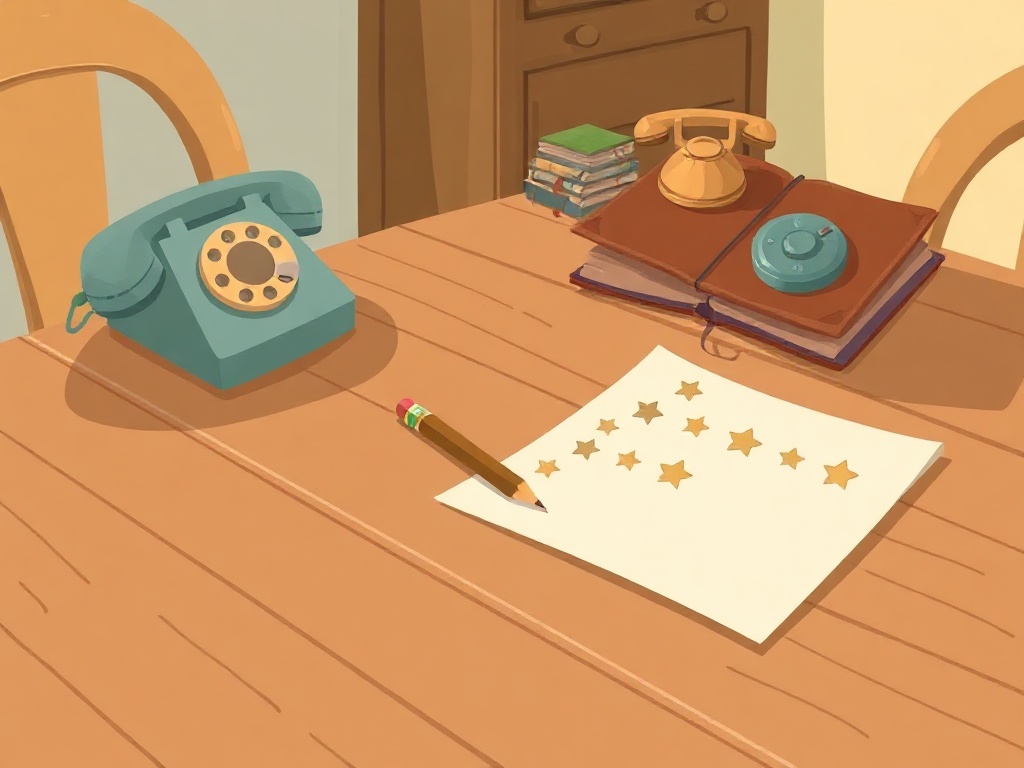
All you need is paper and a pen — ask your host for them, that's part of the game. Play for 20–25 minutes; perfect for ages 7 to 9. The child gets a list of ready-made questions and keeps notes: "What was your first job?" "Which subject did you hate at school?" "Did you have a nickname?" "What did you eat when the fridge was empty?" "What was your best friend called when you were my age?" For every answer that includes a number — a year, an age, a number of siblings — the child draws a star. The goal is ten stars. If the grown-up answers with a whole story instead of just a sentence, that's worth two stars. The game is a win if the page ends up with at least ten stars and the child can retell one of the answers to the other parent in the car on the way home.
Five games that need nothing but a table
- The Quiet Spy: one player picks an object in the room and says only its colour. The other asks yes-or-no questions, up to ten of them. Whoever guesses in fewer questions wins. It's played in whispers — that's part of the rules, and children stick to it surprisingly well.
- One-Word Story: everyone adds a single word to a shared sentence until someone puts a full stop. Whoever ends the sentence starts the next one. After five sentences, read the whole story aloud — it's usually delightfully absurd.
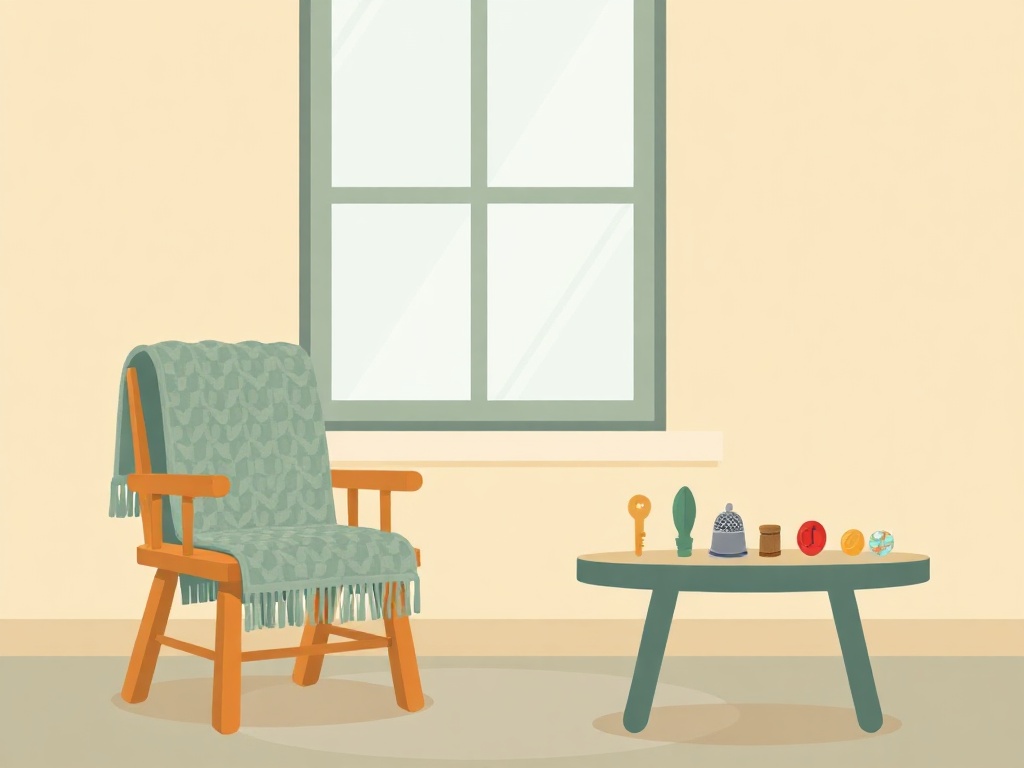
- What's Missing: line up eight small objects from the table — a spoon, a button, a key, a bottle cap. The child studies them for thirty seconds, closes their eyes, and you remove one. Then swap roles, because Grandma will enjoy it just as much.
- Kitchen Maths: if a pie for four needs six eggs, how many eggs for ten people? If one yoghurt costs about €1.20, how many can you buy with three euros? Let the host supply the numbers, not you — that's what makes them feel real.
- Draw From a Description: one person draws something without showing it, describing it in words instead. The other draws from the description. Then compare the two pictures. Laughter is guaranteed, and voices stay low, because the artist has to listen.
The house-tour game
Every old house or flat is full of objects with a story behind them — a clock that no longer works, a photo of a mustachioed stranger, a china set that only comes out at New Year. Normally the child isn't allowed to touch them. Instead, give them permission to ask about them.
The Museum of This House
You'll need paper, a pen, and the host's permission; if there's a phone with a camera and the grown-up agrees, photos help but aren't required. Set aside 30 minutes; suitable for ages 7–9. The child tours the rooms with an adult and picks five objects to go into the "museum." For each one, they note down three things: its name, where it came from, and one word the host uses to describe it. Nothing gets touched without permission — if the object is fragile, it's viewed from a distance, which only makes the game feel grander. At the end, the child reads all five labels aloud, like giving a guided tour. It's a success if there are five labels and at least one object has a year attached to it.
The most common mistake: "Sit still and play on your phone"
A phone really will switch a child off for an hour. The trouble comes afterwards. The child starts linking visiting relatives with being sent off to the side of the room rather than being part of it, and next time they say they don't want to go. The relative, for their part, sees a bowed head and decides "kids these days don't talk to anyone." No one's really at fault, but everyone drifts further apart.
The second common mistake is announcing the rules as a list of bans on the doorstep. "Don't run, don't touch, don't shout" gives the child three things they can't do and nothing they can. Say the opposite instead, and be specific: "Your job today is to collect five stories from Great-Grandpa. You sit in this chair — it's yours for today." The chair matters. The child needs a spot that belongs to them, or they'll wander the room and bump straight into the coffee table.
And third — don't direct the conversation from the sidelines. If the child asks their great-grandmother something and you jump in with "Ask her about the war" or correct how they're phrasing it, the game turns into an exam. Let them work it out on their own, even when the answers repeat themselves or the conversation wanders somewhere odd.
A child doesn't need to be entertained on a visit. Give them a job — the fun takes care of itself.
How to prep your child in the car, in five minutes
- Give them one name and one fact: "We're going to see Aunt Pena — she's a seamstress and loves talking about her sewing machine." The child walks in with an opening line ready.
- Give them one task, not three: "Today I want you to find out where that big clock came from."
- Agree on a secret signal for "I can't take it anymore" — say, the child comes over and taps your elbow. Then you step out onto the balcony together for two minutes. That heads off most meltdowns.
- Tell them exactly how long you're staying and stick to it. "Until half past four" is a promise, not a rough guess.
Do even just one of these things, and you'll come away with more than two hours logged. The child will know what Grandpa's dog used to be called, and Grandpa will spend the whole week telling the neighbours his grandchild grilled him like a reporter.