
The Third Day Home With a Cold: Games With a Thermometer, a Glass of Water and a Blanket
When your child is already feeling better but still needs to rest in bed, boredom becomes problem number one. Here are two in-bed games for kids aged 5-7 that use a thermometer, a glass of water and a blanket — no screens, no getting up.
It's half past eight in the morning, your child has already had breakfast, their temperature is normal, and from the doorway you hear: "Mum, what do I do now?" The nose is still runny, the doctor said to stay home, and the blanket has become the most boring thing in the world. The first two days went by in sleep and cartoons. The third is the one that wears everyone out.
The usual advice is "come up with something for them to do." The trouble is, by the third day your child has already turned down twenty activities. It's not fun they're missing — it's the feeling of being useful for something. That's why the games below aren't party-entertainer tricks, but tiny tasks where the child is in charge of something real: the glass of water, the temperature chart, the blanket. You'll notice the difference right away — instead of "I'm bored," they start saying "wait, I need to check."
Why these three things, and not a box of toys
The thermometer, the glass and the blanket are the only items that stay by the bed anyway. No one needs to get up, dig through a cupboard, or buy anything. All three get handled every day during an illness, so the child already knows them — the game doesn't start with an explanation, it just starts.
There's something else too: all three actually matter. The water needs drinking, the temperature needs tracking, the blanket needs sorting out. When the game is built on something real, the child doesn't ask "now what?" four minutes in.
The Sick Explorer's Journal
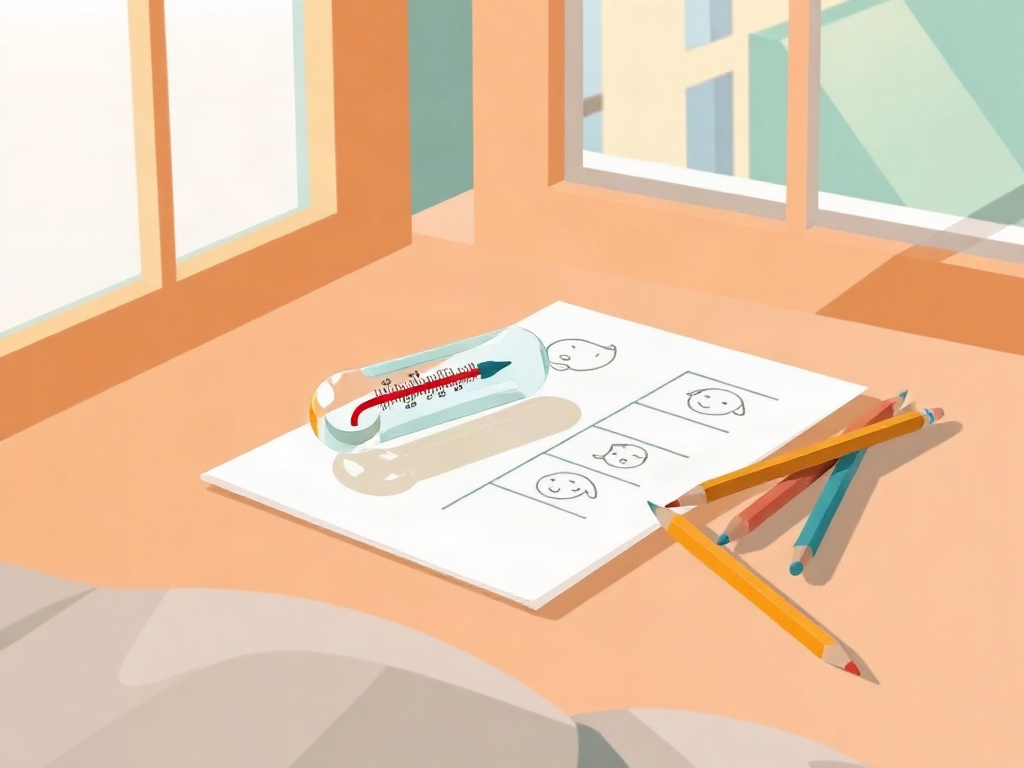
Your little one becomes a scientist observing a very interesting patient — themselves. Materials: a sheet of A4 paper, a pencil, coloured pencils, and the thermometer that's on the nightstand anyway. Draw a table together with four columns — time, temperature, mood (drawn as a little face with the mouth turned up, straight or down), and "something I noticed today." Take the temperature together in the morning, at noon and in the evening; the child says the number out loud and you write it down, or they write the digits themselves if they already can. The "noticed" column can hold anything: that the nose runs more in the evening, that the throat hurts less after drinking water, that the cat slept on their feet three times. Duration: about 10 minutes per reading, three times a day. Age: 5-7 years old — 5-year-olds dictate, 7-year-olds write it themselves. It's a success if, by the end of the day, the table has at least three filled-in rows and the child can tell you, without looking, what their highest temperature was that day.
This game has a side effect worth having: the child stops being scared of the thermometer. The number is no longer a verdict — it's data for the table. And in the evening, when you take their temperature for the fourth time, they simply ask, "What is it, so I can write it down?"
How the glass of water stops being a punishment
Drinking water while you have a cold is the classic battle. "Just drink a little more" works once, maybe twice. After that comes the silent glass-pushed-to-the-side routine.
The Harbour — The Glass and the Sea Game
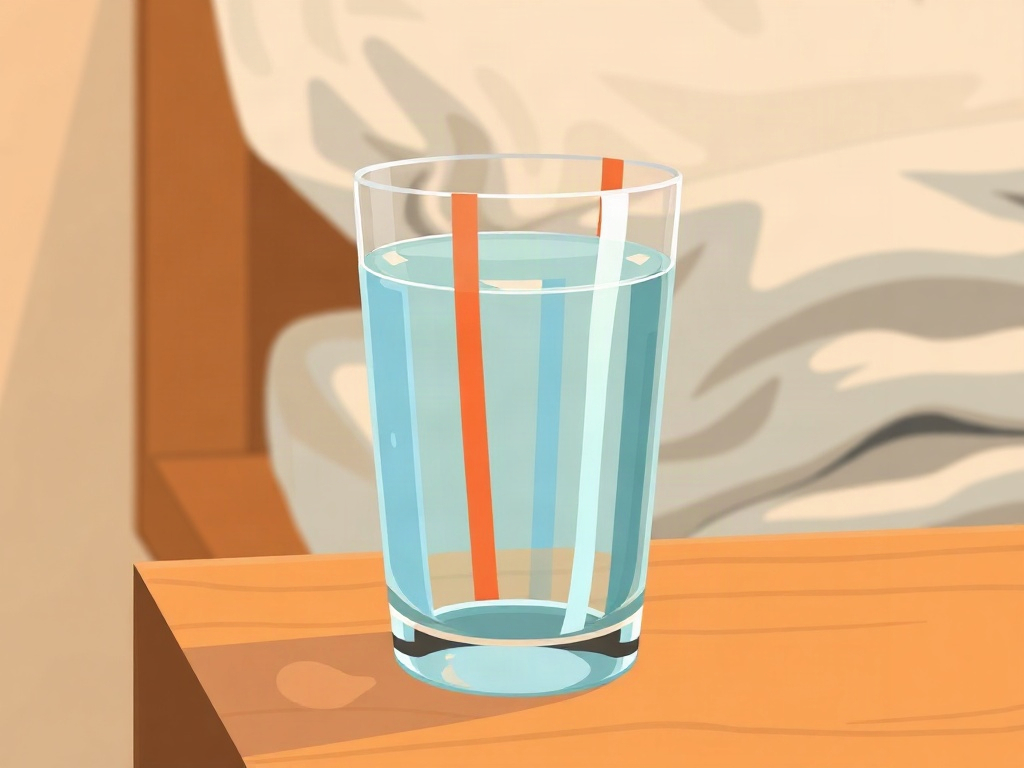
The glass becomes the sea, and every sip is a ship that has to reach the harbour. Materials: a glass of water (preferably clear, so you can see how far the level has dropped), a whiteboard marker or a thin strip of tape to mark three lines on the outside of the glass. Each line is a harbour: "Dover," "Brighton" and "Plymouth," or whatever names the child dreams up. The task is for the ship to reach the first harbour before the story you're reading ends, the second before lunch, and the third before the afternoon nap. The child checks the water level themselves and announces out loud: "I've reached Brighton!" Duration: 5 minutes to set up, then the game runs itself all day. Age: 5-7 years old. It's a success if, by evening, the water has dropped past the third line and you haven't had to remind them more than twice.
One small detail that changes everything: the child draws the lines, not you. If you draw them, it's a chore. If they draw them, it's their map.
The blanket isn't just for covering up
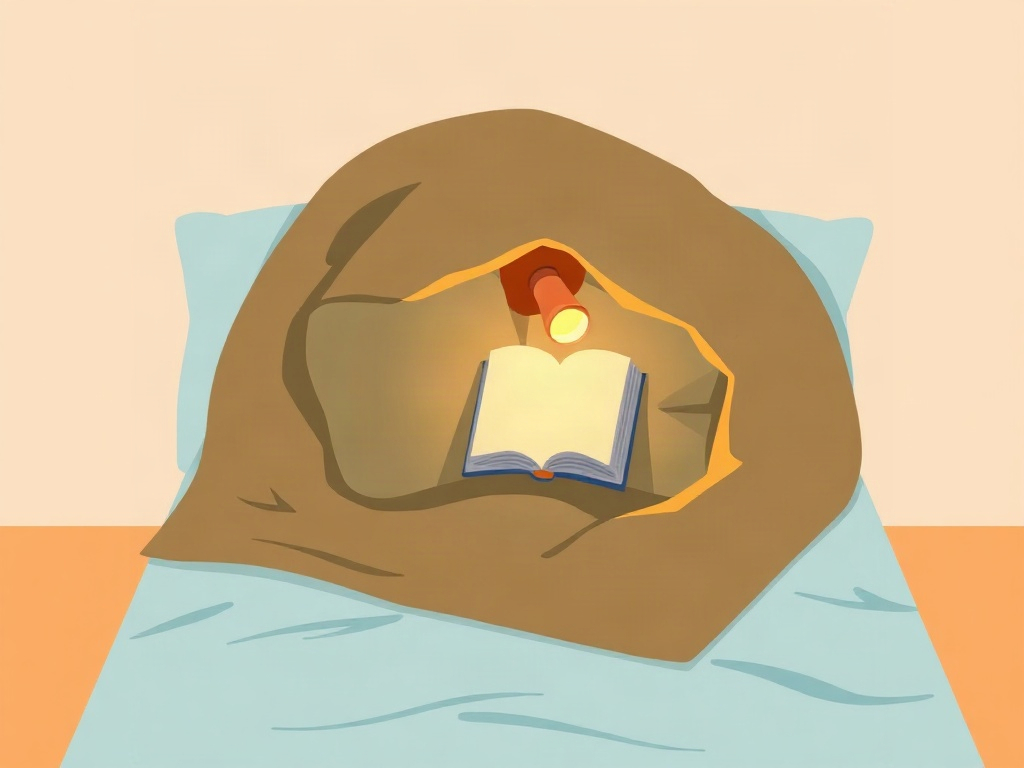
- Cave: two pillows on the sides, the blanket over the top, and inside goes a torch and a book. The rule is that inside the cave you only speak in whispers — and it's the one way a child will happily rest their voice when their throat hurts.
- Waves: hold both ends of the blanket and move it up and down over the child lying down, and they guess whether the wave is small, medium or big — without opening their eyes.
- Map of the land: the folds of the blanket become mountains and rivers, and a finger-journey from the knee to the pillow passes through three "towns" that the child names.
- Parcel: the child wraps themselves up like a package, and you "deliver" it, asking what's inside. The answers are usually wild, and that's exactly the point.
The most common mistake on day three
The mistake is trying to fix boredom with more screen time. The logic seems foolproof — the child is ill, they're lying down, the tablet keeps them in bed. In practice, the opposite happens. After two hours of watching, the child is more restless than before, starts pushing back, wants more, and when you stop it, a meltdown follows. Screen hours don't fill the day — they eat it up — and then in the evening, when bedtime needs to come earlier because of the illness, the mind is overloaded while the body is tired from nothing at all.
The second mistake is quieter: the parent invents the game, explains it in detail, and expects gratitude. A child on their fifth day at home doesn't want a programme — they want to take part. So leave half the game unfinished — let them decide what the harbours are called, how many columns the table has, and who lives in the cave. An unfinished game holds attention longer than a finished one.
Don't ask "do you want to play?" Ask "will you be writing it down, or me?" — that second question almost always gets an answer.
What to do when the child refuses everything
There are hours like that, and they're not a failure. In those moments, the simplest thing works: sit on the edge of the bed and stay quiet for ten minutes while you smooth out the folds of the blanket. Usually the child starts talking on their own — about something from the garden, a friend, a silly thing they dreamed. A conversation that starts out of nowhere does more good than a third game in a row.
One more thing: the day before going back to school or nursery is best spent with a little preparation. Get the school bag out together, let the child choose which T-shirt to wear. This small step takes five minutes and saves half an hour of morning grumbling.
What's left after the third day
The temperature chart can stay up on the fridge — kids love showing it off. The glass with the lines comes in handy even after the illness, especially in summer. And the blanket cave goes up in two minutes whenever a day gets hard. Three items you already own, zero pounds spent, and one changed role: the child isn't a patient waiting to get better — they're a person with three jobs to do.